walking upstream…
Woody Guthrie


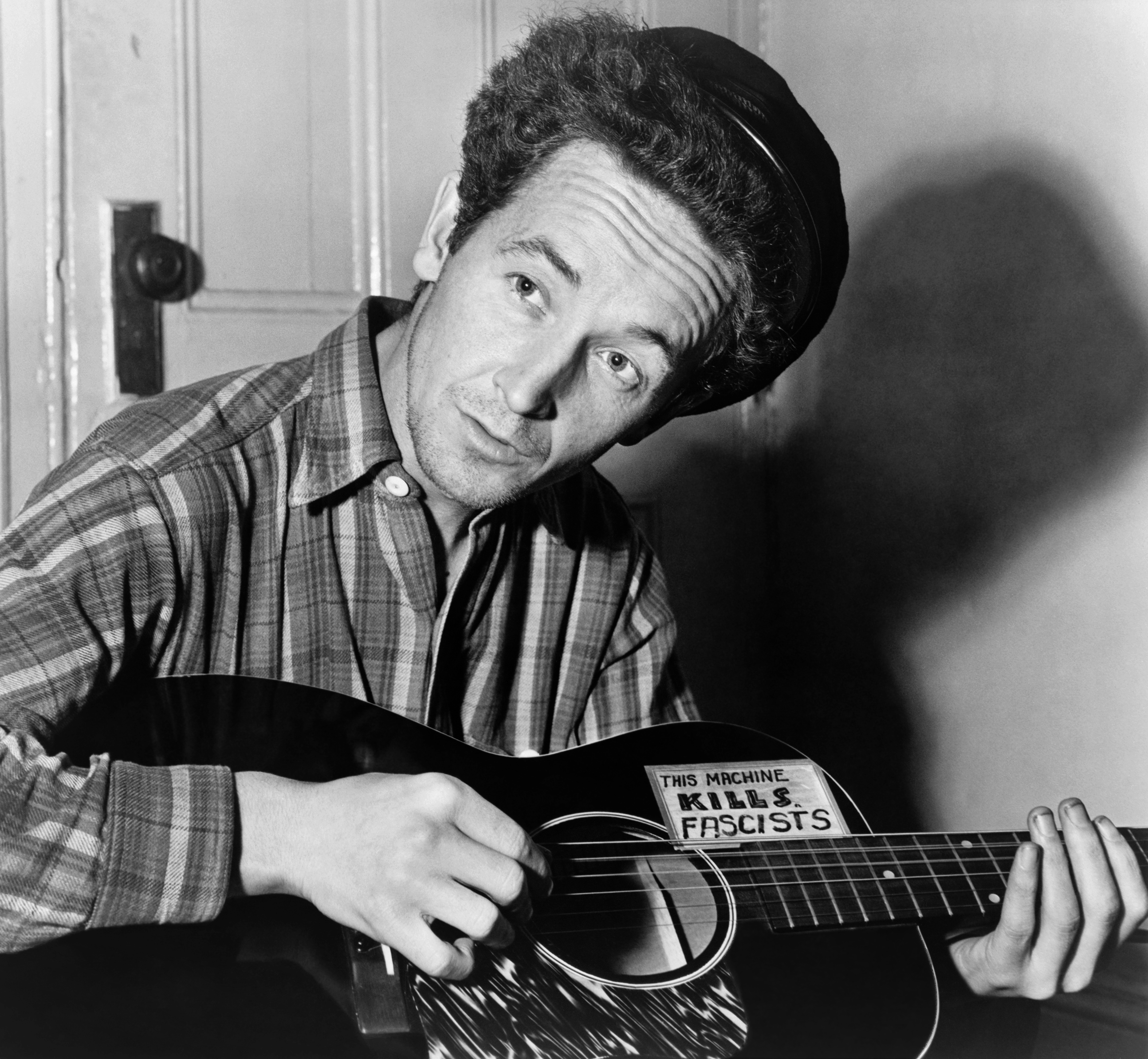
Woodrow Wilson Guthrie left Okemah, Oklahoma, at fifteen and never really stopped moving, riding boxcars and picking up songs the way other travelers picked up work: cowboy ballads, mountain hymns, and, from an African American shoeshine boy named George, the blues harmonica lines he taught himself to match note for note. By the time the Dust Bowl scattered Oklahoma families across California's labor camps, Guthrie had turned that inherited songbag into plainspoken talking-blues about people nobody else was writing songs for, from "Hard Travelin'" to "Talking Dust Bowl Blues." His 1943 memoir Bound for Glory told the same story in his own down-home dialect, storyteller's flourishes intact. Huntington's disease sidelined him by the early 1950s; he died in 1967. What he left behind wasn't really a sound but a stance, the guitar-slung wanderer speaking for the displaced, that every folk songwriter since has had to answer to.
the sound in question
1944
This Land Is Your LandWoody Guthrie
walk the tributaries ↓
The Carter Family1930s · Country / Old-time / Gospel
In Pampa, Texas, in the mid-1930s, Guthrie wore out a stack of secondhand 78s belonging to a neighboring family, the Jennings, replaying the same Carter Family sides on a wind-up Victrola until he had the guitar runs down cold. A childhood friend remembered him chasing what the two of them called "the Carter Family lick" — Guthrie "wanted to do all the runs; he loved those bass runs," the friend recalled. He carried that fingerpicked bass-string pulse into his own writing, and when he needed a melody sturdy enough to carry an anthem, he reached for a Carter Family record already worn smooth from replaying.
listen: upstream & here
1930
When the World's on FireThe Carter Family
1944
This Land Is Your LandWoody Guthrie
listen forCue up The Carter Family's "When the World's on Fire" next to "This Land Is Your Land" and the kinship is immediate: the same rise-and-fall melodic shape, the same walking bass line under the opening phrase. Guthrie kept the gospel song's structure nearly intact and swapped its subject, divine judgment for American ownership, while the alternating-bass guitar style he chased on his neighbor's 78s still shapes the strum pattern underneath his flatter, talking-blues phrasing.
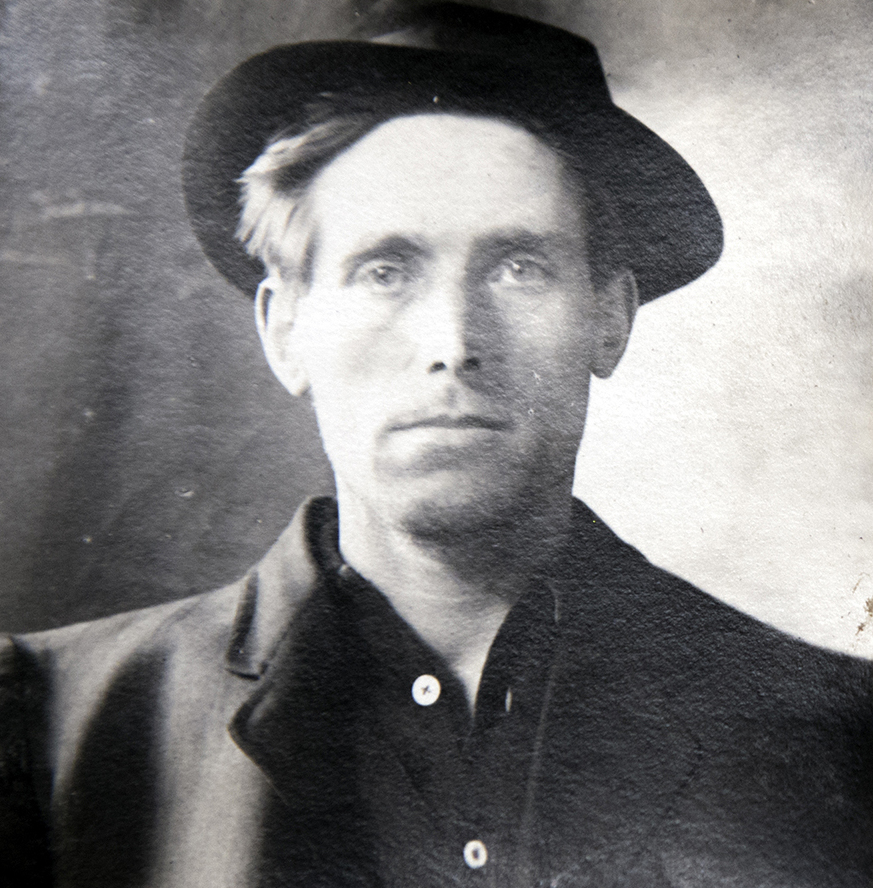
Joe Hill1910s · Labor song / Protest song / Folk
In California in 1938, broke and moving through union halls, Guthrie discovered a name older than his own politics: Joe Hill, the Wobbly songwriter executed by firing squad in 1915 for labor organizing. Guthrie started carrying the IWW's "Little Red Songbook" — Hill's hymn-tune protest songs rewritten for strikers — in his pocket, and adopted its whole method along with it. "As long as we've got wrecks, disasters, cyclones, hurricanes, explosions, lynchings, trade union troubles, high prices and low pay," Guthrie said, "folksongs and folk ballads are on their way in." It could have been Hill's own rationale, twenty-five years earlier.
listen: upstream & heresource: In These Times — Remembering Joe Hill (Joe Hill) ↗
1913
There Is Power in a UnionJoe Hill
1941
Pastures of PlentyWoody Guthrie
listen forPlay Hill's "There Is Power in a Union," built, like most of his songbook, on a tune congregations already knew, against Guthrie's "Pastures of Plenty," and the inherited move is a chorus built for a crowd to join by the second pass: simple, stepwise, made to carry over a picket line or a labor-camp fire. Guthrie pushes Hill's borrowed-hymn trick further, trading the union anthem's flat declaration for a migrant worker's plain inventory of crops picked and towns passed through, but the same songwriting logic, a simple tune doing the recruiting, still holds.
Lead Belly1930s–40s · Country blues / American folk / Songster
By 1941, Guthrie was living out of a Greenwich Village loft with Pete Seeger, singing on street corners and picket lines as part of the rotating Almanac Singers lineup, sharing stages most nights with Huddie Ledbetter, better known as Lead Belly. Lead Belly had already spent a career braiding blues, work songs, and topical commentary into a single repertoire; night after night alongside him, Guthrie absorbed the blend and built his own topical songwriting on the same foundation, the guitar carrying grievance instead of just rhythm.
listen: upstream & heresource: Wikipedia — American folk music revival (Lead Belly, Almanac Singers) ↗
1933
Goodnight, IreneLead Belly
1944
Hard Travelin'Woody Guthrie
listen forThe debt here is less a borrowed phrase than a shared toolkit: hear how Lead Belly's "Goodnight, Irene" rides a plain, repeating blues figure under an unhurried vocal that never rushes the story to fit the form, then how Guthrie's "Hard Travelin'" does the same, trading Lead Belly's floating verses for a mile-by-mile catalog of labor. Neither man ornaments the tune; both let a steady blues pulse carry a story a crowd could pick up by the second chorus.