walking upstream…
Vico C


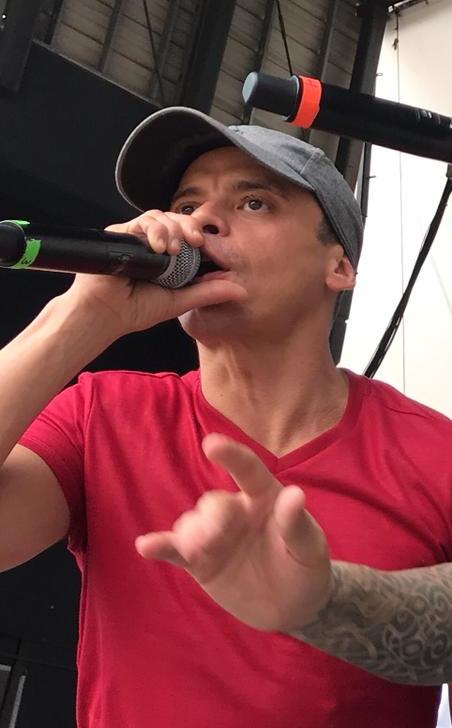
In 1985, DJ Negro caught a fourteen-year-old rapping with a duo called VG Princes in San Juan's Puerta de Tierra barrio and pulled him out on the spot — nobody, he found, rapped in Spanish like this kid. That kid, born Luis Armando Lozada Cruz in Brooklyn and raised in Puerto Rico, became Vico C, and the DJ Negro apartment session that followed, "El Rapeo del Vikingo," is remembered on the island as its first Spanish-language rap record. Hits released through Jorge Oquendo's new label Prime Records made him a commercial force by decade's end, but a 1990 motorcycle accident left him addicted to heroin, cocaine, and alcohol. He returned in 1998, evangelical and sober, with the aptly titled "Aquel Que Había Muerto" — "The One Who Had Died." Reggaeton's producers still trace their blueprint to the sessions he started as a teenager.
the sound in question
1998
Aquel Que Había MuertoVico C
walk the tributaries ↓
Run-D.M.C.1980s · Hip-hop / Old-school hip-hop
Vico C's own origin story names Run-D.M.C. first: "Inspired by Run DMC and Grandmaster Flash," his profile in the interview outlet religion.info records, "Vico C started rapping while growing up in Puerto Rico." Run-D.M.C. had already stripped hip-hop down to voice and drum machine, trading the DJ-and-band arrangements of early rap for two MCs trading bars with nothing to hide behind. When Vico C cut his own bare, DJ Negro-produced verses at fourteen, he was working from that same blueprint — a kid with a cassette deck, betting the words alone could carry a record.
listen: upstream & heresource: religion.info — Evangelicals and music ↗
1983
Sucker M.C.'sRun-D.M.C.
1985
El Rapeo del VikingoVico C
listen for"Sucker M.C.'s" strips its beat to a single drum-machine pattern and handclap, leaving Run-D.M.C.'s trading verses nowhere to hide — a deliberate rejection of the live-band arrangements that had defined rap's first wave. Vico C's "El Rapeo del Vikingo," recorded two years later in DJ Negro's apartment, makes the same bet in Spanish: a teenager's voice riding a bare rhythm track, every syllable exposed. Neither song asks you to dance so much as to listen to the rapping itself.
Grandmaster Flash and the Furious Five1980s · hip hop / old-school hip hop / electro
Asked what drove his music, Vico C didn't reach for hip-hop's usual boasts. "Being marginalized," he told the interview outlet religion.info. "The injustice that I've felt. As a barrio person, I've dealt with a lot of prejudice, classism." That was Grandmaster Flash and the Furious Five's territory first — "The Message," their 1982 single, turned a rapped verse into a case study of a ghetto childhood ending in prison, the first hip-hop record the Library of Congress preserved as a national treasure. Vico C's own message record, "No a las Drogas," follows the same move: real trouble, narrated plainly, over a beat that gets out of the way.
listen: upstream & heresource: Wikipedia — Grandmaster Flash and the Furious Five ("The Message" and its social commentary) ↗
1982
The MessageGrandmaster Flash and the Furious Five
1988
No a las DrogasVico C
listen for"The Message" rides a single stark synth bassline under grim, unhurried narration — the beat never breaks stride even as the lyrics describe a life falling apart, an argument that the words need no embellishment. Vico C's "No a las Drogas" works the same math a language apart: a plain, conversational flow laid over a spare rhythm track, describing addiction's toll without a single boastful aside. Both records treat rap less as a party trick than as reportage — the groove carries the testimony instead of upstaging it.
The Sugarhill Gang1970s–80s · Hip-hop / Old-school hip-hop
Wikipedia's entry on Puerto Rican hip-hop credits the Sugarhill Gang alongside Run-D.M.C. as a starting point for Vico C, who "formalized his career starting in 1984." The Sugarhill Gang mattered less for style than for proof of concept: "Rapper's Delight" showed in 1979 that a rap record could cross onto pop radio and sell in numbers no one in hip-hop had managed before. Vico C set out to repeat that proof in Spanish. Signed to Jorge Oquendo's new label Prime Records, he broke through with "La Recta Final," a single AllMusic calls "a big hit" that proved rap en español could sell, not just exist.
listen: upstream & heresource: Wikipedia — The Sugarhill Gang ("Rapper's Delight" and its commercial breakthrough) ↗
1979
Rapper's DelightThe Sugarhill Gang
1989
La Recta FinalVico C
listen for"Rapper's Delight" borrows Chic's "Good Times" bassline and stretches it across fifteen minutes of boastful, singsong rhyming built for parties, not undergrounds — the sound of rap discovering it could be pop. "La Recta Final" makes the same play in Puerto Rico a decade later: a hooky, radio-ready cadence and a chorus built to be chanted back, trading the raw, one-take feel of Vico C's earliest tapes for something engineered for the airwaves. Both tracks mark the moment their scenes stopped being underground rumors and became hits.