walking upstream…
Run-D.M.C.
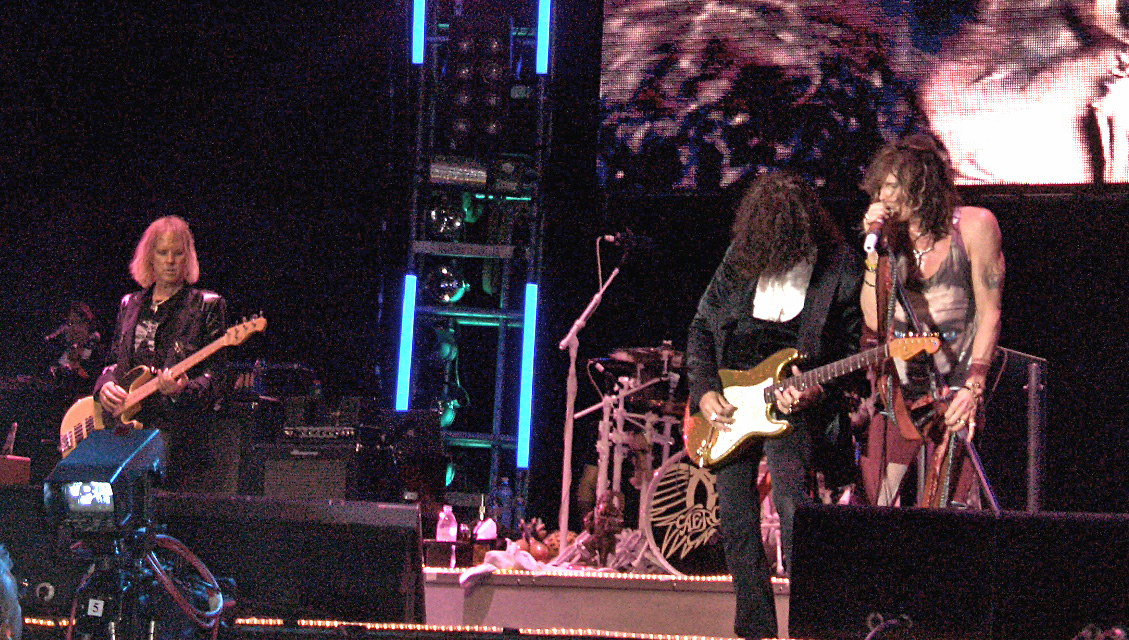


 photo: not credited · public domain ↗
Run-D.M.C.
Joseph "Run" Simmons, Darryl "DMC" McDaniels, and Jam Master Jay came out of Hollis, Queens, in 1981 and stripped hip-hop down to its studs — a drum machine, scratches, and two voices trading bars like a single instrument. "Sucker M.C.'s" and "It's Like That" made them rap's first bona fide stars in leather and unlaced adidas, and "Raising Hell," powered by the Aerosmith collaboration "Walk This Way," dragged the genre onto MTV and mainstream rock radio for good. Jam Master Jay's murder in 2002 closed out the group's active era, but the tandem-rhyme, rock-hard-beat template they built is still the bedrock under most hip-hop that followed.
the sound in question
1983
Sucker M.C.'sRun-D.M.C.
walk the tributaries ↓
Aerosmith1970s–90s · Rock / Hard rock / Blues rock
Run-D.M.C. were already rapping over hard-rock guitar on "Rock Box" and "King of Rock" before producer Rick Rubin pushed them to rebuild Aerosmith's "Walk This Way" outright, bringing Steven Tyler and Joe Perry in to play on it. The result fused DMC and Run's tandem rhymes directly onto Aerosmith's own riff, and the crossover hit took hip-hop into rock radio and MTV rotation it hadn't reached before.
listen: upstream & here
1975
Walk This WayAerosmith
1986
Walk This WayRun-D.M.C.
listen forPut Aerosmith's 1975 original next to the 1986 remake: the guitar riff and drum groove barely change, but where Tyler sang the verses, Run and DMC now rap them in tight unison before Tyler crashes back in on the chorus.
Kurtis Blow1980s · Hip-hop / Old-school hip-hop
Before Run-D.M.C. existed, a teenage Joseph Simmons DJ'd for Kurtis Blow — managed by Run's own brother Russell Simmons — and was even billed on records as "DJ Run, son of Kurtis Blow." Blow's crowd-command showmanship and party-chant hooks were Run's direct, hands-on apprenticeship in how a rap record gets a room moving.
listen: upstream & heresource: Kurtis Blow — Wikipedia ↗
1980
The BreaksKurtis Blow
1985
Here We Go (Live at the Funhouse)Run-D.M.C.
listen forKurtis Blow's "The Breaks" leans on a call-and-response hook built to get an audience shouting back; Run-D.M.C.'s "Here We Go (Live at the Funhouse)" is that same live-wire, crowd-participation energy caught on tape a few years later, with Jam Master Jay cutting up the breaks instead of a full band.
Grandmaster Flash and the Furious Five1980s · hip hop / old-school hip hop / electro
Grandmaster Flash and the Furious Five had already proven a crew of MCs could trade lines over a hard breakbeat and hold a party's attention without singing a note. Run and DMC took that old-school template and cut it down to two voices instead of five, but the bar-for-bar tandem delivery and the party-rocking authority both start with the Furious Five's crew routines.
listen: upstream & heresource: Grandmaster Flash and the Furious Five — Wikipedia ↗
1982
The MessageGrandmaster Flash and the Furious Five
1983
It's Like ThatRun-D.M.C.
listen forListen to how the Furious Five hand the mic back and forth on "The Message," each MC finishing the other's thought without breaking the rhythm; Run and DMC do the same trick tighter and harder on "It's Like That," often rapping the same line in unison instead of trading off.