walking upstream…
De La Ghetto

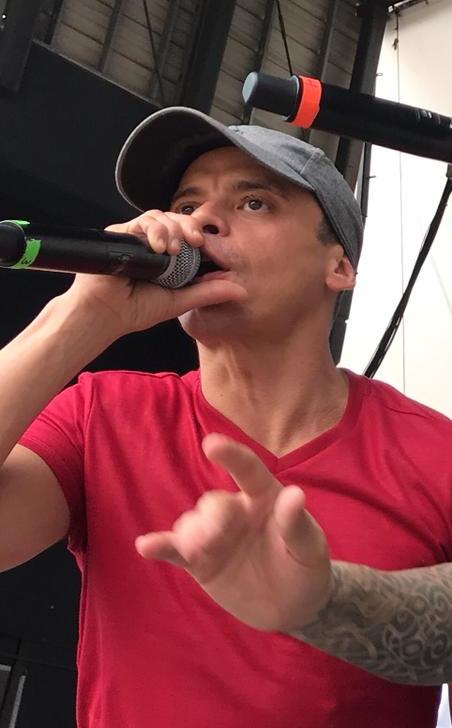

 photo: tony dandrades · cc by 3.0 ↗
De La Ghetto
Rafael Castillo Torres was born in the Bronx to a Dominican father and Puerto Rican mother, and relocated to San Juan as a child after his mother's incarceration; by 2004 he'd teamed with Austin Santos (Arcángel) to become one of reggaetón's most versatile voices, equally at home on a street anthem or a bachata-tinged ballad. As De La Ghetto, he helped push the genre toward Latin trap and a smoother "reggaetón romántico," landing era-spanning hits from "Sensación del Bloque" through "La Fórmula." Two decades in, he's reggaetón's quiet crossover architect — as comfortable covering Guns N' Roses as anchoring a Daddy Yankee posse cut.
the sound in question
2006
Sensación del BloqueDe La Ghetto
walk the tributaries ↓
Guns N' Roses1980s–90s · Hard rock / Heavy metal / Blues rock
De La Ghetto has said he "wanted to be Axl so bad" from age six and spent his rock-obsessed teenage years (7 to 14) hiding a Guns N' Roses fandom that didn't fit in the hood — a love letter he finally cashed in with a full rock cover of "Sweet Child O' Mine" in December 2024.
listen: upstream & heresource: Billboard — De La Ghetto on 20 years of hits and his hidden love of Guns N' Roses, Metallica, Linkin Park ↗
1987
Sweet Child O' MineGuns N' Roses
2024
Sweet Child O' MineDe La Ghetto
listen forListen for how he keeps Slash's opening riff and the song's climbing melody almost intact, just leaning his own voice into a grittier register — proof the arena-rock DNA was sitting under the reggaetón the whole time.
Vico C1990s · Hip-hop / Reggaeton / Christian hip-hop
Vico C is the godfather whose Spanish-language rap and Boricua street storytelling gave De La Ghetto's generation its whole vocabulary — De La Ghetto paid it back directly, rebuilding Vico C & DJ Negro's 1990 cut "Me Acuerdo" into his own "Recuerdo" on 2018's Mi Movimiento.
listen: upstream & heresource: WhoSampled — De La Ghetto's 'Recuerdo' samples Vico C & DJ Negro's 'Me Acuerdo' ↗
1990
Me AcuerdoVico C
2018
RecuerdoDe La Ghetto
listen forListen for the same nostalgic, half-sung/half-talked cadence and the way both tracks loop a simple hook into a vehicle for reminiscing — De La Ghetto keeps Vico C's conversational flow but drapes it in a modern reggaetón bounce.
Daddy Yankee2000s · Reggaeton / Latin pop
Daddy Yankee is the genre's founding hitmaker De La Ghetto grew up on during Puerto Rico's reggaetón golden age, and by De La Ghetto's own account it was Yankee who personally advised him to soften his street image and chase more commercial, romantic material to reach a wider audience.
listen: upstream & heresource: Maiky Backstage — De La Ghetto on Daddy Yankee's advice to go more commercial/romantic ↗
2004
Lo Que Pasó, PasóDaddy Yankee
2018
Todo El AmorDe La Ghetto
listen forCompare how Yankee's own "Lo Que Pasó, Pasó" turned reggaetón into a radio-ready romantic ballad in 2004 with De La Ghetto's glossier, guest-stacked "Todo El Amor" — the same play-it-for-the-ladies formula, aimed squarely at the pop charts.