walking upstream…
DJ Negro
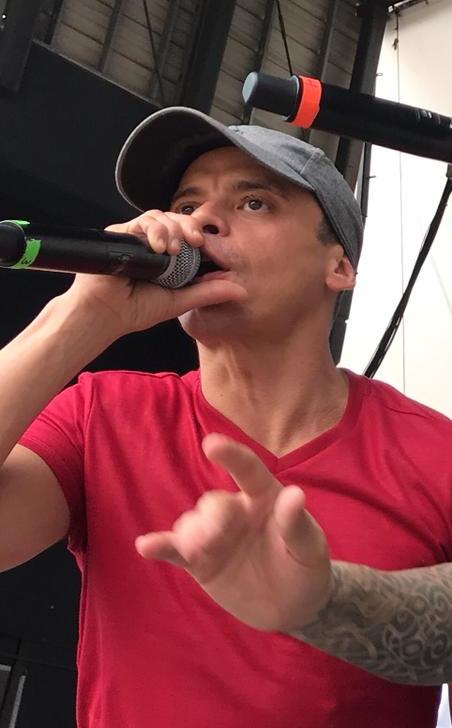


DJ Negro
sourcesPrimera Hora — DJ Negro recuerda los días difíciles del reguetón (origin story, motivations) · Heabbi.com — La historia del ritmo que cambió el pop contada por DJ Negro y DJ Nelson (founding The Noise, distribution, DJ Nelson's Panama testimony) · Miami New Times — DJ Playero talks reggaeton history (El General/Panama influence on the shared underground scene) · Wikipedia (ES) — DJ Negro (discography facts
Félix Rodríguez was born May 18, 1968, in San Juan, Puerto Rico, and started out DJing birthday parties in the La Perla neighborhood. He talked his way into a partnership with a young rapper he had spotted winning an English-language rap contest, and the two began selling cassette tapes hand to hand around San Juan — the partnership that, by Rodríguez's own account, started Spanish-language rap on the island. Cut loose from that group in the early 1990s, he opened a San Juan nightclub, The Noise, where freestylers traded verses over borrowed dancehall and hip-hop riddims; he built it into a ten-volume compilation series running through 2004, launching Baby Rasta & Gringo, Don Chezina, and Ivy Queen. He's remembered as one of three DJs, alongside DJ Playero and DJ Eric, who built underground music, reggaetón's direct predecessor.
the sound in question
1990
Misión: La CimaDJ Negro
walk the tributaries ↓
Vico C1990s · Hip-hop / Reggaeton / Christian hip-hop
Rodríguez was hosting an English-language rap contest when a duo took the stage; he zeroed in on the sharper voice, introduced himself, and proposed a partnership. "At that point," he said, "we started working together, we started selling cassette tapes, and I started to distribute them to people I knew. And that was when Spanish rap was born in Puerto Rico." The rapper was Vico C. Rodríguez became his DJ through three albums — La Recta Final, Misión: La Cima, and Hispanic Soul — before an unexplained split sent him founding The Noise on his own.
listen: upstream & heresource: NYCTastemakers — Exclusive Interview with Reggaetón Artist DJ Negro (partnership with Vico C, distribution, career) ↗
1989
La Recta FinalVico C
1994
Voy a Implantar (The Noise, Vol. 1)DJ Negro
listen forOn "La Recta Final," Vico C raps in unbroken Spanish over a stripped, boom-bap loop — no chorus, no hook, just verses building an argument. Five years later, on "Voy a Implantar," the first volume of The Noise, Baby Rasta & Gringo trade rhymes over a similarly bare, looped riddim built for a room to shout back — the same rapped-not-sung format Rodríguez learned making records with Vico C, stripped down further and handed to a new generation of freestylers.
Shabba Ranks1990s · Dancehall / Reggae
Elías de León, founder of the record label White Lion Records, spent his teenage years combing Manhattan record stores and hauling dancehall and hip-hop vinyl back to Carolina, Puerto Rico, for two friends. "I would always buy new records and take them back... to DJ Playero and DJ Negro," he told Rolling Stone. From those imports the pair spliced together what they called música underground. Reggaetón pioneer Don Chezina later named Jamaican dancehall artist Shabba Ranks as one of two sources for the dembow drum pattern Playero and Negro "artfully fused" into the riddim.
listen: upstream & heresource: Rolling Stone — Inside Reggaeton's Unsung Black History (Elías de León and Don Chezina on Shabba Ranks/El General and the dembow riddim) ↗
1990
Dem BowShabba Ranks
1995
The Noise, Vol. 5: Back to the TopDJ Negro
listen forShabba Ranks' "Dem Bow" rides a rolling, syncopated kick-and-snare pattern under his dancehall toasting — the loop musicologist Wayne Marshall found sampled or replayed in more than 80 percent of reggaetón songs through 2008. Five years later, that same rolling kick pattern anchors The Noise, Vol. 5: Back to the Top, DJ Negro's compilation, thickened with hip-hop drum sounds and a heavier bass — the riddim's bones intact under a new generation's freestyles.
El General1990s · Reggae en español / Dancehall / Reggae
No interview has DJ Negro naming El General himself, but the people around him fill in the record. His direct creative partner DJ Playero recalled being shaped by "reggae, Jamaican music, hip-hop, rap in Spanish, freestyle, house music... influence from Panama, from artists like El General," while DJ Nelson, who worked the turntables alongside Negro at The Noise, remembered hearing Panamanian artists sing reggae in Spanish and thinking, "estos tipos están cantando en español, puedo entenderlo." Chezina names El General, with Shabba Ranks, as a co-source of the dembow pattern Negro fused into his sound.
listen: upstream & heresource: Rolling Stone — Inside Reggaeton's Unsung Black History (Elías de León and Don Chezina on Shabba Ranks/El General and the dembow riddim) ↗
1991
MuéveloEl General
1997
Cuentos de la CriptaDJ Negro
listen forEl General's "Muévelo" sets Spanish-language toasting over a spare reggae-en-español riddim, the record that helped prove the format could travel from Panama to the rest of the Spanish-speaking Caribbean. Six years later, DJ Negro closed the loop directly, teaming with Panamanian producer El Chombo on the full-length Cuentos de la Cripta — the same reggae-and-dancehall-in-Spanish blueprint, now built as a joint session between a Puerto Rican DJ and a Panamanian one.