walking upstream…
Hank Williams
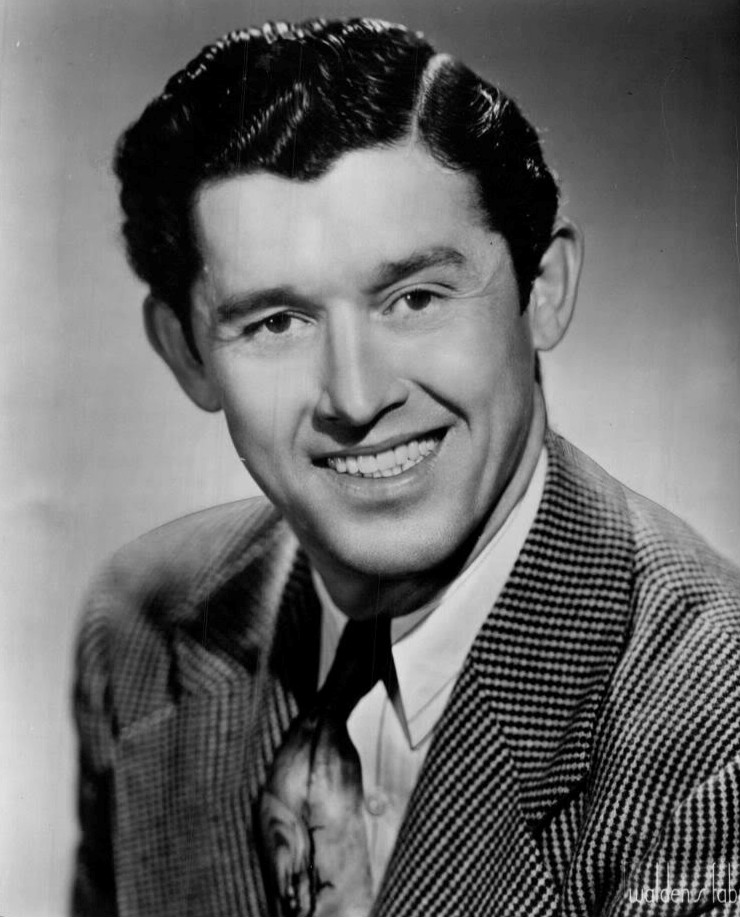
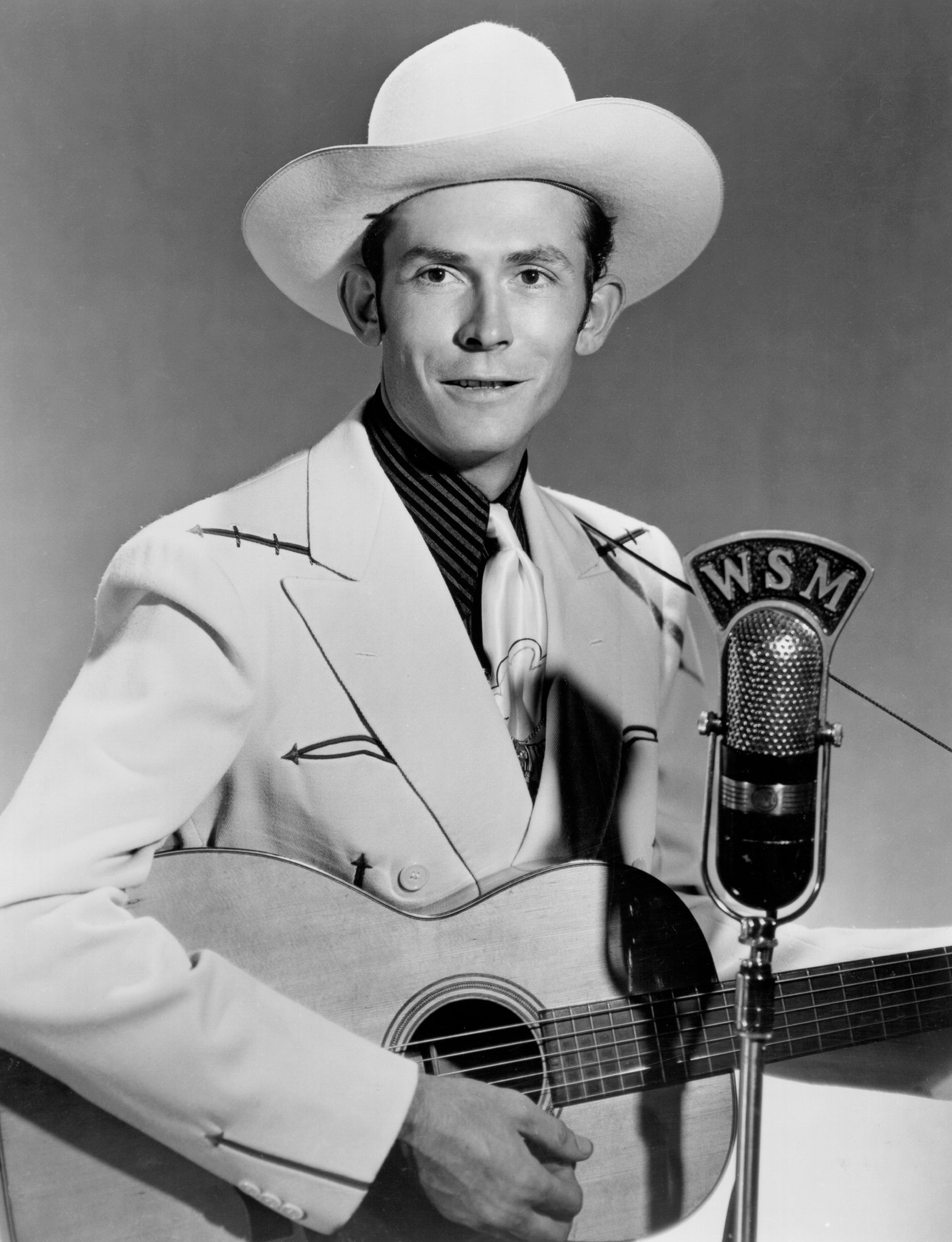 photo: wsm radio · public domain ↗
Hank Williams
sourcesEncyclopedia of Alabama -- Hank Williams Sr. (early life, Payne and Acuff influences) · TeachRock -- Hank Williams ("All the musical training I ever had was from him") · Colin Escott, George Merritt, William MacEwen -- Hank Williams · Tennessee Encyclopedia -- Acuff-Rose (founding by Roy Acuff and Fred Rose; signing Hank Williams, 1946)
Hank Williams was born September 17, 1923, in rural Butler County, Alabama, and raised mostly by his mother after his parents separated; she taught him harmonica and organ, and he got his first guitar around age eight. In Georgiana, a Black street musician known as Tee-Tot became the only teacher he ever credited: "All the musical training I ever had was from him," Williams said. By 1946 he'd signed with the Nashville publisher Acuff-Rose, and on June 11, 1949 he stopped the Grand Ole Opry cold with six encores of "Lovesick Blues." Over the next three and a half years he cut roughly 66 sides, mostly his own songs, before dying in the back of a Cadillac on New Year's Day, 1953, at 29. His plainspoken heartbreak has outlived every genre boundary built to contain it.
the sound in question
1953
Your Cheatin' HeartHank Williams
walk the tributaries ↓
Rufus "Tee Tot" Payne1920s-30s · Blues
In Georgiana, Alabama, in the early 1930s, a crowd of children trailed a Black street musician nicknamed Tee-Tot -- home-brewed liquor and tea were his trademark -- as he busked with a guitar, a horn, and cymbals rigged between his knees. The crowd just wanted to listen; young Hank Williams wanted to learn, and Rufus Payne became the one teacher he ever named outright. "All the musical training I ever had was from him," Williams said. Payne also handed him a song directly, "My Bucket's Got a Hole in It," which Williams later cut for MGM.
listen: upstream & here
My Bucket's Got a Hole in ItRufus "Tee Tot" Payne
listen forNo recording of Rufus Payne survives, so his side of this story has to be taken on faith -- his biographers can only describe a guitar, a horn, and a rhythm sense honed on Georgiana sidewalks. What's audible is what Payne left behind in the student: Williams' 1949 cut of the song Payne taught him, a loping, talked-as-much-as-sung blues shuffle under a walking bass, phrasing that owes more to a busker's timing than to any Opry singer of the era.
Roy Acuff1930s–40s · Country / Old-time / Gospel
By 1946, when Hank Williams signed to the Nashville publishing house Acuff-Rose -- co-founded four years earlier by Roy Acuff and the songwriter and producer Fred Rose -- Acuff was already the biggest star the Grand Ole Opry had, singing without amplification in a voice pitched to carry over an unmiked band. Williams built his own bare-knuckle delivery in that shadow, and still called it the standard six years later: "He's the biggest singer this music ever knew," he told the columnist Ralph Gleason in 1952. "For drawing power in the South, it was Roy Acuff, then God."
listen: upstream & heresource: American Songwriter -- Hank Williams on Roy Acuff as "the biggest singer this music ever knew" (1952 Gleason interview quote) ↗
1938
The Great Speckled BirdRoy Acuff
1949
I'm So Lonesome I Could CryHank Williams
listen forPlay Acuff's 1938 "The Great Speckled Bird" next to Williams' 1949 "I'm So Lonesome I Could Cry" and the kinship is in the restraint: no vibrato flourish, no dressed-up runs, just a voice pushed to the front of a spare band and left to carry the ache alone. Acuff rides an old hymn tune almost unaccompanied; Williams strips a honky-tonk waltz down to little more than a steel guitar moan and his own plainest phrasing -- the full-throated Opry style Hank grew up on, turned inward.
Moon Mullican1940s–50s · Honky tonk / Western swing / Country
When Hank Williams brought the piano man Moon Mullican onto the Grand Ole Opry roster in 1951, it wasn't charity -- it was gratitude with a paper trail. It was an open secret, the Nashville Songwriters Foundation records, that Mullican helped write Williams' "Jambalaya"; his contract with the rival label King Records meant he couldn't take a credit, so he was paid 25 percent of the royalties on the sly instead -- an arrangement his biographer Colin Escott attributes to Williams' publisher, Fred Rose, working around the label dispute. The debt was Mullican's warm, rolling honky-tonk narrative sense, folded into a song about a bayou wedding feast.
listen: upstream & heresource: Nashville Songwriters Foundation -- Moon Mullican (Jambalaya co-writing, royalty arrangement) ↗
1946
The Lonesome Hearted BluesMoon Mullican
1952
Jambalaya (On the Bayou)Hank Williams
listen forMoon Mullican's 1946 "The Lonesome Hearted Blues" rolls on a rollicking, syncopated piano figure under a warm, conversational baritone that treats the lyric like a story told across a bar. Williams' "Jambalaya (On the Bayou)" swaps piano for fiddle and accordion but keeps the trick -- a bouncing two-step rhythm carrying a string of scene-setting details, crawfish pie and file gumbo, delivered in that same easy, talking-blues cadence a credited songwriter borrowed wholesale.