walking upstream…
Roy Acuff


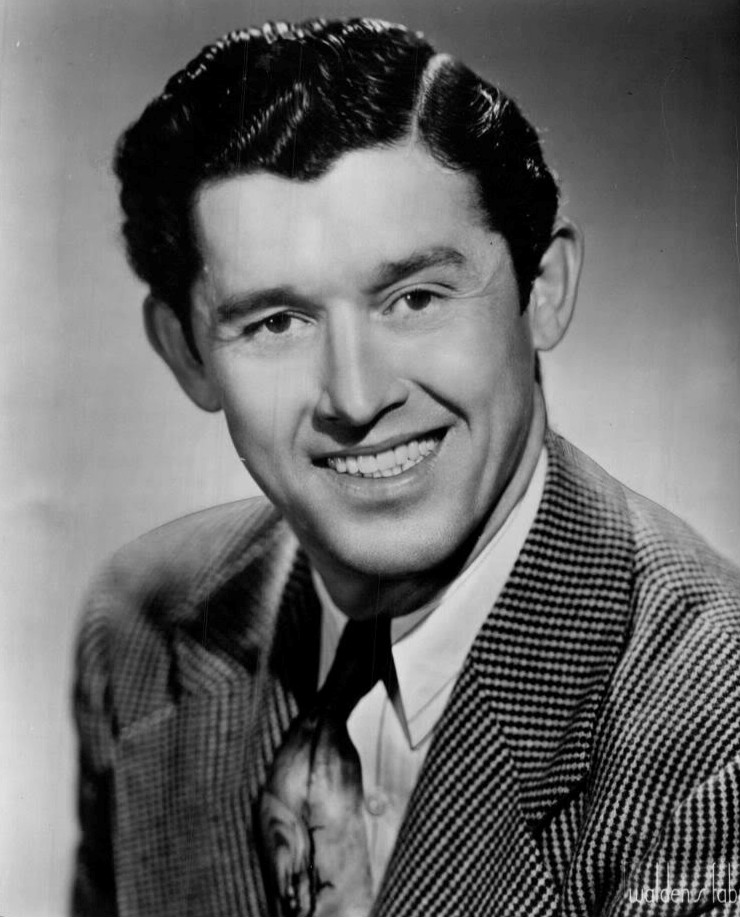
sourcesTennessee Encyclopedia — Acuff, Roy C. (biographical background · Country Music Hall of Fame — Roy Acuff artist page (Opry breakthrough, Acuff-Rose founding) · Rolling Stone — Flashback · Wilkes Heritage Museum / Blue Ridge Music Hall of Fame — Roy Acuff inductee page (Clarence Ashley medicine-show connection)
In 1929 a Knoxville teenager bound for a New York Yankees tryout collapsed with sunstroke on a semipro ballfield, and the year of recovery that followed remade him. Roy Acuff spent the convalescence wearing out his preacher father's fiddle records, then carried the instrument onto the Appalachian medicine-show circuit, hawking tonic between songs. A February 1938 Grand Ole Opry performance of "The Great Speckled Bird" brought in so much fan mail that within a year Acuff had displaced Uncle Dave Macon as the show's biggest draw, and by 1939 the NBC "Prince Albert Show" carried his plain, unyodeled tenor into homes nationwide. He co-founded Acuff-Rose, Nashville's first major music publisher, signed Hank Williams, and even ran for governor before settling into four more decades as the Opry's elder statesman — the man who turned a mountain-hymn repertoire into an entire industry.
the sound in question
1938
The Great Speckled BirdRoy Acuff
walk the tributaries ↓
Jimmie Rodgers1920s–30s · Country / Old-time / Blues
Rodgers, the era's dominant recording star, died in 1933; six years later Acuff cut Rodgers' own "Blue Yodel No. 8" as "Mule Skinner Blues," trading the original's swooping falsetto break for a plain, declarative delivery. One retrospective on the song credits Acuff with having "made country songs out of pre-existing old-time tunes," turning what had been "a yodeling 'hillbilly' song with a limited shelf life" into a permanent standard — succeeding Rodgers less by imitation than by refusal, keeping the work-song lyric and dropping the yodel that had made Rodgers famous.
listen: upstream & heresource: Wide Open Country — Mule Skinner Blues ↗
1930
Blue Yodel No. 8 (Mule Skinner Blues)Jimmie Rodgers
1940
Mule Skinner BluesRoy Acuff
listen forRodgers cracks into a swooping falsetto yodel every time the line "good mornin', captain" comes back around — the vocal hook the whole record is built on. Acuff's version keeps the same guitar-and-fiddle shuffle and the same verses, but at the exact spot where Rodgers breaks into falsetto, Acuff just sings straight through in his flat, forceful chest voice. Same lyric, same rhythm, opposite idea of what a voice should do at the peak of a phrase.
Clarence "Tom" Ashley1920s–30s · Old-time / Appalachian folk / String band
On the medicine-show circuit in the early 1930s, Acuff crossed paths with Appalachian banjo player Clarence Ashley, and according to the Blue Ridge Music Hall of Fame, Ashley "probably taught him" two songs outright: "House of the Rising Sun" and "Greenback Dollar." This wasn't influence absorbed secondhand from records — it was one working musician handing a song directly to another between medicine-show sets, and Acuff carried both into a recording studio within a few years, crediting no one.
listen: upstream & heresource: Wilkes Heritage Museum / Blue Ridge Music Hall of Fame — Clarence "Tom" Ashley inductee page (corroborating Ashley/Acuff connection) ↗
1933
Rising Sun BluesClarence "Tom" Ashley
1938
House of the Rising SunRoy Acuff
listen forAshley and harmonica player Gwen Foster cut the tune bare in 1933 — just banjo, harmonica, and Ashley's flat mountain tenor picking out the melody note by note, verse after verse, no arrangement to speak of. Acuff's 1938 version keeps that same descending minor-key tune and verse order almost intact, but fills it out with a full string band and pushes his voice up into the held, pleading style that would define his Opry sound — the same inherited melody, dressed for a bigger room.
Fiddlin' John Carson1920s · Old-time / Country / String band
During his 1929-30 convalescence, Acuff's father put two records in his hands: Fiddlin' John Carson, the Georgia fiddler credited with country music's first commercial "hillbilly" recording in 1923, and Gid Tanner's string band the Skillet Lickers. Reference biographies describe these sides as formative for Acuff's early fiddle style during the very months he was teaching himself the instrument — though no account ties a specific Acuff recording back to a specific Carson or Tanner side. The debt is to a tradition of old-time fiddle breakdowns, not to one traceable lick.
listen: upstream & heresource: Encyclopedia.com — Acuff, Roy, from Gale's Contemporary Musicians (career overview; Fiddlin' John Carson/Gid Tanner childhood-influence claim; 1971 Look magazine quote) ↗
1923
The Old Hen Cackled and the Rooster's Going to CrowFiddlin' John Carson
1949
Smoky Mountain RagRoy Acuff
listen forCarson's fiddle drives a fast, scratchy breakdown with the rhythm laid down entirely by his own sawing bow — no drums, barely any backing. Acuff's 1949 "Smoky Mountain Rag" keeps that same breakneck bowing attack at its core, though it now runs over a full band arrangement instead of a bare fiddle. No source ties this specific tune to Carson's directly; the connection is to the old-time breakdown tradition his father's records first put in Acuff's ear, not a documented note-for-note descent.