walking upstream…
Ernest Tubb

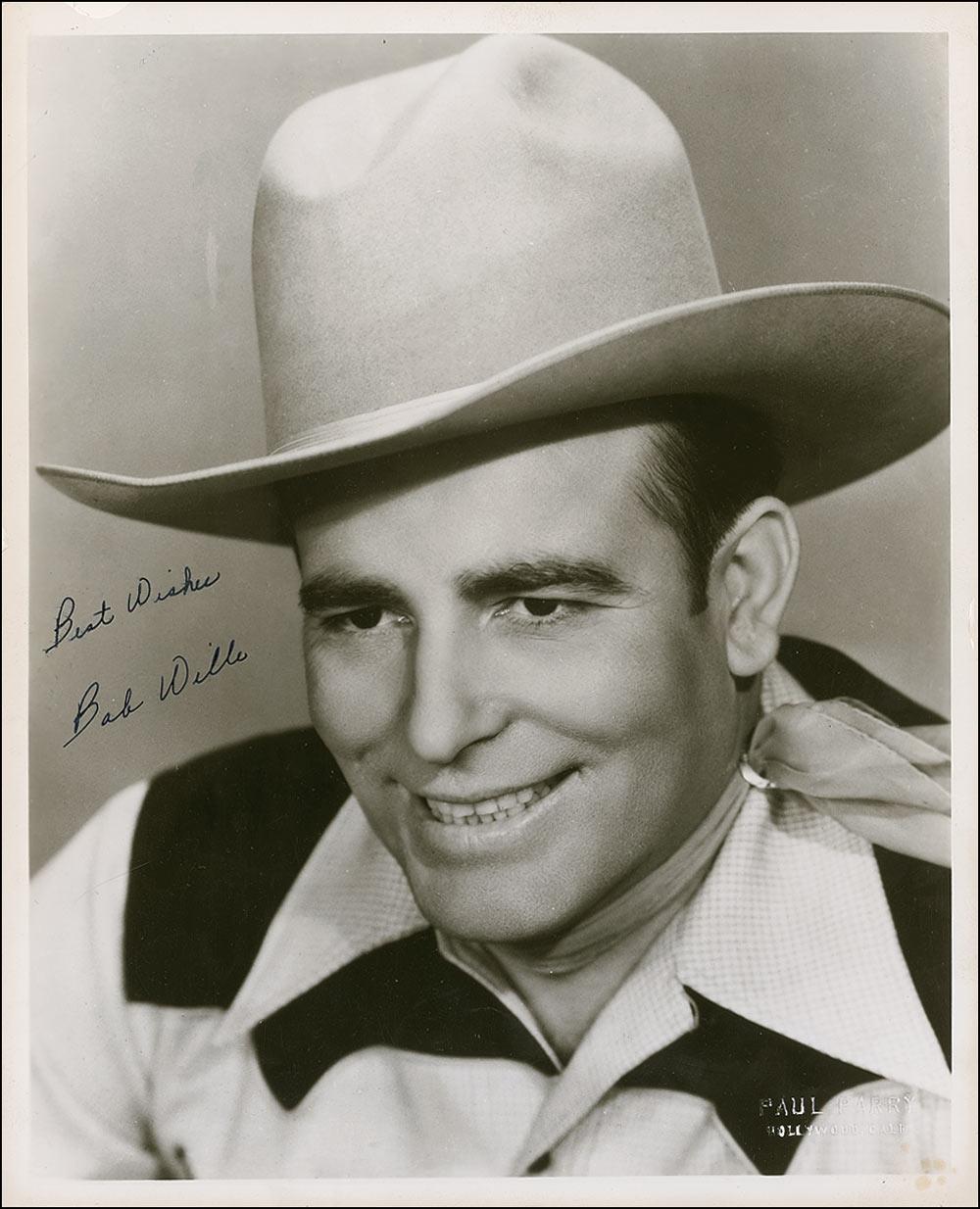
 photo: atlas artist bureau · public domain ↗
Ernest Tubb
sourcesTexas State Historical Association — Handbook of Texas, "Tubb, Ernest Dale" (career overview, direct Tubb quotes) · Country Music Hall of Fame and Museum — Ernest Tubb bio, by Ronnie Pugh (Carrie Rodgers mentorship, generosity to younger artists) · Nashville Songwriters Hall of Fame — Rex Griffin inductee page (Tubb's financial support, tribute album, song-catalog cover trail) · Cowtown Birthplace of Western Swing — "Ernest Tubb" (Bob Wills as a named influence and electrification precedent)
Ernest Dale Tubb was born February 9, 1914, near Crisp, Texas, the youngest of five children of cotton sharecroppers. At 14 he heard a Jimmie Rodgers record and became instantly, permanently obsessed, teaching himself guitar and yodel in direct imitation while working as a soda jerk and WPA ditch-digger to fund an unpaid radio slot. A 1939 tonsillectomy cost him his yodel and killed the imitation, forcing something new: a plain, conversational baritone over a single amplified lead guitar. That style, honky-tonk, broke nationally with 1941's "Walking the Floor Over You," written alone in minutes while he worried his wife wouldn't come home. He joined the Grand Ole Opry in 1943 and stayed 39 years, touring into his late 60s and mentoring Hank Williams, Loretta Lynn, and George Jones the way a dead idol's widow had once mentored him.
the sound in question
1941
Walking the Floor Over YouErnest Tubb
walk the tributaries ↓
Jimmie Rodgers1920s–30s · Country / Old-time / Blues
In 1928, fourteen-year-old Tubb heard one of Jimmie Rodgers's earliest records and, in the words of one chronicler, "the obsession was instant and it would steer the course of the rest of his life." Still enthralled eight years later, he phoned Rodgers's widow, Carrie, asking for an autographed photo. She did far more: she loaned him Jimmie's own Martin guitar, its name inlaid in pearl across the fretboard, sent him on tour dressed in one of Jimmie's tuxedos, and got him his first record deal — a stranger's widow becoming the foundation of his career.
listen: upstream & heresource: Cocaine & Rhinestones — "CR001 ↗
1927
Blue Yodel No. 1 (T for Texas)Jimmie Rodgers
1936
The Passing of Jimmie RodgersErnest Tubb
listen forRodgers opens "Blue Yodel No. 1" with a loose, storytelling verse that breaks into his signature high, swooping falsetto yodel at the end of each line — the sound the entire genre would later chase. On "The Passing of Jimmie Rodgers," recorded the same year Carrie began mentoring him, nineteen-year-old Tubb is still chasing it too: the phrasing, the guitar picking, even the yodel itself are a direct, unashamed impression — a Rodgers record before Tubb found a voice, and a throat, of his own.
Rex Griffin1930s–40s · Country / Honky-tonk
Ernest Tubb didn't just admire Rex Griffin, the Alabama singer-songwriter behind 1937's "The Last Letter" — he recorded him across three separate decades, cutting "Over the River" in 1945 and "My Hillbilly Baby" in 1957, while the two co-wrote songs and stayed close friends. "Griffin was assisted financially by longtime friend Ernest Tubb" as his health failed, the Nashville Songwriters Hall of Fame records; after Griffin died of tuberculosis, Tubb devoted a full 1963 album, Just Call Me Lonesome, to twelve of his songs — the same instinct, on a smaller scale, that had once tied him to Jimmie Rodgers's memory.
listen: upstream & heresource: Encyclopedia of the Great Plains — "Tubb, Ernest (1914-1984)," by Ronnie Pugh (Rex Griffin and Texas-radio-era contemporaries) ↗
1937
The Last LetterRex Griffin
1963
Last LetterErnest Tubb
listen forGriffin's original is spare and doom-laden — just voice and guitar carrying a suicide note set to music, the plain narrative delivery that shaped a generation of Texas radio singers. Tubb's 1963 version keeps every word of that same grim letter, but wraps it in the thick, amplified honky-tonk band — steel guitar, drums, electric lead — that didn't exist when Griffin cut the original in 1937: a tribute paying its debt in the very sound Tubb had spent two decades building.
Bob Wills1930s–40s · Western swing / Country
According to biographer Ronnie Pugh's account for the Library of Congress, a Dallas–Fort Worth jukebox operator told Tubb bluntly that his quiet, unamplified records were losing out at night to the louder dance-hall sound of the bigger bands — Bob Wills chief among them — and suggested he electrify his lead guitarist. Tubb took the advice, hiring Fay "Smitty" Smith for the 1941 session that produced his signature hit. A Western-swing historian later put it plainly: Tubb "dared to follow Bob Wills' innovation by using an electric lead guitar" on the Grand Ole Opry stage.
listen: upstream & heresource: Library of Congress — Ronnie Pugh, "Walking the Floor Over You"—Ernest Tubb (1941) (biography, tonsillectomy, and the jukebox-operator/Bob Wills electrification story) ↗
1940
New San Antonio RoseBob Wills
1941
Walking the Floor Over YouErnest Tubb
listen forWills's Texas Playboys fill "New San Antonio Rose" with a full, amplified dance-hall band — horns, fiddle, and volume built for a crowded floor. Tubb's quieter, three-piece "Walking the Floor Over You" can't match that scale, but listen for the one concession: Fay Smith's electric lead guitar playing the melody clean and unadorned, cutting through the mix exactly the way the record's jukebox reputation depended on — the single instrument Tubb borrowed straight from the louder bands crowding him off the machine.