walking upstream…
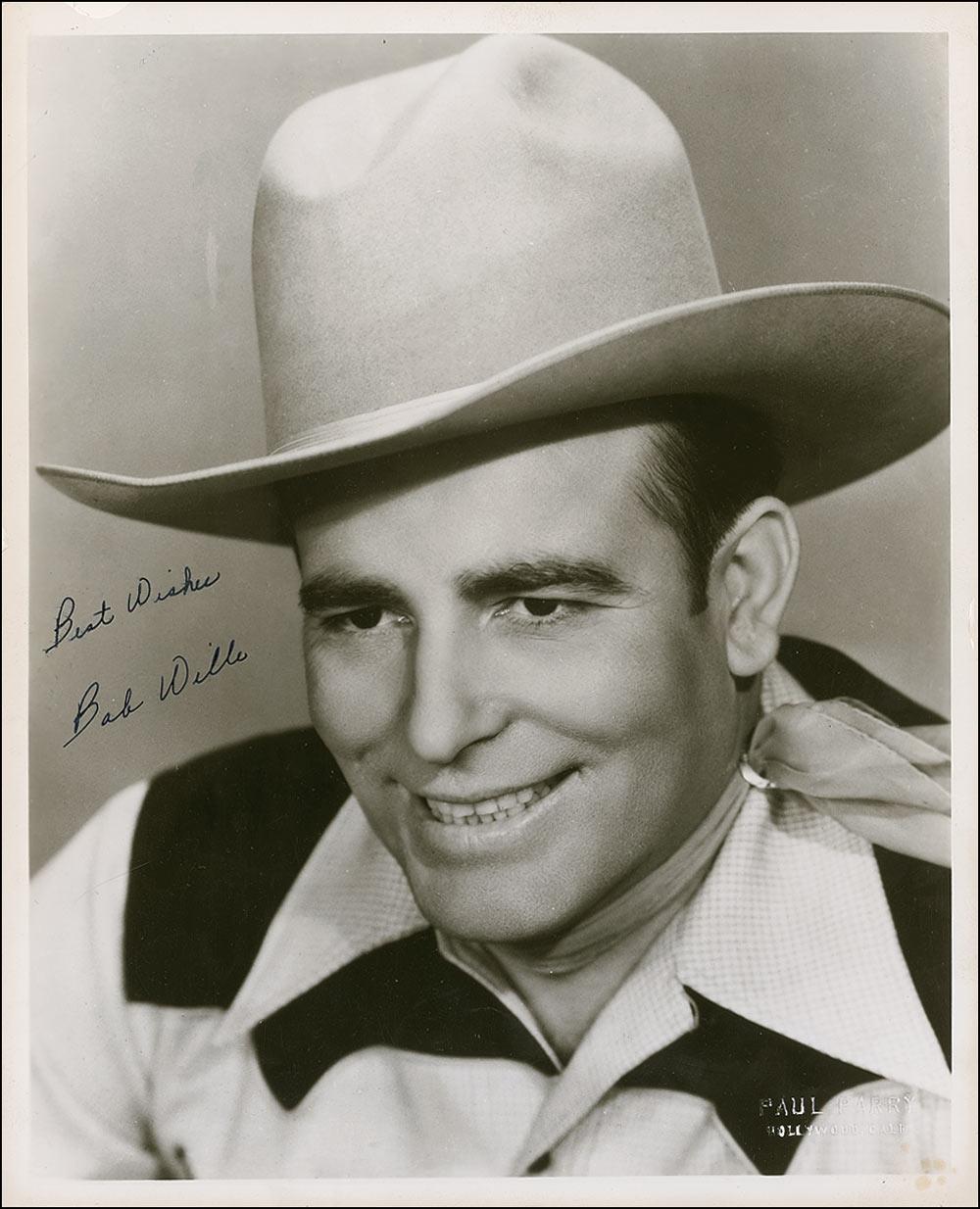
Bob Wills

sourcesUniversity of Illinois Press — Cary Ginell, Milton Brown and the Founding of Western Swing, 1994, pp. 32–33 (Wills adding Bessie Smith's "rowdy city blues" to his repertoire) · Native Ground Books & Music — Wayne Erbsen, Eck Robertson · Lone Star Music Magazine — Michael Corcoran, The Texas Top 50 ("Faded Love" as an adaptation of "Darling Nelly Gray") · Encyclopedia of the Great Plains — Wills, Bob (1905–1975) (biographical facts; Texas Playboys formation)
James Robert Wills was born March 6, 1905, on a cotton farm in Kosse, Texas, to a father who'd beaten the celebrated fiddler Eck Robertson in contest more than once and taught his son every waltz and breakdown he knew. As a teenager, working the cotton rows between the Little Red River and the Prairie Dog Town Fork, Wills rode roughly fifty miles on horseback to Childress just to hear Bessie Smith sing, then carried her blues home to a repertoire built on frontier fiddle tunes. By 1934 he'd formed the Texas Playboys in Tulsa, Oklahoma, running that blues and the era's jazz swing straight through his father's dance-hall tradition until something unclassifiable came out the other end. "New San Antonio Rose" made it a national hit in 1940; decades on, western swing is still the sound of two worlds refusing to stay separate.
the sound in question
1940
New San Antonio RoseBob Wills
walk the tributaries ↓
Bessie Smith1920s · Blues / Classic female blues / Vaudeville
Wills told the story of that ride for the rest of his life, giving his biographer Charles Townsend the fullest version: "I rode horseback from the place between the rivers to Childress to see Bessie Smith... She was about the greatest thing I had ever heard. In fact, there was no doubt about it. She was the greatest thing I ever heard." Still in his teens, he had fifty miles home to decide the blues wasn't ornament, it was the whole point. Within a few years he'd folded what one historian called her "rowdy city blues" into a band built to play waltzes.
listen: upstream & heresource: University of Illinois Press — Charles R. Townsend, San Antonio Rose ↗
1925
St. Louis BluesBessie Smith
1935
St. Louis BluesBob Wills
listen forSmith's 1925 Columbia recording is almost bare: her voice, Louis Armstrong's cornet answering each line, a pump organ underneath, the tempo slow enough to feel every bent note. Wills cut the same W. C. Handy standard a decade later at his first Texas Playboys session, and the blues is still there in the phrasing, but it's been put to work: horns and fiddle crowd in, the tempo near doubles, and a song built for a quiet room becomes one meant to fill a dance floor. What holds is the melody; everything around it just learned to move faster.
John Wills1920s · Old-time fiddle
John Wills fiddled for a living, and he was good enough that people still repeat the story of the Munday, Texas contest where he beat his rival Eck Robertson by holding one note so long the crowd went wild and the judges gave him first prize on nerve alone. Asked afterward if John had outfiddled him, Robertson shot back, "Hell, no! He didn't outfiddle me. That damned old man Wills outhollered me." That showmanship, and the waltzes and breakdowns behind it, were the first music Bob ever learned, taught fiddle in hand by his father at ranch dances across West Texas.
listen: upstream & heresource: KUTX — Eck Robertson Pioneers Commercial Country Music (John Wills as a rival fiddler to Eck Robertson) ↗
Frontier fiddle waltzes and breakdowns at West Texas ranch dances (traditional, unrecorded)John Wills
1950
Faded LoveBob Wills
listen forJohn Wills left almost nothing on record — one guest turn, “Oh Henry,” cut at his son’s 1943 Hollywood session — and the ranch-dance fiddle tradition he taught largely died with the people who played it. But you can hear what he handed down in "Faded Love," the song Bob wrote with his father and brother Billy Jack: the melody adapts an old 1850s ballad, "Darling Nelly Gray," that had circulated as a fiddle tune for generations before it reached Bob through his father. Strip away the Texas Playboys' horns and steel guitar, and the tune underneath is exactly what it always was, a fiddle waltz built for a Saturday-night dance.