walking upstream…
Willie Nelson


sourcesFrets Magazine — Willie Nelson, Guitar Player (Django Reinhardt / early life / Sinatra phrasing) · Bill DeYoung — Willie Nelson biographical profile (Bob Wills bandleading / Sinatra combination quote) · Billboard — Willie Nelson on His Frank Sinatra Tribute Album (My Way, 2018) · My Kind of Country — Album Review
Willie Nelson's mother left when he was six months old, and his grandparents raised him in Abbott, Texas — his blacksmith grandfather teaching him guitar at six, his grandmother, a gospel songwriter, teaching him voice. By ten he earned $8 a night in a Bohemian polka band; through his teens he picked cotton beside Black field hands whose blues and work songs, he said, made the labor bearable. He wrote 'Night Life,' 'Crazy,' and 'Hello Walls' while working as a DJ and bass player in Ray Price's band, then moved to Nashville in 1960 as an in-demand songwriter. In the early 1970s he broke from the polished 'Nashville Sound,' moving home to Texas to record Shotgun Willie (1973) and the spare Red Headed Stranger (1975), and became outlaw country's figurehead. 'I grew up listening to all kinds of music,' he said, 'and I could see how it all fit together.'
the sound in question
1975
Blue Eyes Crying in the RainWillie Nelson
walk the tributaries ↓
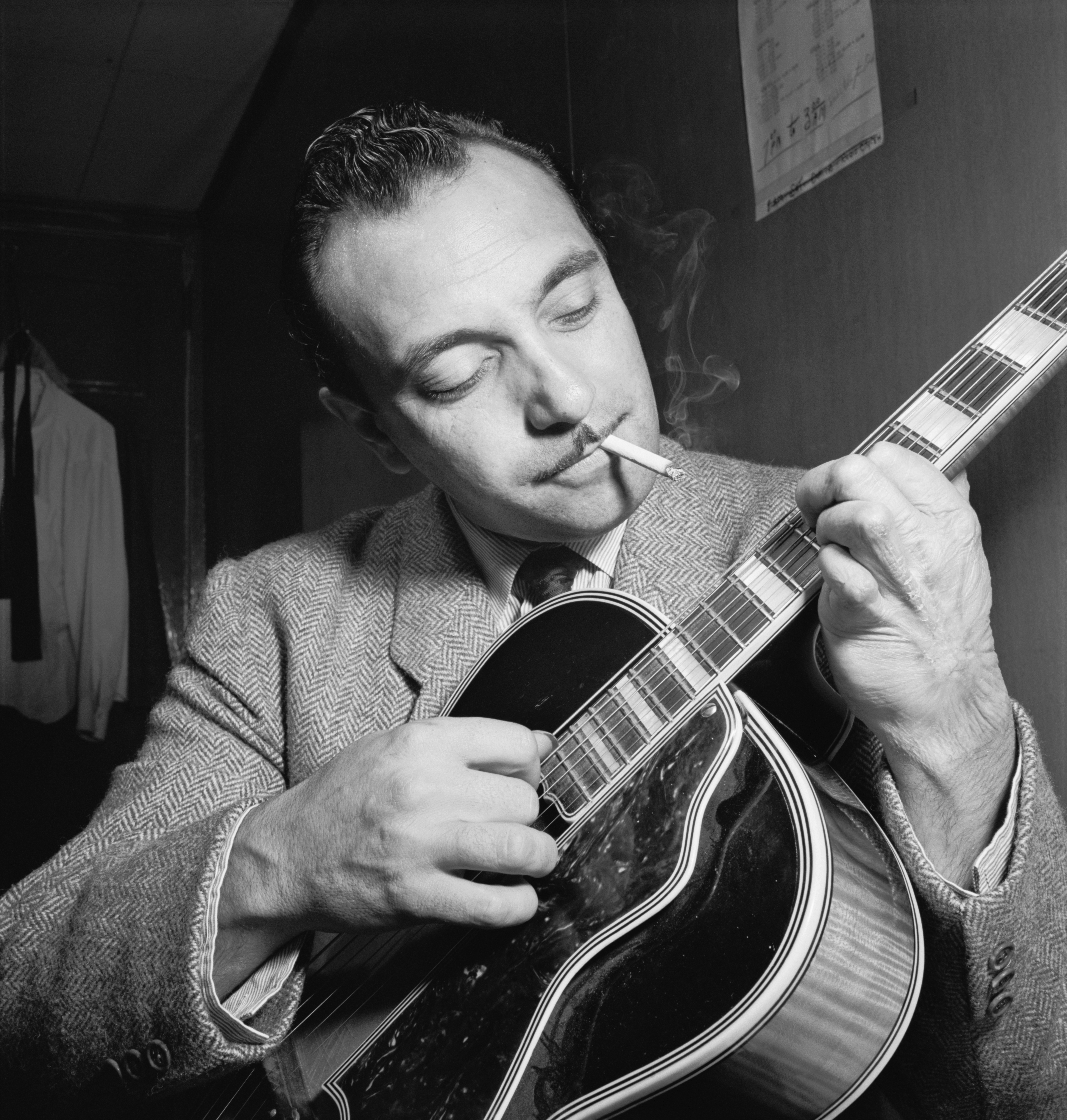
Django Reinhardt1930s · Gypsy jazz / Jazz / Swing
Nelson tells the story like a conversion: hearing Django Reinhardt's records, then learning the gypsy jazz guitarist had reinvented his technique after a caravan fire crushed two fingers on his fretting hand. 'No other musician has had a greater influence on me,' Nelson said. 'I felt like his guitar was talking to me... His songs were like little short stories.' Reinhardt's survival became its own lesson — 'he found a way to turn the handicap into an advantage,' Nelson said — and in 1969 Nelson bought a nylon-string Martin classical guitar, nicknamed Trigger, chasing the exact tone Reinhardt got from his battered Selmer-Maccaferri.
listen: upstream & heresource: American Songwriter — 45 Years Ago Today, Willie Nelson Ruled the Charts With This Acoustic Jazz Tribute to His 'Folk Hero' (Django Reinhardt influence) ↗
1940
NuagesDjango Reinhardt
1999
NuagesWillie Nelson
listen forPlay Reinhardt's 1940 'Nuages' first: a floating melody over light swing rhythm, his guitar's thin, percussive attack coming off the steel strings of his battered Selmer-Maccaferri. Then hear Nelson's own 1999 recording of the same tune on Trigger, his nylon-string Martin, played with a flatpick instead of fingerstyle — 'I wanted to look for a guitar that I could use to find that tone that Django was getting,' he said of buying it. Neither guitar is electric, and both have that same dry, percussive pluck: proof Nelson wasn't just naming an influence, he'd spent years shopping for the actual sound.
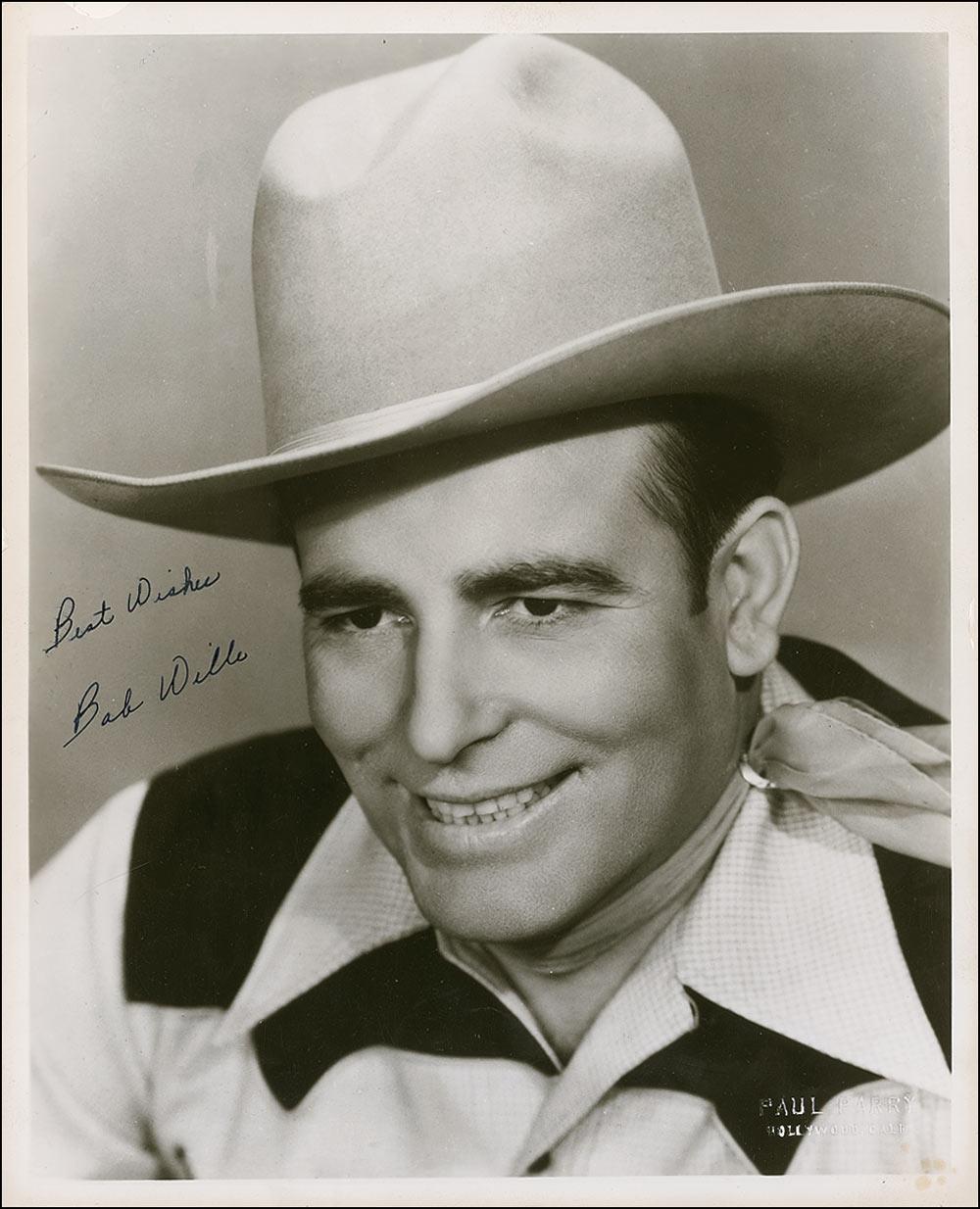
Bob Wills1930s–40s · Western swing / Country
At sixteen, Nelson helped his brother-in-law book Bob Wills — the western-swing bandleader whose Texas Playboys were the biggest act on the Texas dance-hall circuit — for a show in Whitney, Texas, and studied up close how Wills worked a room for hours without a lull. The lesson stuck. 'Bob Wills taught me how to be a bandleader and how to be a star,' Nelson wrote in his 1988 autobiography. 'He would hit the bandstand at 8 p.m. and stay for four hours without a break... I learned from him to keep the people moving and dancing.' Wills later became a friend, writing the liner notes to Nelson's second album.
listen: upstream & heresource: Newsweek — Willie Nelson, the Enduring Face of American Music (Bob Wills / Django Reinhardt) ↗
1950
Faded LoveBob Wills
1980
Faded LoveWillie Nelson
listen forWills's 1950 'Faded Love' rides a warm western-swing fiddle over walking bass, its steel guitar answering every vocal line — dance music built to never stop. Thirty years later Nelson and Ray Price cut the same song for their 1980 album San Antonio Rose, titled after another Wills standard, trading verses in tight harmony over a slower, steel-guitar-heavy arrangement that still leans on the swing chord voicings underneath. It reached No. 3 on the country charts — Nelson, the ex-teenage promoter, paying Wills back with a hit.
Frank Sinatra1950s · Traditional pop / Vocal jazz
Long before Nashville, young Willie and his older sister Bobbie sat by the radio learning Frank Sinatra songs together. 'He is and was my favorite singer,' Nelson said decades later. 'I like his phrasing, I like the choices of songs that he recorded.' The debt runs deeper than taste: a 1984 Frets Magazine profile noted that Nelson had adopted Sinatra's habit of singing 'off, or against, the beat,' so persistently that his early Nashville producers remixed his tapes trying to drag his voice back onto it. In 2018 Nelson repaid the influence outright with My Way, an eleven-song tribute to the singer he'd once idolized over the family's Philco radio.
listen: upstream & heresource: Garden & Gun — An Interview with Willie Nelson (Frank Sinatra influence) ↗
1969
My WayFrank Sinatra
2018
My WayWillie Nelson
listen forSinatra's 1969 'My Way' builds like a grand finale — strings swelling, his voice pushing dramatically ahead of the beat on the final verses, daring the band to catch up. Nelson's 2018 version strips that away entirely: just his weathered tenor, a small combo, and Trigger's nylon-string twang threaded through the arrangement. What survives is the rhythmic liberty — Nelson leans into phrases early or late, never quite where a straight reading would put them, the same push and pull he first picked up learning Sinatra songs with his sister as a kid.