walking upstream…
Buddy Holly


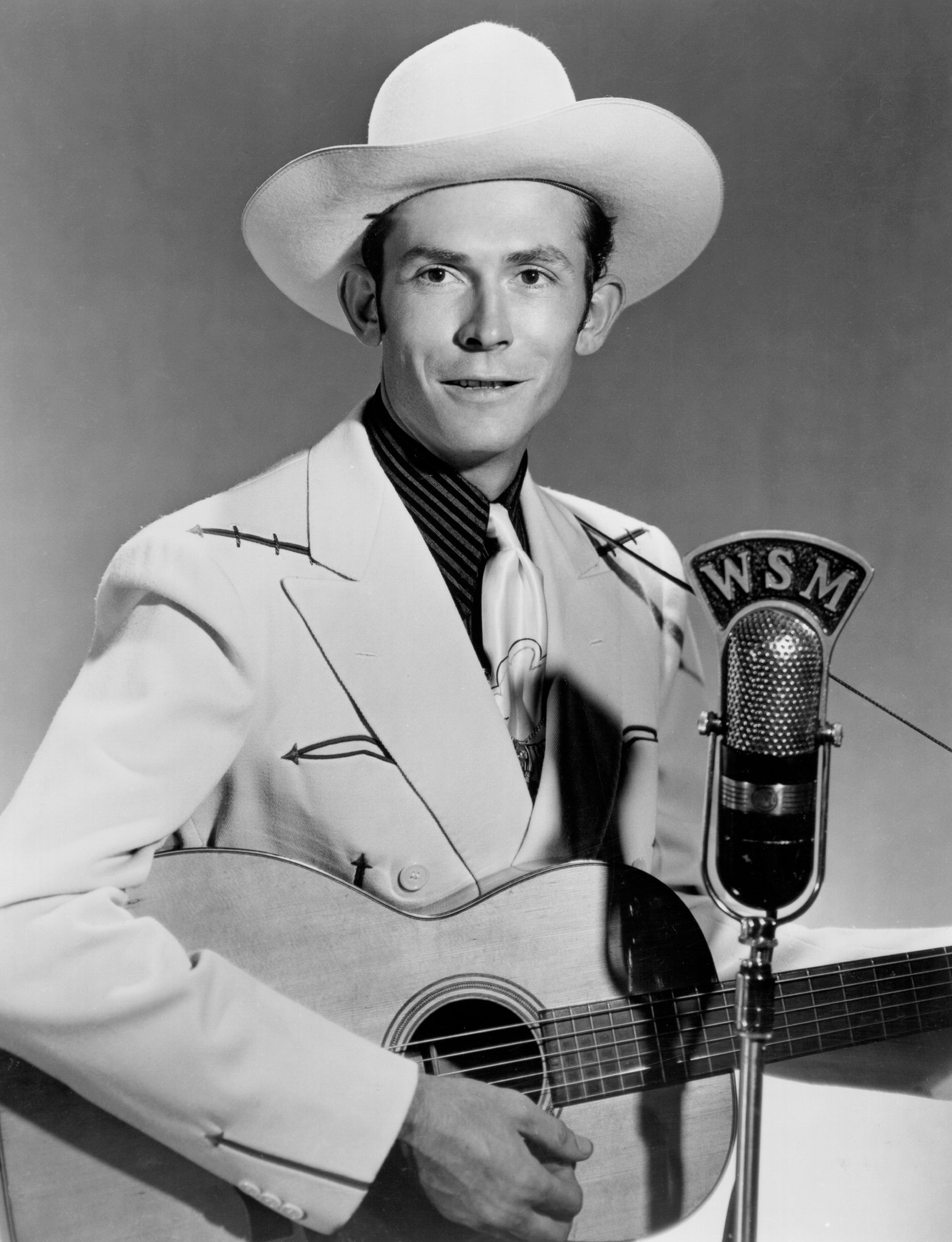
 photo: brunswick records · public domain ↗
Buddy Holly
sourcesRock & Roll Hall of Fame -- Buddy Holly (genre synthesis, "rock and roll as we know it wouldn't exist") · PowerPop blog -- Buddy Holly · Wikipedia -- Buddy Holly (biography, Elvis concerts, vocal hiccup, childhood country influences) · Wikipedia -- Hank Williams (career, artists he influenced) · Wikipedia -- Bo Diddley (career, Bo Diddley beat, artists he influenced)
Charles Hardin Holley was a Lubbock High School senior in February 1955 when he opened for Elvis Presley at the Fair Park Coliseum -- enough to convince him, he later told the Billboard columnist Ren Grevatt, that "without Elvis Presley none of us would have made it." The country music of his childhood didn't disappear; it fused with Presley's rhythm and the R&B records Holly chased at Nashville and Clovis recording sessions. By 1957, performing as Buddy Holly with the two-guitars-bass-drums lineup that became rock's standard band, he'd scored hits with "That'll Be the Day" and "Peggy Sue." He died in a plane crash near Clear Lake, Iowa, on February 3, 1959, at twenty-two -- a catalog built in barely three years, foundational enough that the Rock and Roll Hall of Fame later put it plainly: rock and roll as we know it wouldn't exist without him.
the sound in question
1957
That'll Be the DayBuddy Holly
walk the tributaries ↓
Elvis Presley1950s–70s · Rock and roll / Rockabilly / Pop / Gospel
In February 1955, a Lubbock High School senior still gigging on the side, Holly opened for a rising Memphis singer at the Fair Park Coliseum, then again that April and June. "Presley just blew Buddy away," his guitarist Sonny Curtis remembered -- "after seeing Elvis, Buddy had only one way to go." Holly said the same thing himself, years later, telling Billboard's Ren Grevatt, "Without Elvis Presley none of us would have made it." What he carried home was a genre shift and one specific trick: the syllable-splitting vocal hiccup Presley used onstage, folded into Holly's own singing within two years.
listen: upstream & heresource: Kin of Rock and Roll -- Buddy Holly and Elvis Presley (Sonny Curtis and Buddy Holly's own Ren Grevatt quote) ↗
1955
Baby, Let's Play HouseElvis Presley
1957
Peggy SueBuddy Holly
listen forElvis's 1955 "Baby, Let's Play House" breaks its opening word into a stutter -- "ba-by, ba-by" -- a glottal catch that reads as pure adrenaline. Holly's "Peggy Sue," cut two years later, does the identical trick to its own two-syllable name, hiccupping through nearly every line until the name becomes the song's rhythm instrument, not just its subject. Listen for the moment each singer stops singing through a word and starts syncopating on it -- Presley's is rawer, Holly's more deliberate, but it's the same maneuver.
Bo Diddley1950s · Rock and roll / Rhythm and blues
By December 1956, chasing a rockabilly sound Decca had already passed on, Holly and drummer Jerry Allison drove to Norman Petty's studio in Clovis, New Mexico, and cut a session built on borrowed material: a straight cover of Bo Diddley's own 1955 single, note for note, plus one more R&B cover for the flip side. Wikipedia's entry on Diddley credits him with influencing "many artists, including Buddy Holly, the Beatles, the Rolling Stones, the Animals" -- a claim this session backs up directly. The Diddley cover sat unreleased until 1963, when it became a UK top-five hit four years after Holly's death.
listen: upstream & heresource: Wikipedia -- Bo Diddley (song) (1955 single, chart history) ↗
1955
Bo DiddleyBo Diddley
1956
Bo DiddleyBuddy Holly
listen forDiddley's 1955 original rides his own signature beat -- a chugging, off-kilter rhythm pushing hard against the downbeat instead of sitting on it -- under a guitar thick with tremolo. Holly's cover keeps that same lurching pulse almost untouched, but strips away the tremolo shimmer for a drier, more percussive strum, and pitches his own voice higher and thinner against it than Diddley's low growl. The rhythm carries over intact; only the color changes.
Hank Williams1940s-50s · Country / Honky-tonk
Long before Holly stood on a stage with Elvis, he and his friend Bob Montgomery were parked by the radio for the Grand Ole Opry and the Louisiana Hayride, absorbing the same short list of names biographers cite for his childhood ear: Hank Williams above Jimmie Rodgers, Bill Monroe, and the Carter Family. The debt may run deeper than taste -- biographer John Gribbin argues Holly was fascinated by Williams's own semi-yodeling vocal break and set out to copy it, tracing Holly's famous hiccup back to Williams's records as much as to Presley's stage. Williams died in 1953, two years before Holly's first session.
listen: upstream & heresource: Vintage Rock -- Buddy Holly ↗
1949
Lovesick BluesHank Williams
1957
That'll Be the DayBuddy Holly
listen forWilliams's 1949 "Lovesick Blues" rides its yodeling break on "lovesick" -- the word splits in two, the pitch lurching up between syllables, half-comic and half-desperate. Holly's "That'll Be the Day," eight years later, does a version of the same split on its own title phrase, the word "day" catching and doubling on the way down. Neither singer is simply sustaining a note; both interrupt it mid-word, then let the interruption become the hook. The vocabulary is the same, even if the backing has swapped fiddle for electric guitar.