walking upstream…
The Shadows


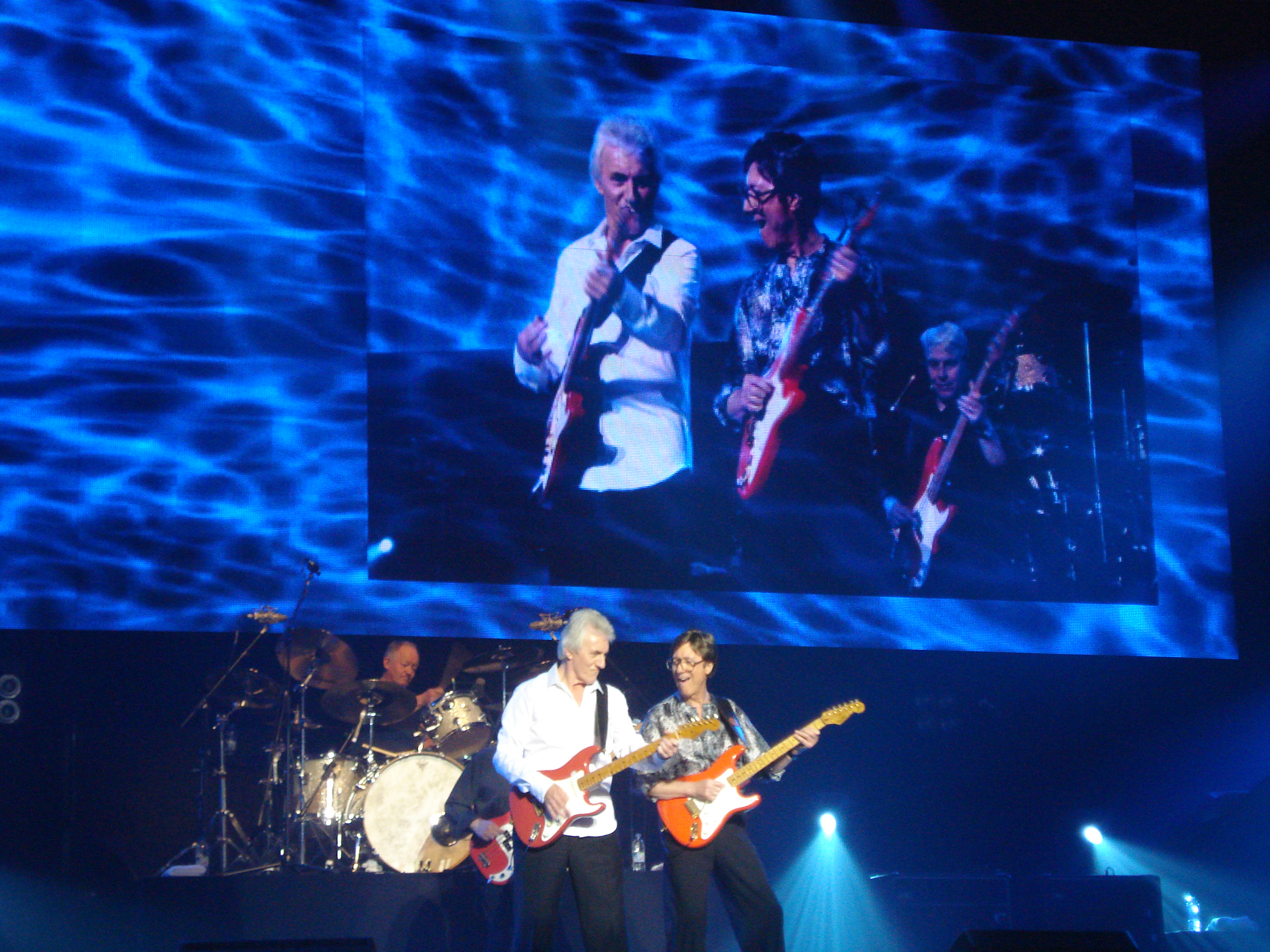 photo: jpmawet · cc by-sa 3.0 ↗
The Shadows
sourcesWikipedia -- The Shadows
Formed in London in 1958 as a backing group -- first for Cliff Richard, later on their own -- the Shadows, anchored by Hank Marvin's clean, tremolo-picked lead guitar, turned wordless instrumentals into some of the biggest hits of the pre-Beatles British charts, starting with 1960's chart-topping "Apache." Marvin's tone, built on a Fender Stratocaster and tape echo, became the default sound of British guitar pop for half a decade and a direct model for a generation of teenage guitarists on both sides of the Atlantic, Neil Young among them.
the sound in question
1960
ApacheThe Shadows
walk the tributaries ↓
Buddy Holly1950s · Rock and roll / Rockabilly / Pop
Marvin has cited Buddy Holly among his earliest models, down to adopting Holly's dark-rimmed glasses as part of his own image, and the group came up playing rock and roll shuffle numbers descended from the clean, uncluttered guitar-and-rhythm sound of Holly and the Crickets.
listen: upstream & heresource: Vintage Guitar -- Hank Marvin on Chet Atkins, Buddy Holly, and his early guitar influences ↗
1957
That'll Be the DayBuddy Holly
1961
ShadoogieThe Shadows
listen forListen to the driving, straightforward rock-and-roll shuffle rhythm under "Shadoogie" -- it's the same uncomplicated backbeat-and-boogie feel as Holly and the Crickets, just recast as a guitar-instrumental showcase instead of a vocal number.
Chet Atkins1950s–60s · Country / Nashville Sound / Instrumental
Marvin has said he bought a Gretsch Country Gentleman in 1961 specifically hoping it would help him sound like Chet Atkins' fingerpicked "Nashville sound"; he found he couldn't play in Atkins' style, but the clean, melodic, chord-shaped lead lines Atkins pioneered on records like "Mr. Sandman" fed directly into the Shadows' own uncluttered, melody-first approach to instrumental guitar pop.
listen: upstream & heresource: Vintage Guitar -- Hank Marvin on Chet Atkins, Buddy Holly, and his early guitar influences ↗
1954
Mr. SandmanChet Atkins
1962
Wonderful LandThe Shadows
listen forListen for the clean, melody-first guitar lines on "Wonderful Land" -- the tune is carried by simple, singable chordal movement rather than blues licks, the same melodic-guitar-as-lead-instrument idea Atkins had already proven commercial on "Mr. Sandman."
Duane Eddy1950s · Instrumental rock / Rockabilly
The Shadows came up in the twang-instrumental boom Duane Eddy kicked off in the US with low-string, heavily echoed hits like "Rebel Rouser," and Marvin has acknowledged Eddy as a formative influence on the group's early instrumental sound, alongside contemporaries like the Ventures.
listen: upstream & here
1958
Rebel RouserDuane Eddy
1961
F.B.I.The Shadows
listen forThe tremolo-picked, heavily echoed low-string melody line on "F.B.I." sits in the same "twang" register Eddy had already popularized -- the guitar as a melodic, echo-drenched voice rather than a rhythm instrument.