walking upstream…
Bo Diddley


sourcesLibrary of Congress National Recording Registry — Ed Komara, "'Bo Diddley' and 'I'm a Man' (1955)" (session history, the Hoochie Coochie Man/Mannish Boy link) · INDY Week — Grant Britt, "Diddlin' with the beat" (2005; second independent telling of the Gene Autry beat-origin story) · Perfect Sound Forever — Bob Gersztyn interview (2006; "rhythm fanatic" self-description) · Wikipedia — Bo Diddley
In a Manhattan hotel room in 2005, Bo Diddley's cell phone slipped and hit the carpet. "You got to get yourself some Velcro," he told the reporter, already fixing the problem no one asked him to fix. He was born Ellas Otha Bates in McComb, Mississippi in 1928, raised by a cousin in Chicago, and busking on electric guitar with a homemade tremolo a decade before Chess Records ever heard him. On March 2, 1955, he cut "Bo Diddley" and "I'm a Man" in one session; the single hit number one on the R&B chart and gave rock and roll a beat named after him. He built his own square guitar, ran it through a blown Silvertone speaker for a sound he never planned, and stayed onstage into his seventies, unrepeatable by design.
the sound in question
1955
I'm a ManBo Diddley
walk the tributaries ↓
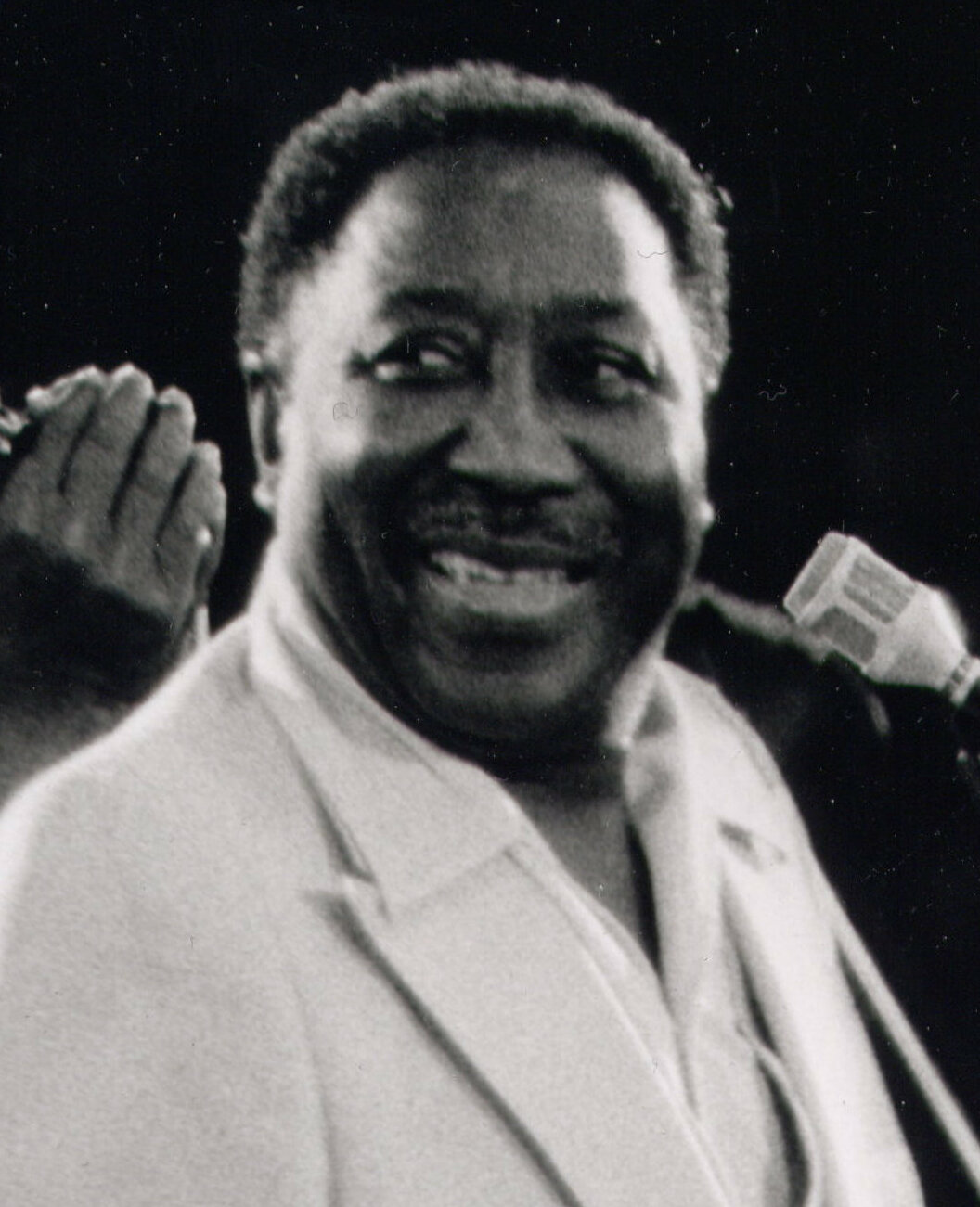
Muddy Waters1950s · Chicago blues / Electric blues / Delta blues
In March 1955, cutting his breakout single for Chess's Checker label, Diddley built "I'm a Man" straight off his labelmate's blueprint. "I'm A Man" is sung "to the recitative verse phrases of Muddy Waters' 1954 Chess hit 'Hoochie Coochie Man,'" the Library of Congress's own account of the session records — and Willie Dixon, who wrote Waters' song, played bass on Diddley's take. It reportedly took some thirty tries to nail the cadence of spelling "M-A-N." The record hit hard enough that Waters answered it two months later with "Mannish Boy."
listen: upstream & here
1954
(I'm Your) Hoochie Coochie ManMuddy Waters
1955
I'm a ManBo Diddley
listen forPlay Waters' "Hoochie Coochie Man" first: a talked-more-than-sung boast punctuated by a stabbing guitar-and-harmonica riff that answers each line. Then Diddley's "I'm a Man": the same call-and-response cadence and first-person brag, but chanted over Jerome Green's maracas instead of a full blues band, with the title itself turned into a chorus — Diddley spells "M-A-N" out letter by letter until the boast becomes its own drumbeat.
John Lee Hooker1950s · Delta blues / Electric blues / Boogie
Rolling Stone's profile of Diddley records the plain fact of how he came to hold a guitar at all: he "added guitar to his repertoire at age twelve after hearing John Lee Hooker," then talked his stepsister into buying him one for Christmas. Hooker's droning, one-chord hypnosis stuck; Diddley never chased scales. "I'm a rhythm fanatic," he told one interviewer decades later. "I'm not a watcha call a finger fanatic, that you do a lot of little fast picking and stuff, I can't do that but can do that rhythm that'll make you undress."
listen: upstream & heresource: Rolling Stone — Neil Strauss, "The Indestructible Beat of Bo Diddley" (2005 profile; Velcro anecdote, church-beat origin story, John Lee Hooker/guitar origin) ↗
1948
Boogie Chillen'John Lee Hooker
1955
Bo DiddleyBo Diddley
listen forCue Hooker's "Boogie Chillen'": one chord, stomped and repeated until it turns hypnotic, with no bridge or change to relieve it. Then Diddley's own "Bo Diddley": the chord changes are still gone, but the drone has turned propulsive rather than loping — Jerome Green's maracas and a full backbeat push Hooker's front-porch trance toward the dancefloor, the same one-chord logic aimed at a different room.
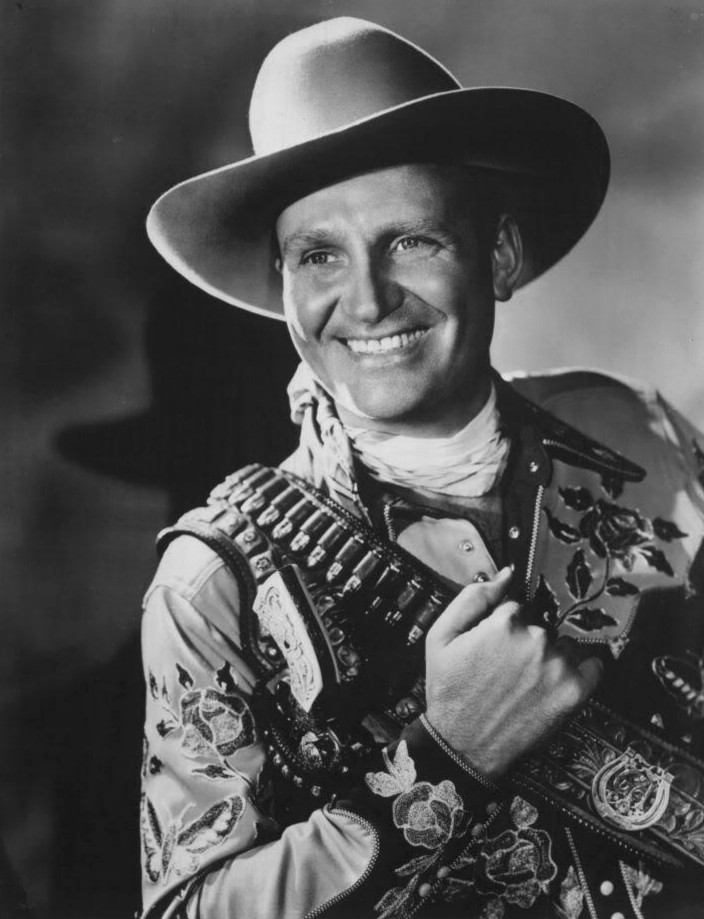
Gene Autry1930s–40s · Country / Western / Singing cowboy
Twice, in interviews years apart, Diddley pinned his signature rhythm to the same specific failure: fumbling his way through Gene Autry's 1942 hit "(I've Got Spurs That) Jingle Jangle Jingle" at fifteen. "I was trying to play, 'I've got spurs that jingle, jangle, jingle' by Gene Autry," he told one paper, then credited his teenage drummer for the payoff: "And I put the drums to it by Clifton James. He's the original drummer." A second, independently published interview corroborates the story almost word for word. Elsewhere, though, Diddley traced the same rhythm to tambourines overheard in a sanctified church — his own two accounts never agree.
listen: upstream & heresource: Mark Guarino — "Bo Diddley" (Chicago Daily Herald profile; Gene Autry beat-origin story, Silvertone speaker/showmanship quotes) ↗
1942
(I've Got Spurs That) Jingle Jangle JingleGene Autry
1957
Hey! Bo DiddleyBo Diddley
listen forListen to how Autry hurries his title line — spurs-that-jingle-jangle-jingle — into a bouncy patter that trips just ahead of the beat. That stumbling push is the closest audible thread to what Diddley described chasing on "Bo Diddley," slowed into a hypnotic vamp and driven by Green's maracas instead of Autry's studio band. The resemblance is looser than a cover; it's closer to a rhythm half-remembered and rebuilt from scratch.