walking upstream…
The Who
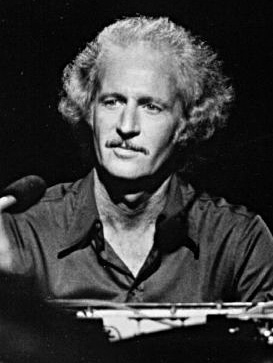


sourcesThe Tapes Archive — Pete Townshend 1996 interview (the composite-songwriting account of My Generation) · electronic book review — "Playing the Blues" (confirms the Who's cover of Bo Diddley's "I'm a Man" on their debut LP) · GuitarPlayer.com — Townshend and Richards on the origin of the windmill (2012 Letterman interview + Guitar Player, 1983) · Encyclopedia.com — The Who (Gale, Contemporary Musicians; formation history and stage-antics reputation) · Rolling Stone — 100 Greatest Artists
In late 1963, a jobbing drummer sat in for two sets with a struggling South London covers band at the Oldfield Hotel in Greenford. Keith Moon fit; the band, then playing under the name the High Numbers, became the Who within the year, joining guitarist and songwriter Pete Townshend, singer Roger Daltrey, and bassist John Entwistle. Rolling Stone later put it plainly: "The Who began as spectacle. They became spectacular." Townshend's guitar-smashing and Daltrey's whipped microphone cord built the legend before the songs did; the arena-scale ambition of Tommy and Quadrophenia came later. Underneath the demolition, though, was a band assembled by close listening — to blues, jazz, and R&B records most of their mod audience had never heard, filtered until they sounded like nobody else.
the sound in question
1965
My GenerationThe Who
walk the tributaries ↓
Mose Allison1950s–60s · Jazz / Blues
Townshend has never hedged on this one. Describing Mose Allison's 1957 "Young Man's Blues" — a talking-blues complaint that the old men got the respect and the young had to stand back — he told a documentary crew: "Without hearing that song, I don't think I would've written 'My Generation.'" He then sang the connection himself: "People try to put us down... Talkin' 'bout my generation." "You know," he added, "it was very Mose influenced." The Who later cut a full cover of the song, "Young Man Blues," a fixture of their 1968–70 live sets and Live at Leeds.
listen: upstream & heresource: National Endowment for the Arts — Pete Townshend on Mose Allison's "Young Man Blues" (Townshend's own testimony on My Generation's origin) ↗
1957
Young Man's BluesMose Allison
1965
My GenerationThe Who
listen forPlay Allison's laconic, half-sung "Young Man's Blues" against "My Generation" and listen for the same clipped, talking cadence underneath the anger: Allison drawls his complaint over a loping jazz shuffle, while Daltrey barks his in short, stuttering bursts over Entwistle's driving bass and Moon's crashing fills. It's the same defiant stance — the young talking back to the old — pushed out of a smoky jazz club and into a three-minute rock single.
Bo Diddley1950s · Rock and roll / Rhythm and blues
In a 1996 interview, Townshend named him outright among the ingredients he stitched into "My Generation" — "a bit of Bo Diddley," alongside Dylan and the Beach Boys, part of a composite built to win over his own bandmates as much as the marketplace. The debt runs deeper than a name-check: the Who's 1965 debut album, also called My Generation, includes a full cover of Diddley's stomping "I'm a Man." Writer Ned Sublette later traced another signature Townshend move, the pick-scrape down the wound low string, directly to Diddley's 1960 "Road Runner."
listen: upstream & heresource: Smithsonian Magazine — "Who Do You Love?" (Ned Sublette on the Townshend pick-scrape traced to Bo Diddley's "Road Runner") ↗
1955
I'm a ManBo Diddley
1965
I'm a ManThe Who
listen forSet Diddley's 1955 "I'm a Man" against the Who's cover from My Generation: both hammer a single chord and a boastful, spelled-out declaration instead of a melody, the song built from rhythm and repetition rather than chord changes. The Who play it faster and rougher, Moon crashing where Diddley's shuffle stayed lean, but the hypnotic one-chord stomp Diddley invented survives the trip intact.
Keith Richards1960s–70s · Rock / Rhythm and Blues / Blues Rock
In 1964, the Who supported the Rolling Stones on a bill built around the Stones' one hit, a Chuck Berry cover called "Come On." Backstage, Townshend was struck by how Keith Richards played it: "As the curtain opened, Keith Richards is doing this," he told David Letterman, demonstrating the windmilling arm swing. Weeks later, watching for it again, he saw nothing — Richards had dropped it. When Townshend finally asked why, Richards later admitted in Guitar Player: "I don't recall doing it, but I guess if he says so, he did." Townshend kept the move and made it his own.
listen: upstream & heresource: GuitarPlayer.com — Townshend on Keith Richards and rhythm guitar (Sound International, 1980) ↗
1965
(I Can't Get No) SatisfactionKeith Richards
1969
Pinball WizardThe Who
listen forTownshend was explicit about the specific debt: "I think my biggest influence in that area was Keith Richards," he said of his rhythm playing in 1980. "It's a physical thing, it's like a dancing thing. There's a strong syncopation element in it." Play the Stones' "Satisfaction" against the Who's "Pinball Wizard" for that at work: Richards' fuzz riff carries the whole record on rhythm alone, and Townshend's slashing chords do the same job louder, turning rhythm guitar into the lead instrument.