walking upstream…
Rush


sourcesGuitar Player, March 2006 — Lifeson on Townshend's influence via the Feedback song list; also Jimmy Page as his single biggest early influence · Modern Drummer, Sept 2002 — Neil Peart on modeling Vapor Trails drum parts on Keith Moon (backs The Who influence) · Neil Peart, Zildjian.com essay, Jan 2003 — Peart's own account of his early drum influences, including Keith Moon and Michael Giles · Guitar Player, June 1980 — Geddy Lee on Cream getting him into music and learning bass from Jack Bruce; Lifeson on painting his guitar to mimic Clapton's SG (backs Cream influence) · Guitar One, Sept/Oct 1996 — Alex Lifeson on playing Cream's "Spoonful" for twenty minutes as a teenager · Rush Vault reproduction of Neil Peart's Feedback liner notes — his pre-Rush band Momblin' Sumpthin' playing Cream's "Crossroads" · PROG, April 2013 — Alex Lifeson on John Rutsey's exit and the band's pivot toward progressive rock · Classic Rock/TeamRock, 2016 — Lifeson and Lee on the band's formation, Rutsey's departure, and hiring Neil Peart · Rhythm, March 1995 — Neil Peart · MusicRadar, 2017 — Neil Peart reiterates he was never a Buddy Rich fan despite organizing the Burning for Buddy tribute album
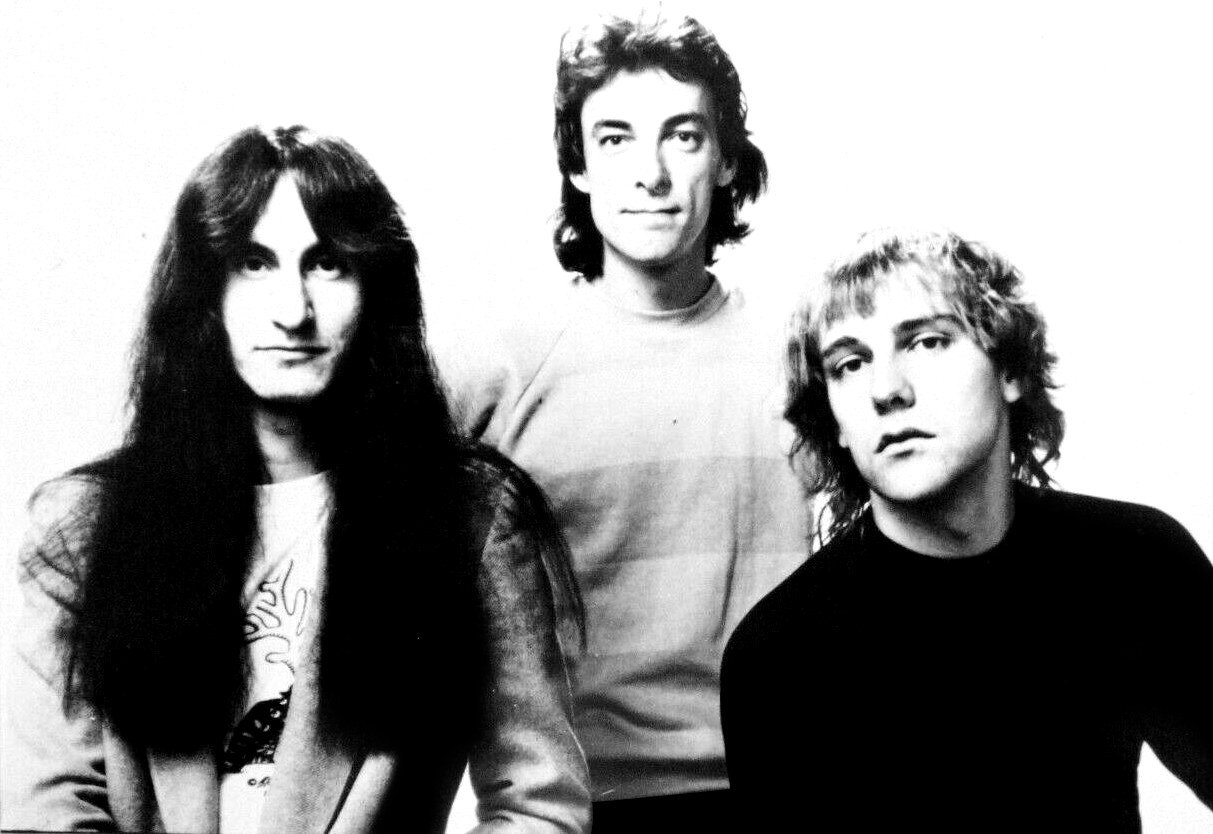
Alex Lifeson and Geddy Lee met as thirteen-year-olds in a Toronto junior high and spent their teens trading records — Cream, The Who, Led Zeppelin — note for note on borrowed amps. Rush, formed with drummer John Rutsey in September 1968, spent six years grinding through bars and high-school dances before their self-financed 1974 debut, straight blues-based hard rock modeled on those same heroes. Rutsey left that summer, unwilling to follow Lee and Lifeson toward the progressive rock they'd started craving; new drummer Neil Peart, hired days later, brought the literate, science-fiction lyricism and jazz-schooled chops that pushed Rush into side-long suites (2112, Hemispheres), then, by the 1980s, into tighter, synth-inflected hits like "Tom Sawyer." Three Toronto kids who never stopped chasing their own record collection became progressive rock's most technically fearsome band.
the sound in question
1981
Tom SawyerRush
walk the tributaries ↓
Led Zeppelin1970s · Hard rock / Blues rock
Bassist Geddy Lee and guitarist Alex Lifeson — still years from forming Rush's classic lineup, with founding drummer John Rutsey behind them — queued fifteen hours to see Led Zeppelin play Toronto in 1969. "They literally brought the house down," Lee later said; "we wanted to be them instantly." Lifeson went further, naming Zeppelin's riffing as the direct model for "Working Man," the grinding closer of Rush's blues-rock 1974 debut, alongside "an element of Black Sabbath" and a "Cream-inspired" solo.
listen: upstream & heresource: Louder — Geddy Lee recalls watching Led Zeppelin with Alex Lifeson in 1969 (backs the Led Zeppelin influence) ↗
1969
Communication BreakdownLed Zeppelin
1974
Working ManRush
listen forSet Zeppelin's "Communication Breakdown" next to "Working Man": both ride a chugging, relentlessly repeated riff at a similar breakneck tempo under a shouted, unpretty lead vocal. Rush just stretches the same blueprint past six minutes, adding an extended solo section that owes as much to Cream's improvising as to Zeppelin's attack — the sound of teenagers copying a record they couldn't quite play.
The Who1960s–70s · Rock / Hard Rock / Mod
The Who reached two different Rush members through two different instruments. Lifeson first heard "My Generation" in the basement of original drummer John Rutsey, and has called Pete Townshend one of his greatest influences: "more than any other guitarist, he taught me how to play rhythm guitar... particularly in a three-piece band." Separately, drummer Neil Peart, who joined after Rutsey's 1974 exit, has named Keith Moon "the total hero of my teenage years" and said he consciously played certain 2002 Vapor Trails parts "the Keith Moon way."
listen: upstream & heresource: Guitar World, July 2006 — Alex Lifeson on Pete Townshend teaching him rhythm guitar, first heard at John Rutsey's house (backs The Who influence) ↗
1970
The SeekerThe Who
2004
The SeekerRush
listen forRush's own 2004 covers EP Feedback settles the guitar side directly: on "The Seeker," Lifeson's chording fills the same rhythmic gaps Townshend's does on the 1970 original, the exact lesson he says he absorbed about playing rhythm guitar in a trio. The drumming side is one instrument removed — listen for the same busy, cymbal-heavy attack on Moon's Tommy-era playing and on Peart's own post-2002 fills, rather than in this specific pair.
Cream1960s · Blues rock / Psychedelic rock
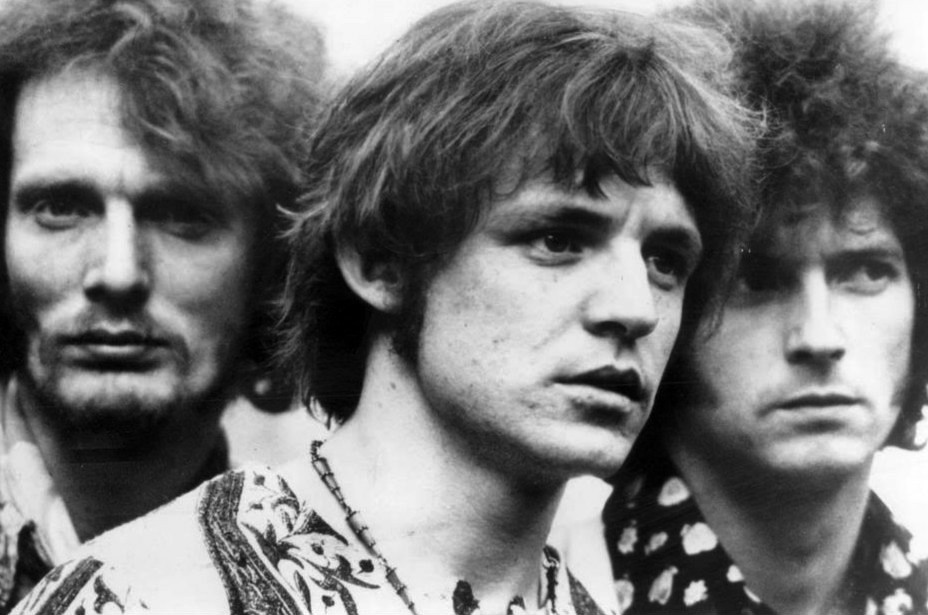
"Cream was actually the first band that really got me interested," Geddy Lee has said — he learned bass by imitating Jack Bruce off the record player. Lifeson corroborates the same period down to a detail: teenage Lee and Lifeson each hand-painted a cheap solidbody to look like Eric Clapton's psychedelic Gibson SG. Neil Peart's own liner notes to Feedback add a third thread: his pre-Rush band, Momblin' Sumpthin' — named for a L'il Abner comic strip — played Cream's "Crossroads" in the mid-1960s, years before Lee and Lifeson put the same song into Rush's earliest sets.
listen: upstream & heresource: Classic Rock, Dec 2004 (transcript) — Alex Lifeson on the "Working Man" riff and its Led Zeppelin/Sabbath/Cream influences ↗
1968
CrossroadsCream
2004
CrossroadsRush
listen forCream's live "Crossroads," from Wheels of Fire, is the template for a power trio stretching a blues riff into extended, interlocking improvisation with no second guitarist to hide behind. Rush's 2004 studio cover on Feedback keeps that arrangement essentially intact, Lifeson mirroring Clapton's call-and-response lines almost note for note — three decades after all three members had separately already played the song.