walking upstream…
Cream


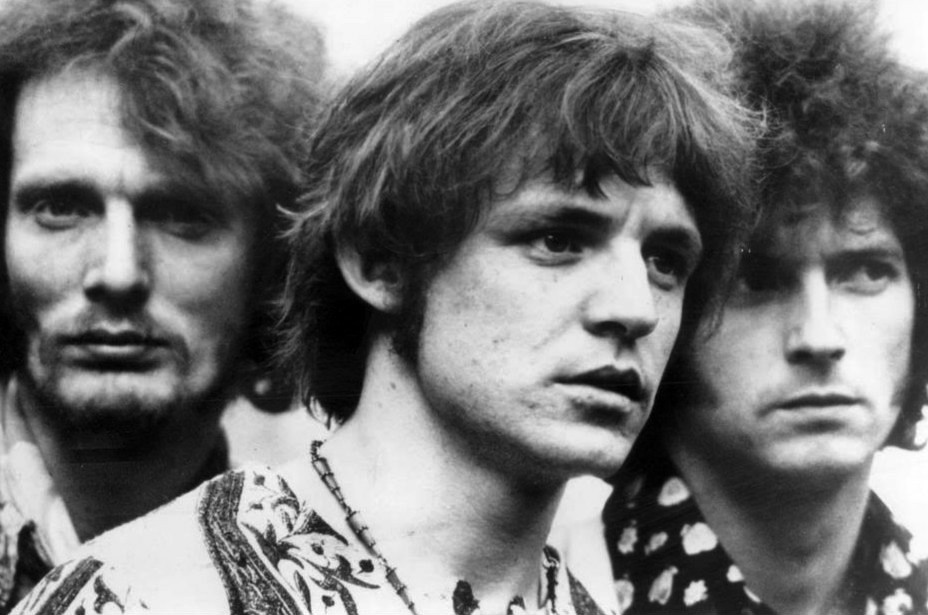
sourcesWikipedia — Spoonful (quotes AllMusic's Stephen Thomas Erlewine on Cream's 1966 cover) · DownBeat — How Jack Bruce built his jazz and blues bona fides (discovering Mingus; bass-as-lead-voice philosophy) · Forbes — Cream legend Jack Bruce, the complete interview (1997 interview naming Mingus and Scott LaFaro) · Wikipedia — Wheels of Fire (Crossroads recording date/venue)
Cream formed in London in July 1966, when Eric Clapton — fresh off stints with the Yardbirds and John Mayall's Bluesbreakers — joined bassist-vocalist Jack Bruce and drummer Ginger Baker, two jazz players who'd already clashed in other bands over tempo and volume. Clapton brought a decade's devotion to Delta and Chicago blues; Bruce brought the conviction, learned from jazz, that a bass could compose as well as accompany; Baker brought a similarly restless sense of rhythm. Fresh Cream (1966) leaned on blues covers to announce the trio's debts. By Wheels of Fire (1968), recorded partly live at San Francisco's Winterland, those same covers had become vehicles for extended improvisation at a volume nobody had tried before. The band split within two years, but the format outlived it: three virtuosos, blues roots, arena scale.
the sound in question
1968
White RoomCream
walk the tributaries ↓
Robert Johnson1930s · Delta blues / Blues
Clapton was still a teenager when he first put Robert Johnson's records on a turntable, and by his own account the encounter never resolved into ordinary listening. "Robert Johnson wasn't entertainment," he said of that first hearing. "When I first heard him I had a very hard time listening to him, because it demanded something of me." What it demanded, years later, was tribute: Cream built their live sets toward "Crossroads," Johnson's own song about a bargain struck at a rural intersection, turned into the showcase for the very guitar playing Johnson had first taught Clapton to fear.
listen: upstream & heresource: MusicRadar — Eric Clapton on Robert Johnson (formative shock of first hearing him) ↗
1936
Cross Road BluesRobert Johnson
1968
CrossroadsCream
listen forJohnson's original is one voice and one guitar trading lines with no drummer to referee — the guitar answers every vocal phrase like a second speaker arguing back. Cream's live "Crossroads" keeps that same call-and-response shape and Johnson's turnaround riff intact, but triples the tempo and lets Bruce's bass and Baker's cymbals push underneath while Clapton's answering phrase swells into the extended solo the recording is famous for — the same conversation Johnson started, now played at rock-and-roll volume.
Howlin' Wolf1950s–60s · Chicago blues / Electric blues / Delta blues
Clapton named him among the handful of things he'd later call sacred: describing his years before sobriety, he wrote that he "found my God in music and the arts, with writers like Hermann Hesse, and musicians like Muddy Waters, Howlin' Wolf, and Little Walter." The debt showed up on record well before it showed up in prose — the first song Cream ever cut for Fresh Cream was Wolf's "Spoonful," the Willie Dixon number Wolf had turned into a slow, hypnotic obsession, stretched by the trio until it barely resembled a three-minute single.
listen: upstream & heresource: Guvna Guitars — Eric Clapton quotes (Clapton ↗
1960
SpoonfulHowlin' Wolf
1966
SpoonfulCream
listen forWolf's "Spoonful" is patient to the point of menace: one riff repeated under a vocal that never raises its volume, daring the listener to lose interest first. Cream keep that same riff and its obsessive repetition, but push Bruce's harmonica and vocal harder while Clapton answers every line with fuzzed, echoing guitar — one critic later wrote that the results pointed "strongly toward the guitar worship of heavy metal," the same hypnotic groove, now brought to a boil.
Charles Mingus1950s–60s · Jazz / Hard bop / Third stream
Jack Bruce was eighteen, working at an American air base in Italy, when a fellow serviceman pulled a record off the shelf and told him he had to hear it: Charles Mingus. "That changed the direction of my thinking," Bruce said, "because he became the person that I wanted to emulate" — not just as a bass player but as a composer who worked through the instrument. When Cream formed around Clapton's blues devotion, Bruce carried that lesson in with him: "He played the bass in the same way that I see the bass in my hands: as an adjunct of myself, not as an instrument."
listen: upstream & here
1959
Better Git It in Your SoulCharles Mingus
1967
Sunshine of Your LoveCream
listen forOn "Better Git It in Your Soul," Mingus's bass doesn't sit under the horns keeping time — it walks, shouts, and talks back, a second lead voice inside a gospel-shout arrangement. "Sunshine of Your Love" asks a rock trio to do the same thing: the song's whole hook is Bruce's descending bass riff, doubled by Clapton's guitar, carrying the melody a rhythm section would usually leave to somebody else. Notice which instrument you're still humming afterward — on both tracks, it's the bass.