walking upstream…
Charles Mingus


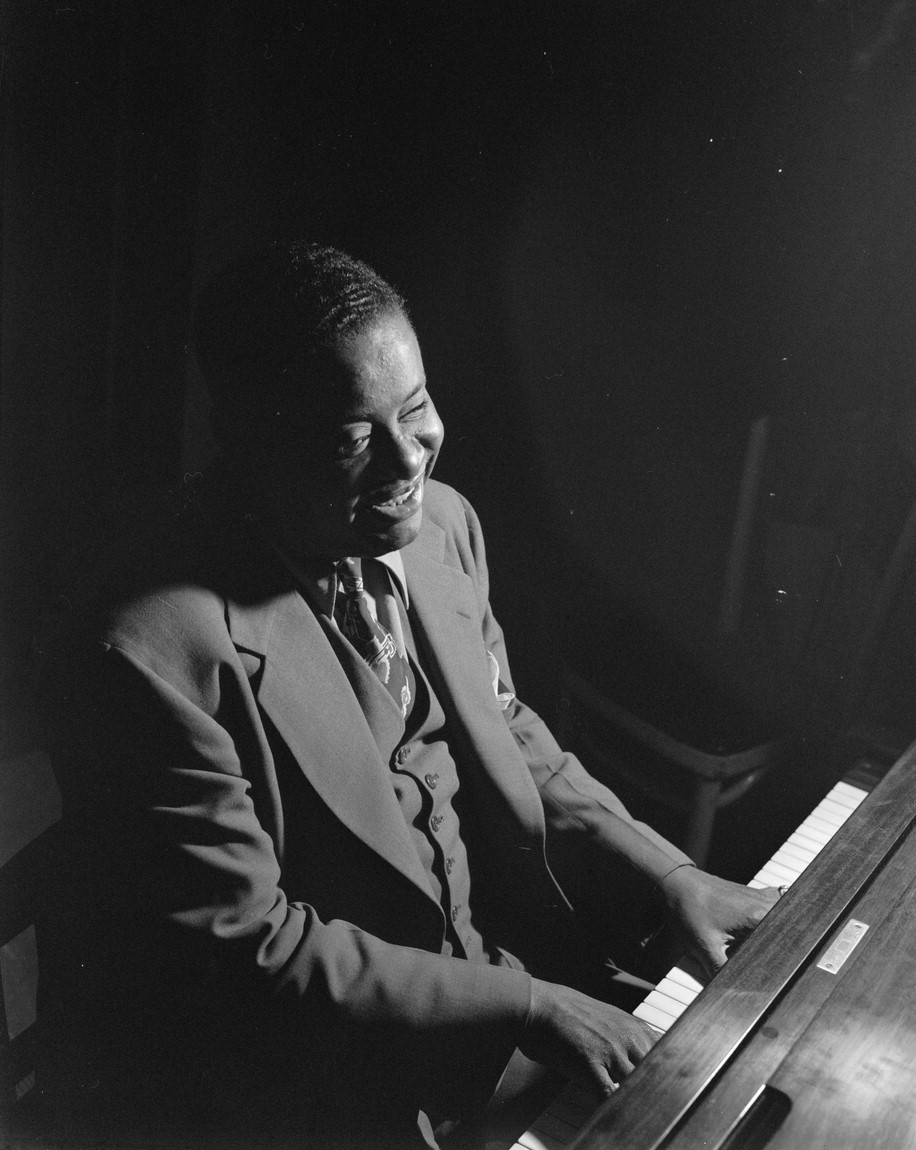
 photo: tom marcello (cropped by emdee) · cc by-sa 2.0 ↗
Charles Mingus
sourcesCharles Mingus official website — Mingus Biography (childhood, Ellington on the radio, career timeline) · Down Beat — Blindfold Test · Charles Mingus — "What Is a Jazz Composer?", liner notes to Let My Children Hear Music, 1971 (Parker and Tatum in Mingus's own words) · The Nation — Adam Shatz, "An Argument With Instruments · NPR Jazz Profiles — "Charles Mingus · Wikipedia — Charles Mingus (biographical facts, genre summary)
Charles Mingus Jr. was born in 1922 on an Army base in Nogales, Arizona, and raised in Watts, where his stepmother allowed only church music in the house — until an eight-year-old Mingus found Duke Ellington's orchestra on the radio and fell for a sound she hadn't approved. He trained formally on bass for five years, worked Los Angeles's Central Avenue scene as a teenager, and by 1953 had played Toronto's Massey Hall alongside Charlie Parker and been personally fired from Ellington's own band after a backstage knife fight with a trombonist. As a bandleader he taught his "Jazz Workshop" by ear rather than by chart, chasing spontaneity over notation. Diagnosed with ALS in 1977, he kept composing into a tape recorder until his death in 1979. His records collapse church, blues, bebop and classical composition into a single, combustible argument.
the sound in question
1959
Goodbye Pork Pie HatCharles Mingus
walk the tributaries ↓
Duke Ellington1930s–40s · Jazz / Big band
Mamie Carson, Mingus's stepmother, allowed only church music in the house, so the boy caught Duke Ellington's orchestra the way you catch a secret: over the radio, at eight years old. His own biography records that his earliest influences came from the church and from "hearing Duke Ellington over the radio" at that age, and he never outgrew it — he took the stage name Baron Mingus, and in 1953 won a chair in Ellington's own band, only to be fired within weeks after a backstage fight with trombonist Juan Tizol. Nine years later he sat across from Ellington in the studio, playing bass on the bandleader's own songbook.
listen: upstream & here
1933
Sophisticated LadyDuke Ellington
1964
Sophisticated Lady (live, The Great Concert of Charles Mingus)Charles Mingus
listen forEllington's 1933 studio recording of "Sophisticated Lady" is built on his own richly voiced reed-section harmony under a plain, unhurried melody — the tune barely needs a soloist. Thirty-one years later, at a Paris concert, Mingus's band plays it straight, no rewrite, Mingus himself on bass beneath the same melody — a rare case of Mingus performing another composer's material note-for-note rather than absorbing it into an original. Listen for how little he alters: the tribute is in the fidelity, not the reinvention.
Charlie Parker1940s · Bebop / Jazz
Mingus resisted bebop when he first heard Parker play at Billy Berg's club in Los Angeles in the mid-1940s, but he came around completely: in his 1971 liner-note essay he called Parker "the greatest genius of all to me because he changed the whole era around." On May 15, 1953, he played bass behind Parker himself at Toronto's Massey Hall — the last recorded meeting of Parker and Dizzy Gillespie — and co-founded Debut Records with drummer Max Roach just to release the tape. After Parker's death in 1955, Mingus wrote five tribute compositions, including "Reincarnation of a Lovebird."
listen: upstream & heresource: Charles Mingus official website — "Born on This Day ↗
1953
Salt Peanuts (live, Jazz at Massey Hall)Charlie Parker
1957
Reincarnation of a LovebirdCharles Mingus
listen forAt Massey Hall, Parker tears through "Salt Peanuts" at a sprint, Mingus's bass driving hard underneath him in real time — the closest the two ever got on record. Four years later, on "Reincarnation of a Lovebird," the tempo drops and the tune turns elegiac: a long, winding theme voiced by Mingus's horns that trades Parker's breakneck lines for something closer to a hymn. The connection isn't imitation — it's a bassist who once kept pace with Parker now writing him a eulogy.
Art Tatum1930s–40s · Jazz / Stride piano / Swing
Tatum wasn't just a hero from records — he was a personal acquaintance who vouched for Mingus's education, recommending the teacher Lloyd Reese and then, in Mingus's words, "When Art found out I was studying with Lloyd, he asked me to come and play for him." Mingus's own critical judgment of him was double-edged: in his 1971 essay he praised Tatum's harmonic reach while ranking him below Bud Powell and Parker as a melodic composer — Tatum, he wrote, worked "more in a chordal-structure sense" than a linear one. He still named a tribute composition after him: "A.T.F.W. (Art Tatum Fats Waller)."
listen: upstream & here
1933
Tiger RagArt Tatum
1964
A.T.F.W. (Art Tatum Fats Waller) (live, The Great Concert of Charles Mingus)Charles Mingus
listen forTatum's 1933 "Tiger Rag" is a torrent of reharmonized runs, stacking chord substitutions under a tune simple enough for a rent party — closer to harmonic architecture than melody, exactly the distinction Mingus drew between him and Bud Powell. On "A.T.F.W.," Mingus's pianist Jaki Byard channels that same density: rapid-fire voicings crowding a stride left hand, honoring Tatum's harmonic sprawl inside Mingus's own working band rather than Mingus's own hands.