walking upstream…
Charlie Parker

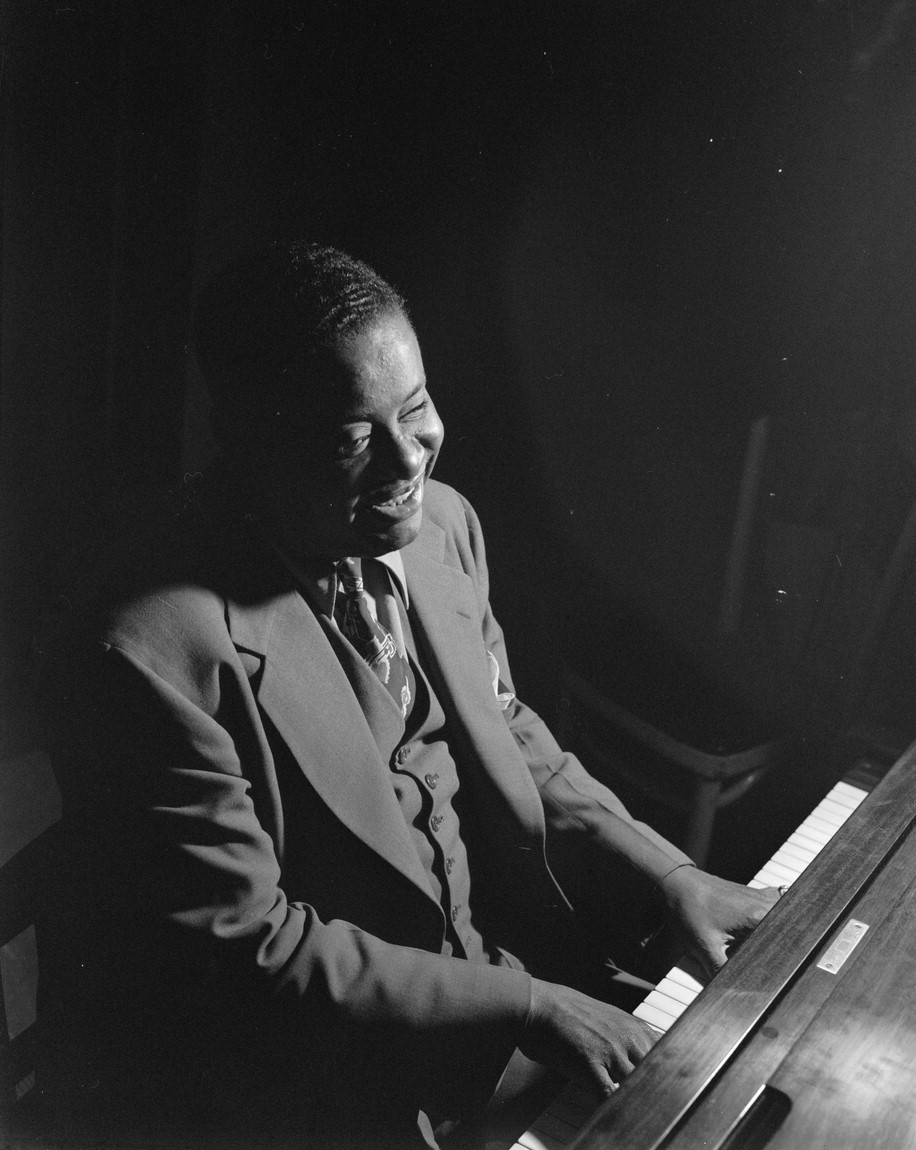

 photo: william p. gottlieb · public domain ↗
Charlie Parker
sourcesWikipedia2 · Library of Congress
Charlie Parker grew up in Kansas City in the 1930s, coming up through the city's blues-drenched dance bands — he woodshedded relentlessly and served an apprenticeship alongside alto player Buster Smith before heading east. In New York in the early 1940s, working after-hours jams and the Harlem club scene, he and trumpeter Dizzy Gillespie forged bebop: a music built on faster tempos, intricate melodic lines, and improvisation that spelled out a tune's underlying harmony rather than just its melody. His 1945 Savoy and Dial sides — 'Ko-Ko,' 'Now's the Time,' 'Ornithology' — became the founding documents of modern jazz, and his 1949 dates with a string orchestra showed a lyrical side to the same virtuosity. Nicknamed 'Bird,' he reshaped the vocabulary of jazz saxophone before his death in 1955 at thirty-four, and virtually every improviser who followed absorbed his phrasing.
the sound in question
1946
OrnithologyCharlie Parker
walk the tributaries ↓
Lester Young1930s–40s · Swing / Jazz
As a teenager in Kansas City, Parker famously studied Lester Young's recorded solos with the Count Basie band until he could play them from memory, and Young's light-toned, melody-first conception — long, singing, blues-rooted lines that flow across the bar rather than punching each beat — became the foundation of Parker's own phrasing.
listen: upstream & here
1945
These Foolish ThingsLester Young
1945
Now's the TimeCharlie Parker
listen forSet Young's ballad 'These Foolish Things' beside Parker's blues 'Now's the Time': both build their improvising out of relaxed, vocal-like melodic lines that lean into the swing rather than forcing it, favoring a story-telling flow of ideas over vertical, chord-by-chord display.
Art Tatum1930s–40s · Jazz / Stride piano / Swing
During a stint in New York, Parker worked washing dishes at a Harlem club where Art Tatum played, and he later pointed to Tatum's example — cascading runs, blistering velocity, and constant harmonic reharmonization — as something he wanted to bring to the saxophone.
listen: upstream & here
1933
Tiger RagArt Tatum
1949
Just FriendsCharlie Parker
listen forCue Tatum's virtuoso solo-piano 'Tiger Rag,' a torrent of fast arpeggiated runs and reharmonized turns, then Parker's 'Just Friends': listen for the rippling double-time flurries and ornamental substitutions that carry Tatum's keyboard fireworks onto the alto.
Coleman Hawkins1930s · Jazz / Swing
Hawkins established the model of a saxophonist who improvises on a tune's chord structure rather than merely embellishing its melody, and that harmonically driven approach — running the changes at speed — is the tradition Parker extended into bebop's dense, fast-moving lines.
listen: upstream & here
1939
Body and SoulColeman Hawkins
1945
Ko-KoCharlie Parker
listen forPlay Hawkins's 'Body and Soul,' where the solo moves through the song's harmony while barely stating the original tune, then Parker's 'Ko-Ko': both treat the chord progression itself as the material to be improvised on, spelling out each passing harmony instead of decorating a melody.