walking upstream…
Dream Theater
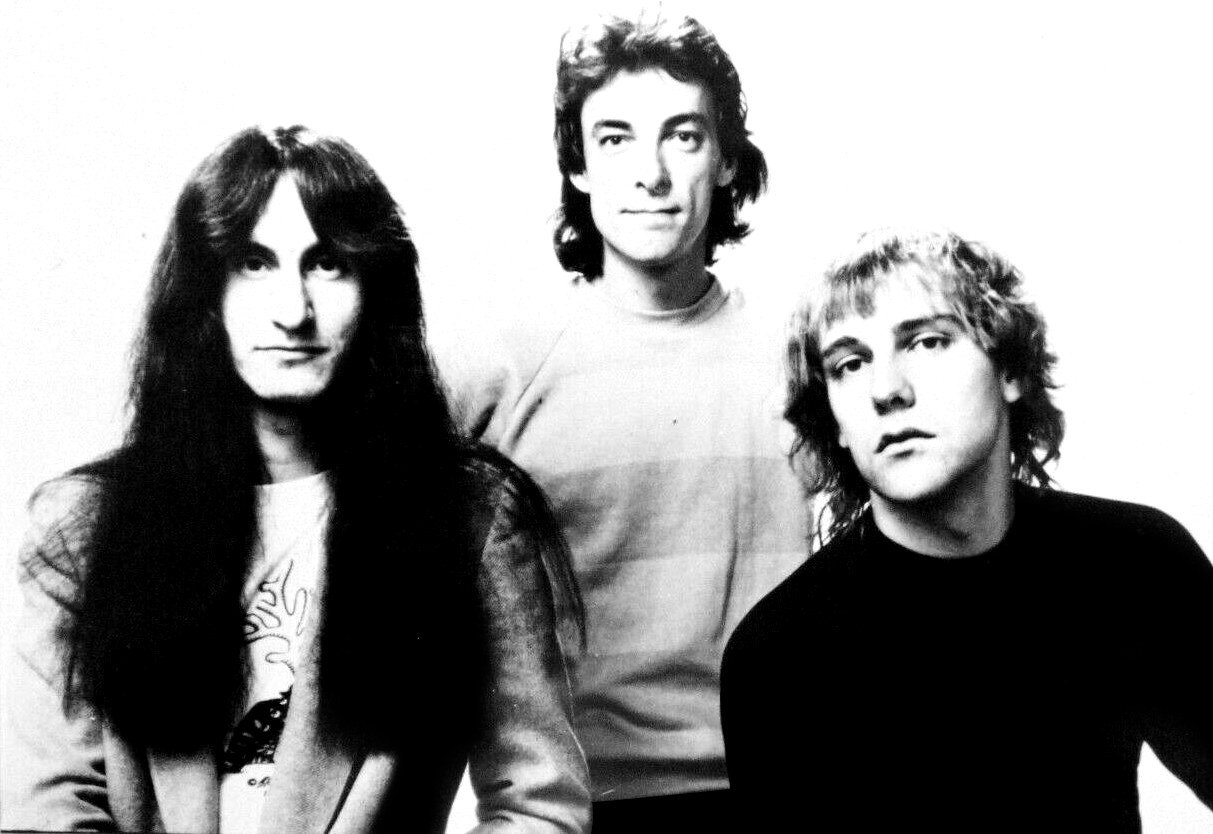


 photo: dennis radaelli · cc by-sa 4.0 ↗
Dream Theater
sourcesWikipedia · Sonic Perspectives · Louder
Dream Theater formed in 1985 at Boston's Berklee College of Music, where guitarist John Petrucci, bassist John Myung, and drummer Mike Portnoy bonded over a shared devotion to Rush and set out, under the name Majesty, to weld that band's virtuosic complexity onto the crunch of thrash metal. After a lineup shuffle brought in singer James LaBrie, 1992's 'Images and Words' turned that fusion into an unlikely radio hit via 'Pull Me Under' and helped codify progressive metal as a genre: multi-part suites, odd time signatures, concept-album ambition, and marathon instrumental showcases. Keyboardist Jordan Rudess joined in 1999 for the through-composed 'Metropolis Pt. 2: Scenes from a Memory,' and the band — reshuffled again after Portnoy's 2010 exit and 2023 return — has kept releasing dense, technically exacting albums ever since.
the sound in question
1992
Pull Me UnderDream Theater
walk the tributaries ↓
Rush1970s–80s · Progressive rock / Hard rock / Progressive metal
Dream Theater's founders built the band around Rush fandom before they had a band name: Petrucci has called Rush's '2112' the record that 'set the course' for his musical career, and the group's original name, Majesty, came from a lyric in Rush's 'Bastille Day.' Portnoy has been blunter still, saying 'everything I learned about progressive music... I got all that from Neil Peart' — the odd meters, suite-like song structures, and instrumental one-upmanship that define Dream Theater's sound trace straight back to that listening.
listen: upstream & heresource: Guitar World ↗
1981
Tom SawyerRush
1999
The Dance of EternityDream Theater
listen forSet 'Tom Sawyer' beside 'The Dance of Eternity' — both treat a shifting, hard-to-count meter as the whole point of the exercise, three musicians locking into changes that never resolve into a comfortable groove, virtuosity worn as the actual hook.
Metallica1980s–90s · Thrash metal / Heavy metal
Portnoy has long counted Metallica among his favorite bands, and Dream Theater's own account of its sound describes a hybrid of prog-rock (Rush, Yes, Pink Floyd, Genesis) and heavy metal specifically credited to Judas Priest, Iron Maiden, Metallica, and Black Sabbath. The band made the debt literal by staging full-album 'cover' concerts of Metallica's 'Master of Puppets' and Iron Maiden's 'The Number of the Beast,' releasing the Metallica set as a live album — the thrash-metal muscle underneath Dream Theater's prog scaffolding is a direct, acknowledged import.
listen: upstream & heresource: Blabbermouth ↗
1986
Master of PuppetsMetallica
2007
Constant MotionDream Theater
listen forLine up 'Master of Puppets' with 'Constant Motion' — both drive on tightly palm-muted, galloping riffs and an aggressive, barked vocal attack that trades prog's patience for straight-ahead metal velocity.
Queensrÿche1980s · Progressive metal / Heavy metal / Art rock
Petrucci has said Queensrÿche was 'very important' to him, and the influence became explicit while writing 1999's 'Metropolis Pt. 2: Scenes from a Memory': the band assembled an 'Inspiration Corner' of classic concept albums in the studio, and Queensrÿche's 'Operation: Mindcrime' sat alongside The Who's 'Tommy' and Pink Floyd's 'The Wall' as a direct model for sustaining a single narrative across a full album — proof that prog-metal heaviness and theatrical storytelling could coexist.
listen: upstream & heresource: Whiplash.Net ↗
1988
Eyes of a StrangerQueensrÿche
1999
Scene Six: HomeDream Theater
listen forCompare 'Eyes of a Stranger' with 'Scene Six: Home' — both are narrative-payoff tracks late in a concept album, building through spoken-word/dialogue passages and dynamic swells toward a heavy, dramatic resolution rather than a conventional chorus.