walking upstream…
James Brown


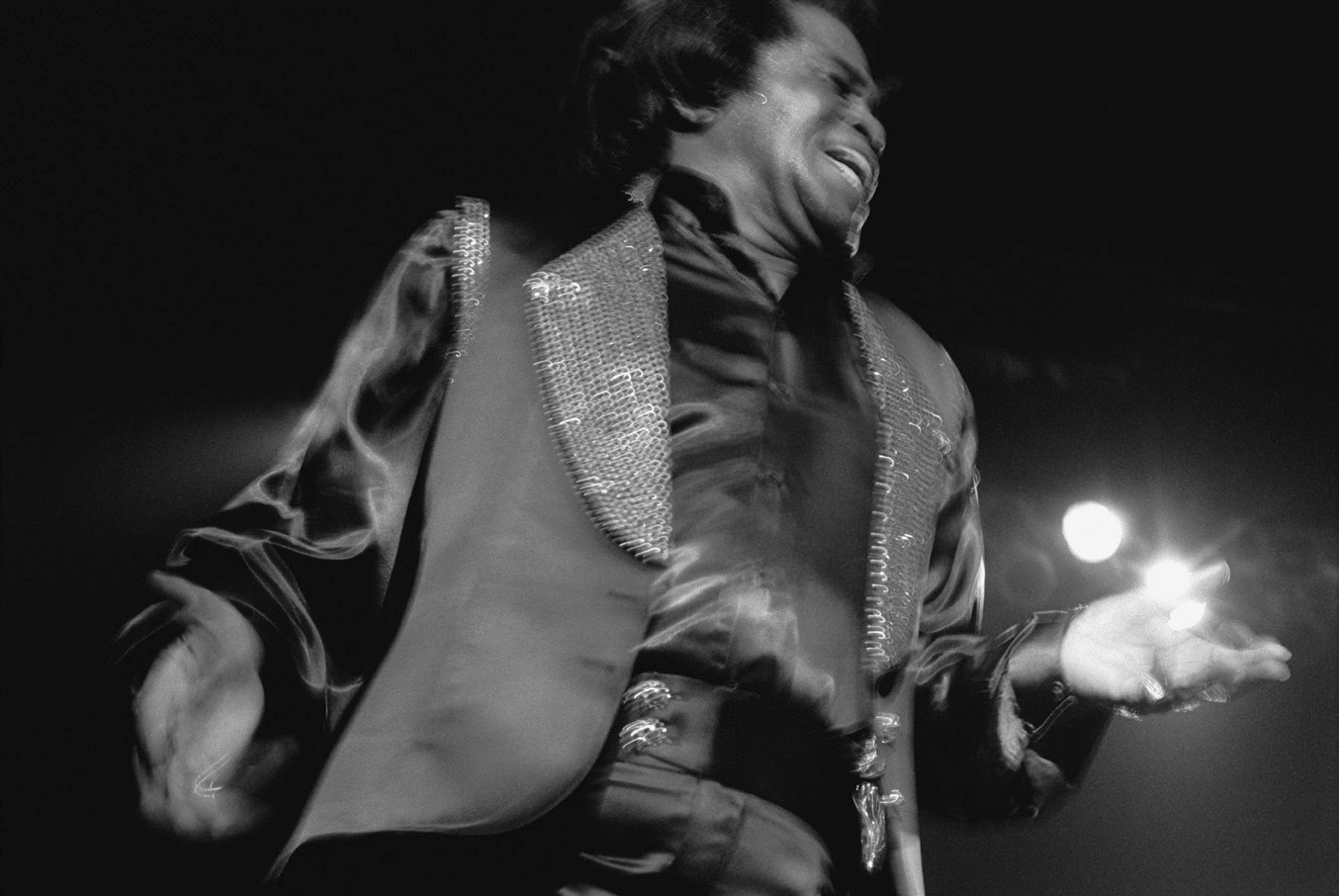 photo: mika-photography · cc by-sa 3.0 ↗
James Brown
sourcesWikipedia — Roy Brown (gospel-steeped delivery, artists he influenced) · Wikipedia — Good Rockin' Tonight (recording and chart history) · Wikipedia — Wynonie Harris (career, Henry Glover on Elvis's debt to Harris) · Wikipedia — Henry Glover (King Records producer linking Wynonie Harris and James Brown) · Wikipedia — Hank Ballard (career; James Brown producing Ballard's 1969 album) · Top40Weekly — Hank Ballard and the Midnighters (the "hard gospel edge" quote) · Biography.com — James Brown (early life, King Records signing, funk's invention)
James Brown was sixteen in 1949 when a Georgia court sent him to a work farm for stealing from parked cars. Paroled to Toccoa in 1952 under the sponsorship of the Byrd family, he sang gospel with Sarah Byrd before her brother Bobby recruited him into a scrappy vocal group, the Gospel Starlighters. Prison and poverty had already taught Brown urgency; the group taught him what to do with it, drilling the jump-blues shouters and gospel quartets of the day into a tighter, harder sound of their own. Renamed the Famous Flames, they cut a demo of a song built from three words scrawled on a napkin — "Please, Please, Please" — that landed a King Records contract in 1956. By 1965, "Papa's Got a Brand New Bag" had reduced every instrument in the band to a drum, inventing funk. The gospel plea never left; it just learned to strut.
the sound in question
1965
Papa's Got a Brand New BagJames Brown
walk the tributaries ↓
Roy Brown1940s–50s · Blues / R&B
Bobby Byrd remembered the ritual: each Famous Flame picked a hero to impersonate on stage before the group had written a note of their own, and "James would do Wynonie Harris and Roy Brown," he told the singer's own website. Brown's pick mattered — Roy Brown had shed a crooner's polish for the pleading, gospel-steeped shout considered taboo in the churches of his youth, a fusion the young Brown spent a career refining. In 1964, on the album Out of Sight, he finally recorded Roy Brown's signature song himself.
listen: upstream & heresource: James Brown official site — The Legacy (Bobby Byrd on the Famous Flames' early influences ↗
1947
Good Rockin' TonightRoy Brown
1964
Good Rockin' TonightJames Brown
listen forPlay Roy Brown's 1947 original next to James Brown's 1964 remake of "Good Rockin' Tonight" and the family resemblance is in the grain, not the notes — both singers push past a clean pitch into a rasped, urgent shout right at the peak of each line, gospel testifying grafted onto a jump-blues shuffle. Brown's version speeds the tempo and hardens the backbeat into something closer to funk, but the vocal move — the barely-controlled break in the voice on "rockin'" — is the same one Roy Brown pioneered nearly two decades earlier.
Wynonie Harris1940s · Jump blues / R&B
The producer Henry Glover, who ran session after session for Harris at King Records, said Elvis Presley "copied many of the vocal gymnastics of Wynonie as well as the physical gyrations" — proof of how far Harris's shout traveled. That same King Records machine, run out of Cincinnati, later signed the teenage James Brown to its Federal subsidiary, with Glover himself producing some of his early sides; the vocal gymnastics Harris pioneered were already circulating through the building before Brown ever stepped into it. Harris's own 1948 cover of "Good Rockin' Tonight" out-shouted its composer, Roy Brown, straight to the top of the R&B chart.
listen: upstream & heresource: James Brown official site — The Legacy (Bobby Byrd on the Famous Flames' early influences ↗
1948
Good Rockin' TonightWynonie Harris
1956
Please, Please, PleaseJames Brown
listen forPut Wynonie Harris's 1948 "Good Rockin' Tonight" beside James Brown's 1956 debut single "Please, Please, Please" and listen to how both singers treat a single word as raw material — Harris stretches "rockin'" into a boast, riding on top of a driving horn section rather than singing through it, while Brown does the same trick to the word "please," bending and repeating it until a plea becomes a performance in itself. The showmanship is the same instrument, aimed at a different emotion.
Hank Ballard1950s · Rhythm and blues / Rock and roll
Before there was a group at all, there was an audience: "When we saw all the girls screaming for groups like Hank Ballard & the Midnighters," Bobby Byrd remembered, "we thought, 'Oh, so this is what we want to do!'" That single audience reaction turned a gospel quartet into an R&B act. Ballard, who'd brought his own church-choir intensity to the Midnighters, and Brown later repaid the debt directly — producing Ballard's 1969 album You Can't Keep a Good Man Down after the frenzy Ballard had once inspired in him.
listen: upstream & heresource: James Brown official site — The Legacy (Bobby Byrd on the Famous Flames' early influences ↗
1954
Work with Me, AnnieHank Ballard
1960
ThinkJames Brown
listen forHank Ballard & the Midnighters' 1954 "Work with Me, Annie" is built on a call-and-response between Ballard's lead and the group's shouted backing vocals, each line answered before it finishes — the sound of a crowd, not a chorus. James Brown and the Famous Flames chase the same effect on 1960's "Think," Brown barking a phrase and the Flames' harmonies snapping back a half-beat later, the vocal traffic as propulsive as the rhythm section underneath it.