walking upstream…
Cheap Trick
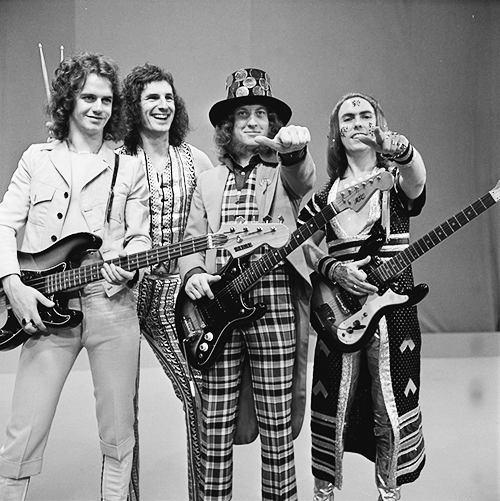


 photo: dwight mccann · cc by-sa 2.5 ↗
Cheap Trick
sourcesWikipedia · Ultimate Classic Rock · The Aquarian
Cheap Trick coalesced in Rockford, Illinois, when guitarist Rick Nielsen and bassist Tom Petersson, both veterans of the earlier band Fuse, settled on drummer Bun E. Carlos and, by late 1974, singer Robin Zander — the new name reportedly coined after Petersson watched a Slade concert and remarked that the band used 'every cheap trick in the book.' Nielsen's manic, multi-necked-guitar stage persona and dense, hook-stuffed songwriting fused British Invasion melody with 1970s hard-rock crunch, a combination critics loved on 1977's 'In Color' before the Japan-only live album 'Cheap Trick at Budokan' became an unlikely U.S. breakthrough in 1979, propelled by a re-recorded 'I Want You to Want Me.' 'Dream Police' consolidated their run as power pop's most theatrical arena act, and the band — inducted into the Rock and Roll Hall of Fame in 2016 — still tours today.
the sound in question
1978
SurrenderCheap Trick
walk the tributaries ↓
Slade1970s · Glam rock / Hard rock
Cheap Trick's name itself came from a Slade show — bassist Tom Petersson watched the band work the crowd and remarked they used 'every cheap trick in the book.' Beyond the christening, Slade's shout-along, deliberately misspelled hit factory gave Nielsen a model for turning glam stomp into a chorus built to be bellowed back by an audience.
listen: upstream & here
1973
Cum On Feel the NoizeSlade
1979
Dream PoliceCheap Trick
listen forPlay 'Cum On Feel the Noize' beside 'Dream Police' — both stomp through a simple, insistent beat under a chorus that repeats its title as a command, written to be shouted by a full room rather than just sung.
The Beatles1960s · Rock / Pop / Rock and roll
Rick Nielsen's songwriting has been described as drawing on 'many of his favorite reference points, including the Beatles,' and Cheap Trick's whole project — stacking layered vocal harmony and major-key melodic hooks on top of loud guitars — reads as an attempt to smuggle British Invasion pop craft into 1970s hard rock.
listen: upstream & here
1966
Paperback WriterThe Beatles
1977
I Want You to Want MeCheap Trick
listen forLine up 'Paperback Writer' with 'I Want You to Want Me' — both ride a tight, insistent riff under close vocal harmonies stacked into an instantly-hummable chorus, guitar muscle in service of a pop tune rather than the other way around.
The Who1960s–70s · Rock / Hard Rock / Mod
Reviewers have heard Nielsen 'sounding like the Who having a fight with the Move' in his playing, and Cheap Trick's early records lean on the same trick Pete Townshend perfected: slamming power chords as the engine of a song rather than as decoration, topped with an arena-scaled vocal.
listen: upstream & here
1965
My GenerationThe Who
1977
Hello ThereCheap Trick
listen forSet 'My Generation' against 'Hello There' — both kick off with a blunt, repeated power-chord figure that functions as the whole song's hook, more interested in impact than in melody for its first several bars.