walking upstream…
Mötley Crüe
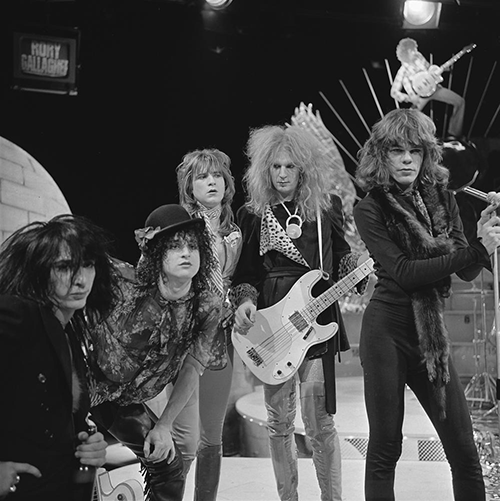


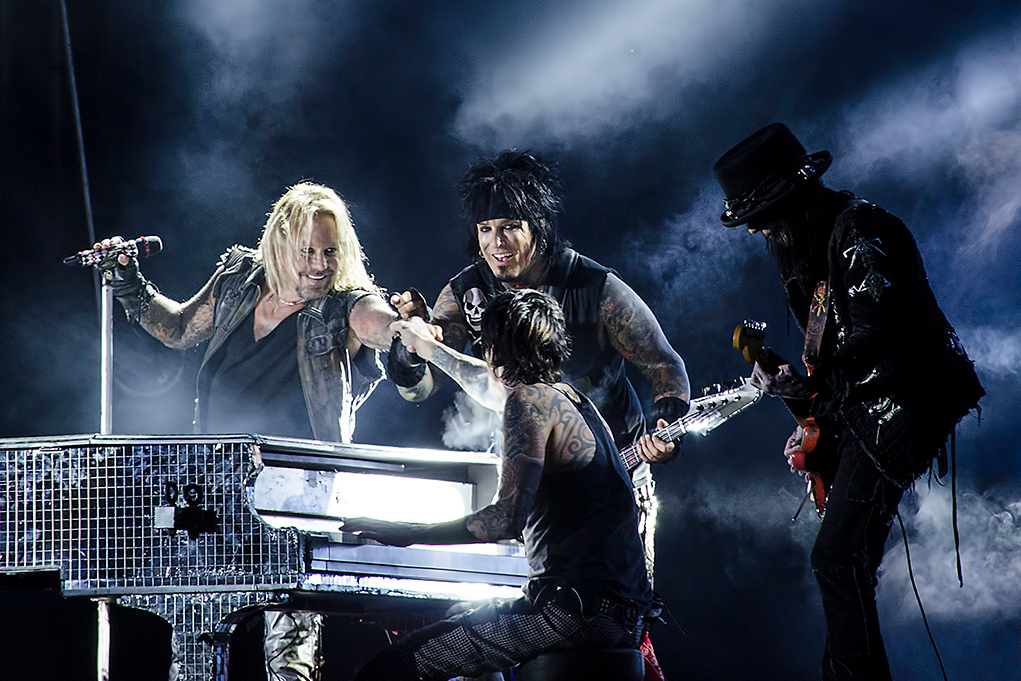 photo: bjornsphoto · cc by 3.0 ↗
Mötley Crüe
sourcesWikipedia · The Aquarian
Mötley Crüe formed in Hollywood in 1981 when bassist Nikki Sixx, freshly split from the glam outfit London, recruited drummer Tommy Lee and singer Vince Neil, then completed the lineup after guitarist Mick Mars answered his own classified ad describing himself as 'a loud, rude and aggressive guitar player' looking for a band. Their self-released debut, 'Too Fast for Love,' turned Sunset Strip sleaze into a look and a sound — spandex, pyrotechnics, and a self-mythologizing excess later chronicled in the memoir 'The Dirt.' Sixx has said he wanted a band that sounded 'like David Bowie and the Sex Pistols thrown in a blender with Black Sabbath.' 'Shout at the Devil' and 'Theatre of Pain' carried them to glam metal's mid-1980s commercial peak, and 'Dr. Feelgood' pushed them higher still before internal turmoil and lineup churn set in.
the sound in question
1983
Shout at the DevilMötley Crüe
walk the tributaries ↓
New York Dolls1970s · Proto-punk / Glam rock / Hard rock
Nikki Sixx has said that as a teenager in rural Idaho he 'can't wait to get home to put on that new New York Dolls record,' and has called the Dolls foundational to 'everybody from Aerosmith, KISS, Guns N' Roses, Mötley Crüe, and Poison.' Their trashy, cross-dressed glam-punk swagger gave Sixx the template for turning a garage-level band into a lurid visual spectacle built on sleaze rather than musicianship.
listen: upstream & here
1973
Personality CrisisNew York Dolls
1981
Live WireMötley Crüe
listen forSet 'Personality Crisis' against 'Live Wire' — both open with a scrappy, barely-contained guitar riff under a sneering vocal that sounds like it's daring the listener to take the song seriously, image and attitude doing as much work as the chords.
Sex Pistols1970s · Punk rock
Nikki Sixx has described his original vision for the band as 'David Bowie and the Sex Pistols thrown in a blender with Black Sabbath' — the Pistols supplying the sneering disregard for musicianship and the chaotic, confrontational stage energy that let a scrappy Sunset Strip band feel dangerous rather than merely loud.
listen: upstream & here
1976
Anarchy in the U.K.Sex Pistols
1981
Public Enemy #1Mötley Crüe
listen forPlay 'Anarchy in the U.K.' next to 'Public Enemy #1' — both snarl through a simple, driving three-chord structure at a tempo that outruns the vocal, treating the song as a provocation first and a composition second.
Cheap Trick1970s · Power pop / Hard rock / Rock
Nikki Sixx has named Cheap Trick among his favorite bands, admitting Mötley Crüe 'had the melodies of Cheap Trick — or we'd try!' Their gift for stacking a huge, singable chorus on top of hard-rock crunch gave Crüe a model for writing arena-ready hooks without losing the raw riffing.
listen: upstream & here
1978
SurrenderCheap Trick
1985
Home Sweet HomeMötley Crüe
listen forCompare 'Surrender' with 'Home Sweet Home' — both build a hard-rock verse toward an enormous, chant-along chorus melody, the kind engineered to have an entire arena singing back the words.