walking upstream…
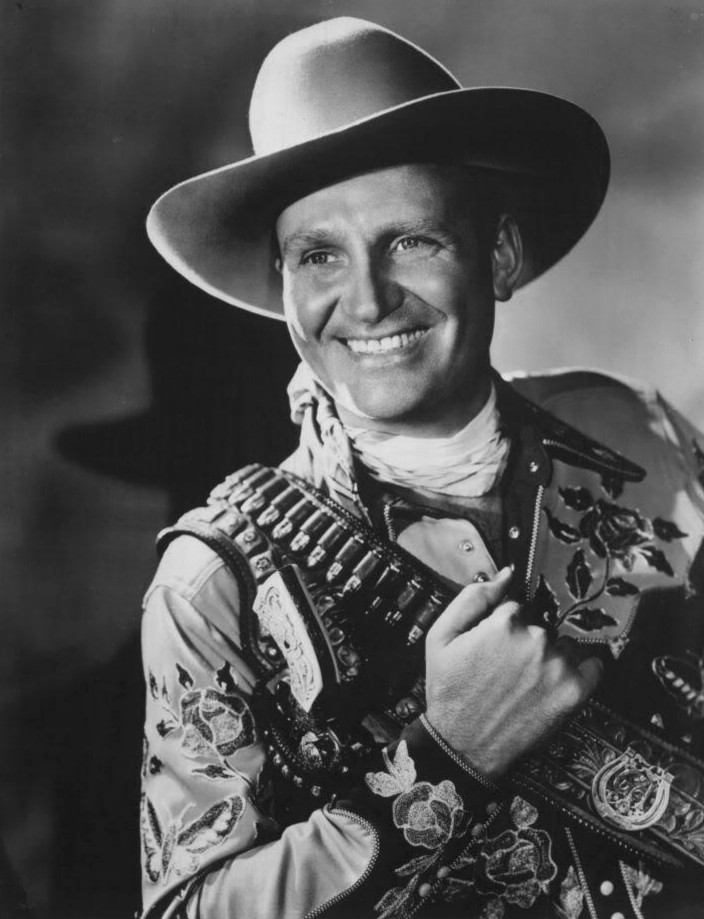
Gene Autry


sourcesTexas State Historical Association — Handbook of Texas · KVPR/NPR Fresh Air — "Gene Autry, America's 'Public Cowboy No. 1'" (interview with biographer Holly George-Warren, on his imitative early career) · Country Music Hall of Fame and Museum — "Gene Autry" (KVOO/Rodgers-covering years, vocal style) · Alan Cackett — "Gene Autry" biography (on Autry as the closest Rodgers imitator of his era) · Nashville Songwriters Hall of Fame — "Jimmie Rodgers" (naming Autry among Rodgers's early imitators) · deaddisc.com — "Waiting For A Train" discography (dates Autry's 1929 and 1930 recordings of Rodgers's song)
In 1928, an Oklahoma telegraph operator named Orvon Autry was overheard singing at his desk by the humorist Will Rogers, who told him to try radio. Autry did — billing himself "Oklahoma's Yodeling Cowboy" on Tulsa's KVOO and, when he reached New York in October 1929 to cut his first records for a string of Depression-era "dimestore" labels, singing almost nothing but other men's hits. His biographer Holly George-Warren calls him "a real mimic"; those early covers, she says, "started selling like hotcakes" in rural mail-order catalogs. A 1931 sentimental duet, "That Silver-Haired Daddy of Mine," made him a star on Chicago's WLS, and by 1934 he was Hollywood's singing cowboy, appearing in nearly 90 westerns and cutting "Back in the Saddle Again," the song that outlived every persona he tried on first.
the sound in question
1939
Back in the Saddle AgainGene Autry
walk the tributaries ↓
Jimmie Rodgers1920s–30s · Country / Old-time / Blues
Autry's earliest singles are barely disguised Jimmie Rodgers records: the same blue yodel, the same railroad and hard-luck subject matter, the same falling melodic turn. The Country Music Hall of Fame's own account of his KVOO radio years is blunt about it — Autry spent two years "covering Rodgers's hits and performing other songs in a similar style" while billed as "Oklahoma's Yodeling Cowboy." The country journalist Alan Cackett goes further: among everyone chasing Rodgers's sound in 1929, "he was the closest." Autry didn't shed the debt so much as sand it down into something a Saturday-matinee crowd could sing along to.
listen: upstream & heresource: Encyclopedia.com — Baker's Biographical Dictionary of Musicians ↗
1929
Waiting for a TrainJimmie Rodgers
1929
Waiting for a TrainGene Autry
listen forPlay Rodgers's 1929 "Waiting for a Train" against the version Autry cut that same year, and the blueprint is unmistakable — the same loose talking-blues meter, the same hobo's-eye lyric, even the same falsetto break on the title line. What's different is texture: Rodgers's guitar sits ragged and bluesy behind a rasp of a voice, while Autry's take smooths the yodel's edges and pushes the vocal front and center, already reaching for the cleaner, radio-friendly tone that would carry him past imitation and into his own persona.
Bing Crosby1930s–40s · Traditional pop / Vocal jazz
By the early 1930s Autry had traded Rodgers's rasp for something closer to a crooner's ease, and Baker's Biographical Dictionary of Musicians names the specific model: Autry's mature style, it says, was "a typical mix of country mannerisms with the crooning popularized by Bing Crosby." No interview or biography has Autry naming Crosby himself — this is a critic's ear, not the singer's own account — but it matches what listeners heard: the Country Music Hall of Fame describes Autry's "smooth, relaxed baritone" and its "total absence of vocal gymnastics," the same unhurried warmth radio was rewarding Crosby for at the same moment.
listen: upstream & heresource: Encyclopedia.com — Baker's Biographical Dictionary of Musicians ↗
1931
I Surrender, DearBing Crosby
1931
That Silver-Haired Daddy of MineGene Autry
listen forThere's no record of Autry citing this exact pairing — it's an inference from the critical claim above, not a documented pairing — but set Crosby's 1931 "I Surrender, Dear" beside Autry's breakthrough that same year, "That Silver-Haired Daddy of Mine," and the kinship is audible: both singers ride behind the beat rather than yodeling over it, favoring a relaxed, conversational baritone over the hard consonants and open-throated attack of Rodgers-style hillbilly singing.