Charley Patton
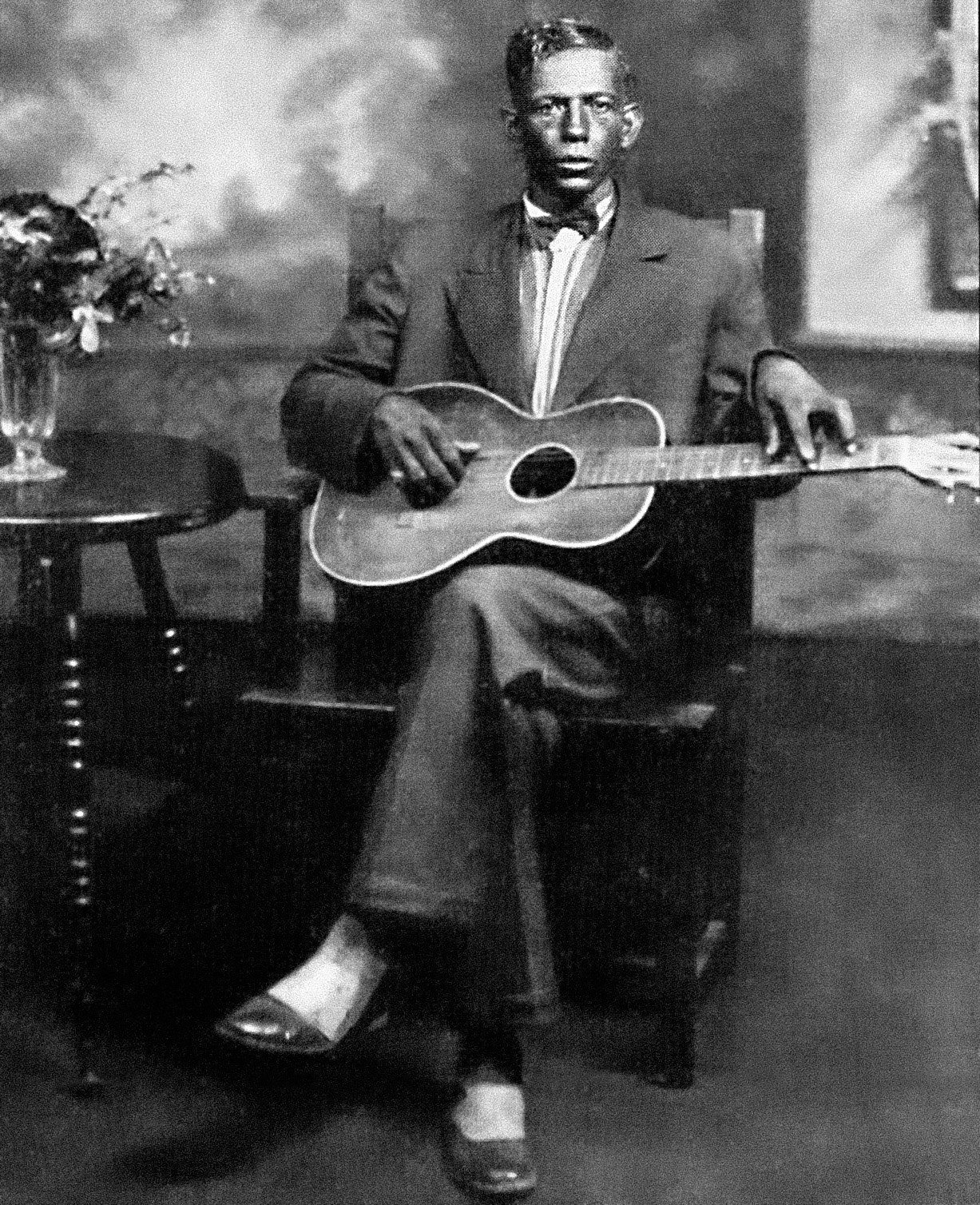
In 1900, Charley Patton's family arrived at the Dockery Plantation, a 10,000-acre cotton and sawmill spread near Ruleville, Mississippi, and the nine-year-old fell in with a field hand named Henry Sloan who played guitar in a style nobody had a name for yet. Patton followed him from job to job until he could keep up, and by 1910 was writing his own songs. Nearly two decades later, on June 14, 1929, he walked into a converted studio in Richmond, Indiana, and cut fourteen sides in a single day — a growling, percussive attack that mentored Robert Johnson and Howlin' Wolf in turn and became the blueprint for Delta blues itself.
Henry Sloan farmed a plantation in Hinds County and, off the clock, worked out a guitar style nobody nearby had heard: bending the field holler — the wordless work cry that carried across the cotton rows — onto a fretted instrument, "the first musician to set field hollers to guitar accompaniment," as the blues researcher David Evans later established. Evans also traced how Sloan taught the technique directly to young Charley Patton, first in Bolton, then at the Dockery Plantation the family moved to around 1900. Sloan never made a record; everything of his playing that survives, survives secondhand, in Patton's.
listen forNo Sloan recording exists, but the fusion he's credited with pioneering — field holler bent onto guitar — is audible from the opening seconds of Screamin' and Hollerin' the Blues: Patton's voice cracks into a full-throated shout, then drops straight back into the sung line, the guitar's syncopated thump never breaking stride underneath. Cry and instrument move as one unit, exactly the trick Sloan is said to have taught him at Dockery three decades earlier.