walking upstream…
Son House

sourcesEncyclopedia.com — Son House, Contemporary Musicians (Guitar Player-magazine quotes on his conversion to blues and 1928 killing) · U.S. National Park Service — Son House (Rube Lacy slide-guitar tutelage; 1930 Paramount session) · Mississippi Blues Trail — Son House marker (1941 Library of Congress session details) · Mississippi Blues Trail — Ruben Lacy marker (Lacy's recording career and influence on House) · Wikipedia — See That My Grave Is Kept Clean (corroborates the melody reuse in House's Mississippi County Farm Blues)
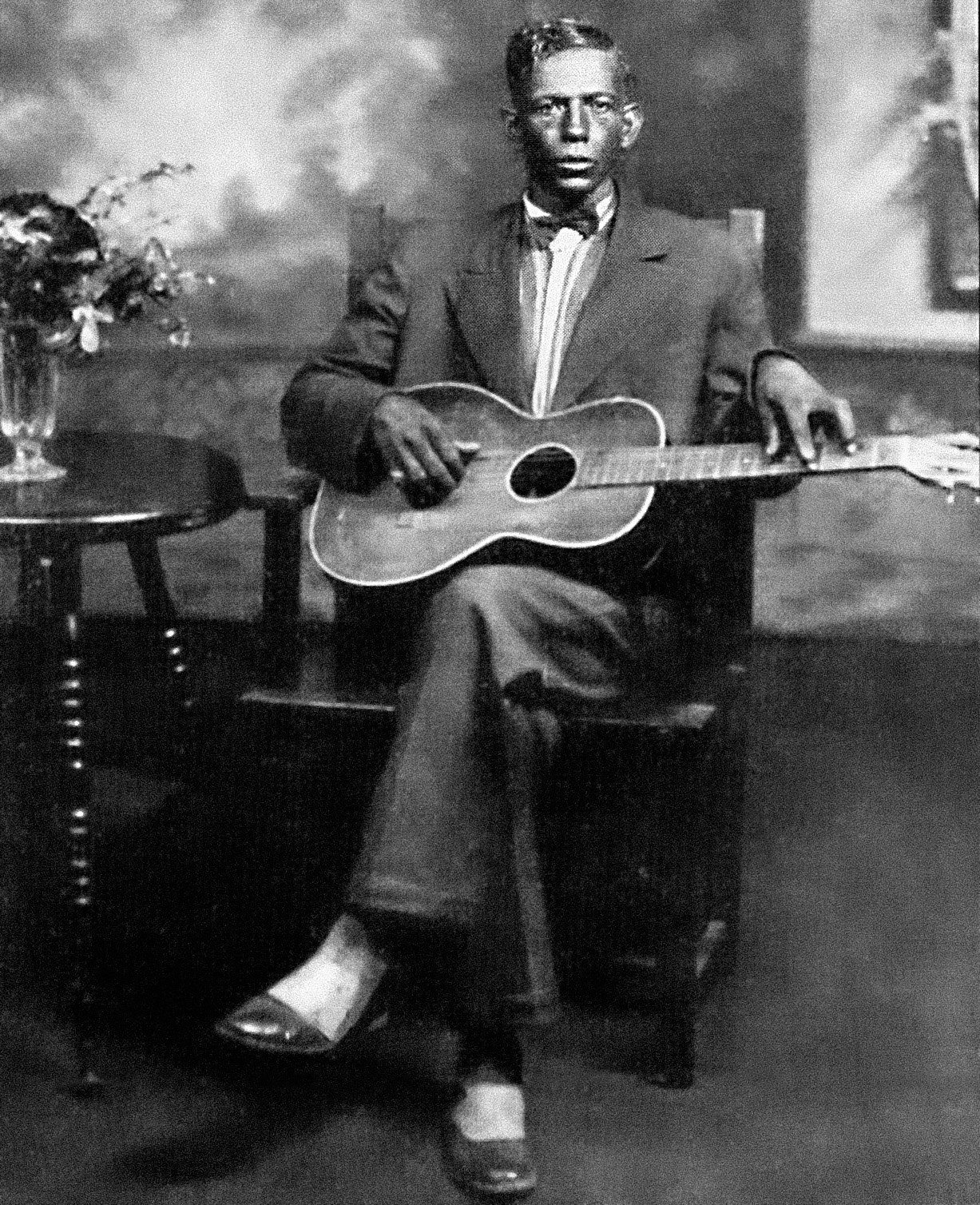
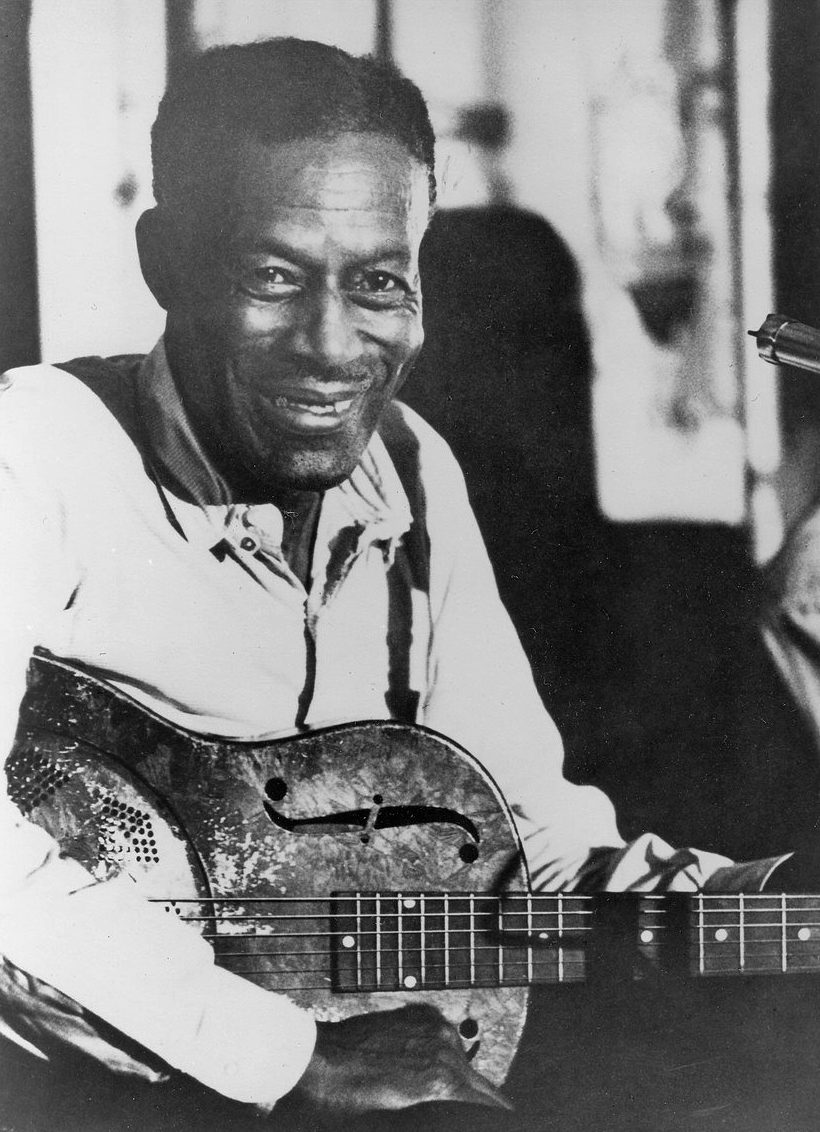
In 1927, at twenty-five, Eddie "Son" House Jr. was a Mississippi preacher who hated the blues on principle — "just putting your hands on an old guitar," he'd say, "looked like that was sin." Then he watched a drinking companion work a bottleneck across guitar strings and changed his mind overnight, buying a battered guitar for a dollar and a half. A year later he killed a man in self-defense, served two years on a penal farm, and emerged to fall in with his idol Charley Patton before recording nine unsuccessful Paramount sides in 1930. He didn't record again for thirty-five years, working as a railroad porter until a 1964 rediscovery restored him to a folk-revival audience. House never separated the pulpit from the bandstand: his slide guitar carries the same hollered intensity he'd once reserved for sermons, and that fusion became the Delta blues' founding template.
the sound in question
1930
Preachin' the Blues, Pt. ISon House
walk the tributaries ↓
Charley Patton1920s-30s · Delta blues
House met Patton in the Delta town of Lula around 1929 and called him "my hero." "I couldn't play the blues like him by just learning straight off," House recalled, "so I stayed around with him for a little while." Patton, in turn, was the one who brought House to the 1930 Paramount session in Grafton, Wisconsin, that produced House's first recordings — the apprenticeship happened by proximity, not formal teaching. House later reworked Patton's own "Pony Blues" into his own "Shetland Pony Blues," retitling it "Pony Blues" again at his 1942 Library of Congress session, keeping his mentor's song alive in his own repertoire for over a decade.
listen: upstream & heresource: Wikipedia — Son House (biography; James McCoy/Willie Wilson conversion story; Charley Patton and Rube Lacy influence; 1964 rediscovery) ↗
1929
Pony BluesCharley Patton
1941
Shetland Pony BluesSon House
listen forPatton's "Pony Blues" rides a rolling, syncopated bass figure under his gravel-throated vocal. House's "Shetland Pony Blues," cut a decade later for the Library of Congress, keeps that same driving bassline and repeats Patton's phrasing patterns nearly intact, even as House layers in his own bottleneck slide — a documented instance of one bluesman's exact song surviving inside a student's session, rather than just a shared regional style.
Rubin "Rube" Lacy1920s · Delta blues
Within a year of buying his first guitar, House — still working out basics from his first teacher, James McCoy — fell in with a better-known Delta performer named Rube Lacy, who'd cut sides for Columbia and Paramount, and began copying his slide-guitar technique. The National Park Service records House "fell in with Delta musician Rube Lacy and began emulating his slide guitar style"; Wikipedia corroborates Lacy as one of four musicians whose example he drew on before turning professional. No source ties a specific song between the two men — technique passed hand to hand, the weakest-documented of House's three influences, though the debt is attested three times over.
listen: upstream & here
1928
Mississippi Jail House GroanRubin "Rube" Lacy
1930
My Black Mama, Pt. ISon House
listen forBoth recordings ride the same basic Delta figure — a rolling bottleneck slide worked over a droning, insistent single chord, with almost no chord changes to interrupt the hypnotic pull. Listen for how each guitarist lets the slide's whine answer his own vocal line, phrase for phrase, rather than keeping a fixed rhythm underneath it; that call-and-response between voice and slide is the specific habit House is documented as having picked up from watching Lacy play, even though no shared song or lyric connects the two men's recordings.
Blind Lemon Jefferson1920s · Texas blues / Country blues
Decades later, listing the men who'd shaped him, House named Jefferson unprompted alongside Patton and Willie Brown: "all 'em old boys has left me by myself; they's all dead and gone." He'd measured himself against Jefferson's stature at the time — recalling the 1930 Paramount trip, House said plainly, "Blind Lemon was way up ahead of us, and he left us there." That reverence became a record: when Jefferson died in December 1929, House set a memorial to the melody of Jefferson's own "See That My Grave Is Kept Clean," cutting it as "Mississippi County Farm Blues" that same session — documented borrowing, not just admiration.
listen: upstream & heresource: Louder/Classic Rock — Son House archive interview (1970 Sounds magazine reprint; Patton and Blind Lemon Jefferson quotes; annotated playlist) ↗
1927
See That My Grave Is Kept CleanBlind Lemon Jefferson
1930
Mississippi County Farm BluesSon House
listen forJefferson's "See That My Grave Is Kept Clean" moves through a plain, mournful melodic line built for a single high, keening vocal. Follow that same melodic shape into House's "Mississippi County Farm Blues," recorded within months of Jefferson's death — the tune underneath House's words is Jefferson's own funeral request, repurposed as House's tribute to the man he'd once watched from a distance as the biggest name in the room.