walking upstream…
Mississippi Fred McDowell
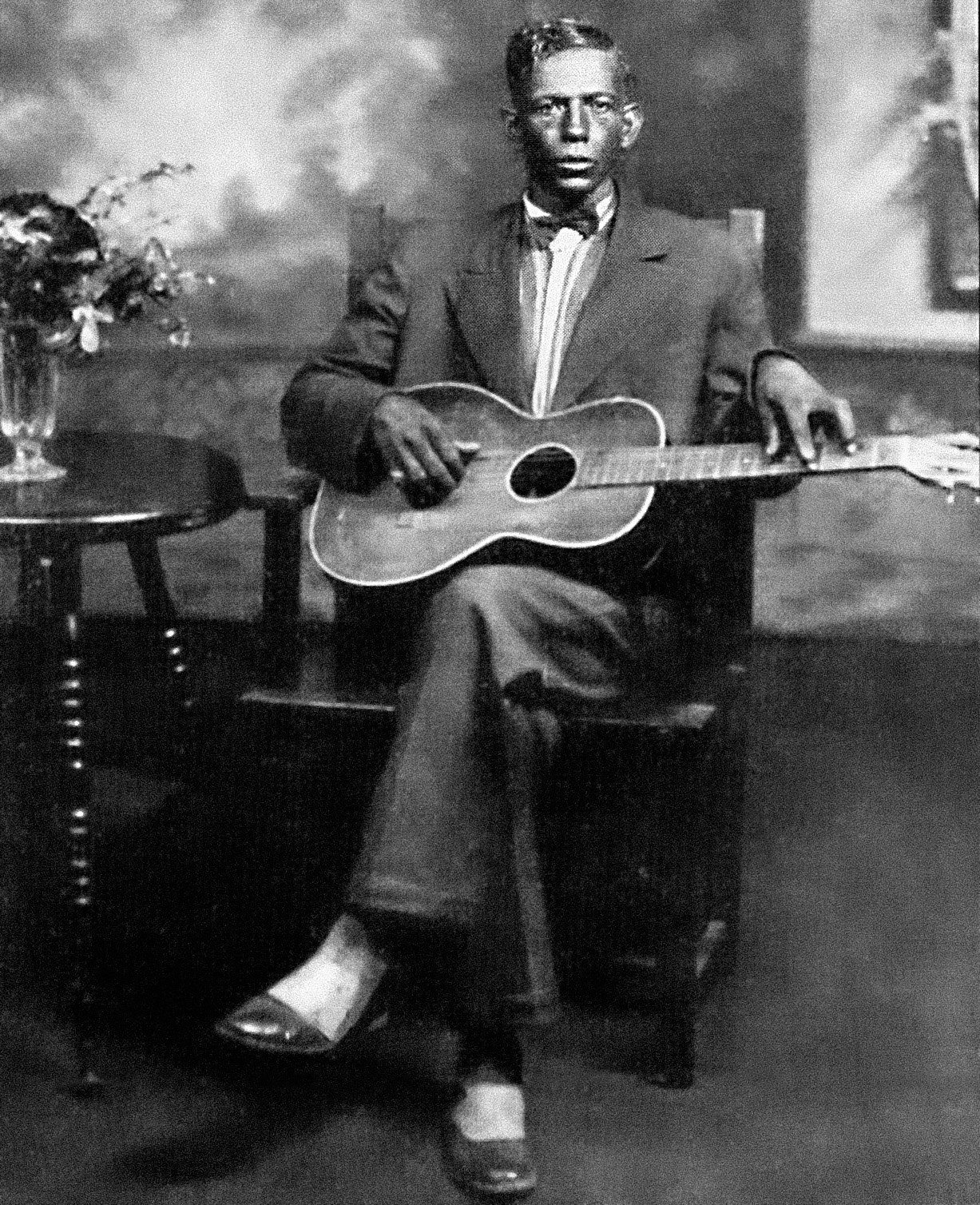
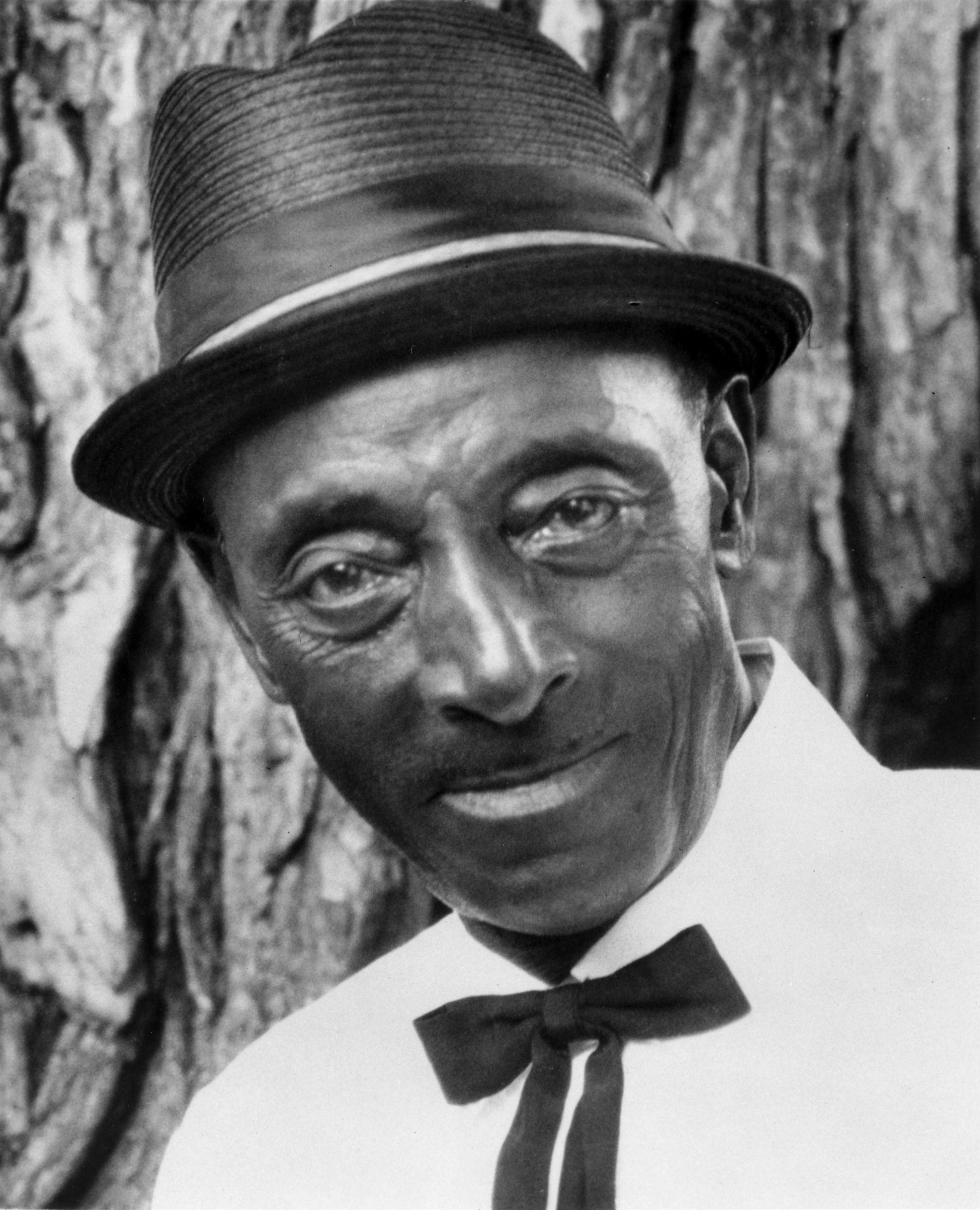 photo: unknown (flickr upload) · cc by-sa 2.0 ↗
Mississippi Fred McDowell
sourcesThe Mississippi Blues Trail — Peavine marker (Patton's 'Pea Vine Blues' and its descendants) · Mississippi Encyclopedia — "'Mississippi' Fred McDowell" by Scott Barretta (Patton, Raymond Payne, biography) · The Arhoolie Foundation — Chris Strachwitz interview transcript (naming Eli Green as McDowell's teacher) · Mt. Zion Memorial Fund — Barry Foster's 1971 Journal of Popular Culture interview with McDowell (direct testimony) · Bear Family Records — artist bio by Bill Dahl (uncle Gene Shields, discography)
Fred McDowell picked up a slide around age 14 in Rossville, Tennessee, copying a relative who fretted his guitar with a filed beef-rib bone — sources call the man his uncle or his father's cousin, and never agree which. He farmed and played house parties and juke joints for four decades before folklorist Alan Lomax found him on a farm outside Como, Mississippi in 1959 and put his droning hill-country slide in front of a national audience at 55. Arhoolie Records' Chris Strachwitz followed, and so did festival stages, a young Bonnie Raitt studying at his elbow, and a much-litigated Rolling Stones cover of his "You Gotta Move." He went electric late in life for the LP that gave him his catchphrase, "I do not play no rock and roll" — though he insisted he liked "all music," Johnny Winter and Howlin' Wolf alike.
the sound in question
1965
You Gotta MoveMississippi Fred McDowell
walk the tributaries ↓
Eli GreenHill country blues
Sometime in their eight years of friendship, Arhoolie Records founder Chris Strachwitz asked McDowell the plain question everyone else had skipped: who did you learn from? "He said, this fellow Eli Green is the one he really learned from," Strachwitz recalled — not Patton, not any recorded Delta star. McDowell's own boyhood memory backs it up: he told writer Tom Pomposello that "they'd all be playing ball or something and I'd be practicing on Booster Green's guitar." Strachwitz went looking for Green anyway, tracking him to a one-room shack in the Holly Springs woods and capturing two songs before his tape recorder gave out.
listen: upstream & heresource: The Mississippi Blues Trail — Fred McDowell marker (biography, Eli Green, steak-bone slide teacher) ↗
No known recordingEli Green
Write Me a Few of Your LinesMississippi Fred McDowell
listen forNo recording of Green performing this specific song survives — the only tape of him ever made breaks off after two unrelated numbers — so what you can verify sits entirely in McDowell's own cut: a vocal line answered phrase-for-phrase by the slide, circling back on the same figure instead of building toward a resolution. It's the rolling, unresolved pull McDowell would have absorbed by ear as a boy, watching rather than reading a piece he never once wrote down.
Charley Patton1920s-30s · Delta blues
Working a labor camp near Cleveland, Mississippi in the late 1920s, McDowell followed the crowd into a juke joint and watched Charley Patton play in person. The Mississippi Encyclopedia's Scott Barretta writes that McDowell spent that stretch "learning 'Pea Vine Special' and other songs directly from blues pioneer Charley Patton" — not from records, but from watching Patton's hands work the branch-line railway song Patton had made famous. McDowell kept it in his own repertoire for the rest of his life, one of several older bluesmen's songs he absorbed on sight rather than on shellac.
listen: upstream & here
1929
Pea Vine BluesCharley Patton
Pea Vine SpecialMississippi Fred McDowell
listen forSet Patton's 1929 "Pea Vine Blues" beside McDowell's own "Pea Vine Special": both hang the same three-line verse on the same rattling railroad image, but where Patton barks a line and stops the guitar dead in the gap, McDowell smooths the stops into one continuous, droning slide figure that never fully lets go — the Delta's stop-and-start attack rounded into the rolling, trance-like pull of hill country.
Tommy Johnson1920s · Delta blues
The first song Fred McDowell ever learned to play, blues writer Tom Pomposello reported, was Delta bluesman Tommy Johnson's "Big Fat Mama (With the Meat Shakin' on Your Bones)." "I learned it on one string," McDowell told him, "then two, note by note. Man, I about worried that first string to death trying to learn that song." That habit of taking a song apart string by string stuck — it became, by Pomposello's account, a cornerstone of McDowell's technique — and forty years later he recorded his own "Big Fat Mama" for his self-titled 1969 album.
listen: upstream & heresource: Encyclopedia.com — Contemporary Musicians profile by Joanna Rubiner, via Tom Pomposello's Frets Magazine interviews (Tommy Johnson, Booster Green quotes) ↗
1928
Big Fat Mama BluesTommy Johnson
1969
Big Fat MamaMississippi Fred McDowell
listen forSet Johnson's 1928 "Big Fat Mama Blues" against McDowell's 1969 "Big Fat Mama": both hang the whole song on a droning bass note worried under a talky, half-spoken vocal, the guitar answering each line instead of chording through it. The patience McDowell described learning one string at a time is audible in how sparingly he lets the melody move, note by note rather than in full chords.