walking upstream…
The Staple Singers


sourcesWikipedia — The Staple Singers · Mississippi Blues Trail — Pops Staples marker (Dockery Plantation, Charley Patton, Pops's own quote on his sound) · National Endowment for the Arts — Roebuck "Pops" Staples, National Heritage Fellow bio (blues/gospel synthesis, "message-man" quote) · GuitarPlayer — "Pops Staples Invented the Americana Tone of Guitar" (Charley Patton lineage; guitar work on Freedom Highway) · InsideHook — "The World According to Mavis Staples" (Mahalia Jackson mentorship anecdote) · NPR, It's Been a Minute — "Mavis Staples on Prince, MLK and a life onstage" (Mahalia Jackson mentorship, 1969 Harlem Cultural Festival duet, MLK meeting) · NPR, All Things Considered — Greg Kot interview on I'll Take You There (Pops's Dockery Farm blues/gospel apprenticeship) · TrueFire Blog — "Blues Song Genealogy
In 1948, Roebuck "Pops" Staples pulled a pawnshop guitar from a Chicago closet, sat his four children on the living room floor, and taught them the harmony parts to "Will the Circle Be Unbroken" — the only song they knew all the way through when an aunt asked them to sing at her church that Sunday. Eight years later, "Uncloudy Day" became gospel's first million-seller, and the family carried Pops's tremolo-shaken guitar out of Chicago's storefront churches and onto the road. After a Sunday service with Martin Luther King Jr. in Montgomery, Pops told his children he could preach it, so they could sing it — and the group began writing the message songs that carried them into the civil rights movement and, later, the pop charts. "I'm not a bluesman," he said. "I'm a message-man."
the sound in question
1956
Uncloudy DayThe Staple Singers
walk the tributaries ↓
Charley Patton1920s-30s · Delta blues
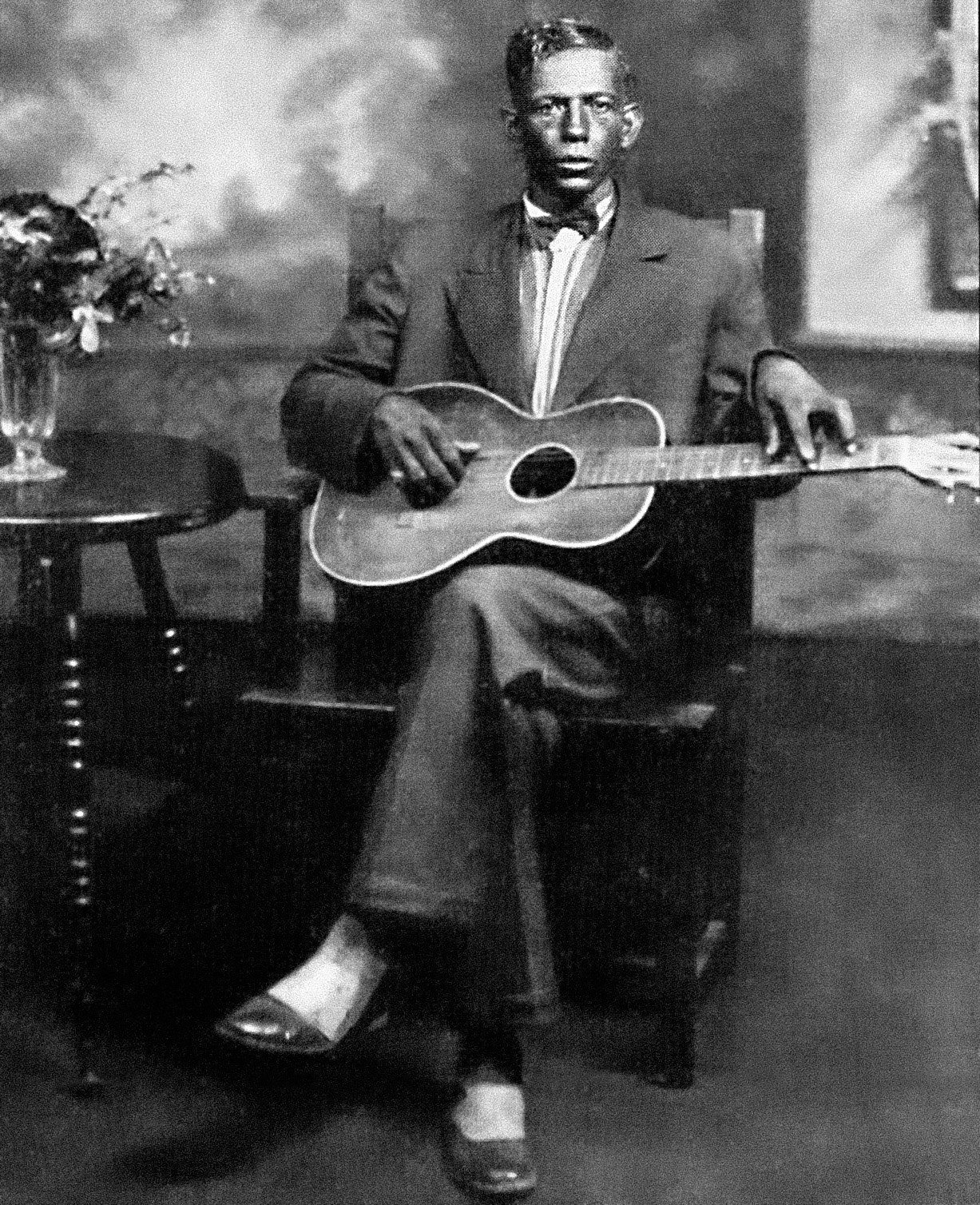
Pops Staples grew up on the Dockery Plantation near Drew, Mississippi, in the years Charley Patton lived and played there, and Mavis remembers exactly where her father's guitar came from: "He learnt to play guitar from Charley Patton down in Dockery's farm," she told Clash Magazine. "It was a long time before I knew that my father was playing the blues licks on his guitar — I just thought that was the way a guitar was supposed to sound!" Patton's rough, rhythm-driving attack became the instrumental floor under the family's gospel harmonies for four decades.
listen: upstream & heresource: Clash Magazine — "Mavis Staples" interview (Charley Patton lineage; Mahalia Jackson idol/mentor anecdote) ↗
1929
Pony BluesCharley Patton
1965
Freedom HighwayThe Staple Singers
listen forPatton's "Pony Blues" rides a loose, thumping one-man rhythm section — the guitar doing the work of bass and drums at once, his vocal cutting in and out of the beat rather than sitting on top of it. Pops carries the same idea onto "Freedom Highway": his tremolo-shaken guitar keeps time for the whole group, chords implied more than struck, while he sings lead and directs the handclaps at once. Listen for how little the guitar resembles backing — on both records it's the engine the voice rides, not an accompaniment to it.
Mahalia Jackson1950s · Gospel / Spiritual
Mavis Staples was a girl on the gospel circuit when Mahalia Jackson pulled her aside after a show, felt that her neck and chest were damp with sweat, and ordered her into a dry shirt before she went outside to jump rope — "so from that day on," Mavis said, "Sister Mahalia Jackson was my idol, but she was also my teacher. Taught me how to keep my voice." The mentorship became repertoire: Mavis later stood beside Jackson to sing "Precious Lord, Take My Hand" at the 1969 Harlem Cultural Festival, a hymn her family had already carried into their own live set.
listen: upstream & heresource: Clash Magazine — "Mavis Staples" interview (Charley Patton lineage; Mahalia Jackson idol/mentor anecdote) ↗
1956
Take My Hand, Precious LordMahalia Jackson
1965
Precious Lord, Take My Hand (Live)The Staple Singers
listen forJackson's 1956 recording of "Take My Hand, Precious Lord" holds each line past the point most singers let go, thickening the tone instead of straining it, the piano trailing rather than leading her. The Staple Singers' live version, cut at Chicago's New Nazareth Church for Freedom Highway, hands that same unhurried held note to Mavis, the congregation answering behind her exactly as Jackson's would — the vocal control Jackson pressed on a worried girl, carried intact into a grown woman's church recording.
Blind Willie Johnson1920s · Gospel blues / Delta blues
Before Pops plugged a guitar into gospel music, only a handful of players had tried it — Sister Rosetta Tharpe among them, and, in guitar writer Michael Ross's words, "Pops' favorite": the blind Texas street-corner evangelist Blind Willie Johnson. Whatever debt Pops felt, the group paid it directly. On 1965's Amen!, they recorded Johnson's own "Nobody's Fault But Mine," a spare hymn of guilt and reckoning Johnson had cut for Columbia in 1927, the guitar carrying nearly as much of the sermon as the voice.
listen: upstream & heresource: Premier Guitar — "Forgotten Heroes ↗
1927
Nobody's Fault But MineBlind Willie Johnson
1965
Nobody's Fault But MineThe Staple Singers
listen forJohnson plays "Nobody's Fault But Mine" as a one-chord vamp, his slide guitar holding a rock-steady alternating bass line, then pulling back whenever his single-note runs get busy. The Staple Singers' version keeps that exact trade-off — the bass walking underneath until the guitar has to choose between holding the rhythm and answering the vocal, and it chooses the vocal every time. It's the same argument between hand and voice that Johnson's slide made on the original, forty years earlier.