walking upstream…
Todd Rundgren
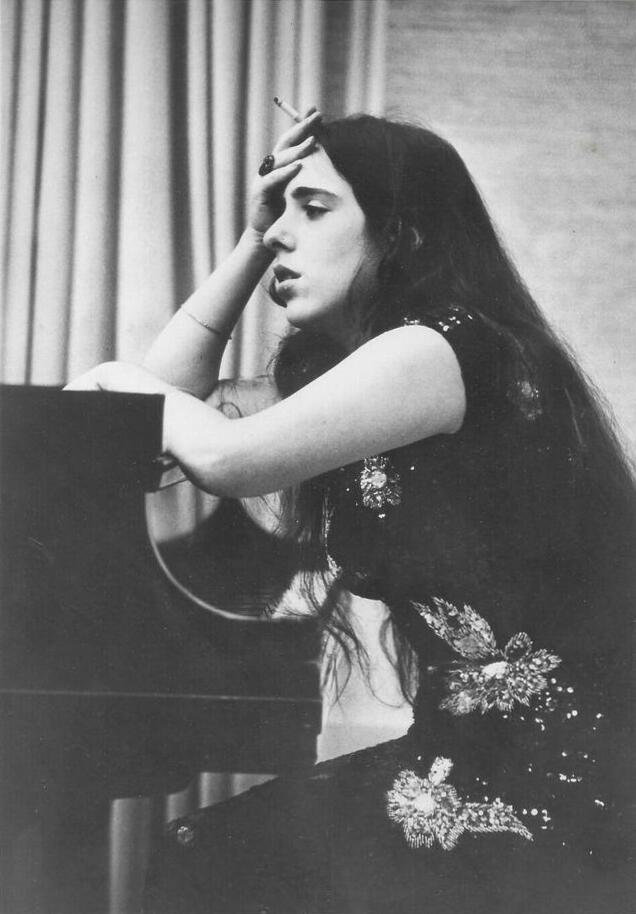

 photo: eva rinaldi · cc by-sa 2.0 ↗
Todd Rundgren
Todd Rundgren spent his teens memorizing two record collections that shouldn't have mixed — his father's Gilbert & Sullivan and French Impressionist LPs, and Philadelphia's wide-open R&B radio — then built a career out of never picking a side. After apprenticing in the British Invasion-indebted Nazz, he went solo and turned his 1970s albums into one-man-band experiments: Something/Anything? (1972), on which he wrote, played, sang, and produced nearly everything himself, and the sprawling, genre-collaging A Wizard, a True Star (1973). He later fronted the prog outfit Utopia and became one of rock's most in-demand producers, shaping records for Grand Funk Railroad, Patti Smith, Meat Loaf, and XTC. Rundgren's real subject was always range — proving a pop song could hold an operetta, a soul medley, and a synthesizer solo at once.
the sound in question
1972
I Saw the LightTodd Rundgren
walk the tributaries ↓
Laura Nyro1960s-70s · Singer-songwriter / Soul
Rundgren was still gigging with the garage band Nazz when Laura Nyro's 1968 album Eli and the Thirteenth Confession rearranged how he thought about songwriting — marrying lyric to melody, moving him toward composing at the piano. He sought her out, and the two grew close enough that he later produced her 1984 album Mother's Spiritual. "Her having such a great influence on me is probably one of the reasons why people think I have a sophisticated sensibility about writing songs, and how the lyrics should impact and mesh with melodies," he told Rolling Stone.
listen: upstream & heresource: Rolling Stone — Todd Rundgren on the greatness of Laura Nyro ↗
1968
Eli's Comin'Laura Nyro
1970
Baby Let's SwingTodd Rundgren
listen forPlay Nyro's "Eli's Comin'" for its rolling, gospel-inflected piano vamp and stacked backing harmonies chasing the beat around corners, then Rundgren's own "Baby Let's Swing" from his 1970 debut Runt — same shuffling piano pulse, same trick of piling voices on top of a simple hook. The song even names its source: it opens "Laura, I saw you open in L.A.," Rundgren's own account of catching Nyro live and going home to write in her style.
Gilbert & Sullivan1880s · Operetta / Comic opera
As a teenager doing poorly in school, Rundgren found an odd way to prove he wasn't dumb. "I wasn't academic, I didn't do well at school, but I wasn't stupid and to prove that I memorised Gilbert & Sullivan's entire catalogue," he told Record Collector — the Victorian operetta duo whose records his father played at home. He and a friend would burst into Pinafore choruses on a whim. The habit resurfaced on record: 1974's double LP Todd includes a straight performance of "The Lord Chancellor's Nightmare Song," the tongue-twisting patter song from their 1882 comic opera Iolanthe.
listen: upstream & heresource: Record Collector — Todd Rundgren interview (childhood, Gilbert & Sullivan, songwriting influences) ↗
1882
The Lord Chancellor's Nightmare Song, from Iolanthe (1882) — predates recorded sound; no performance by Gilbert & Sullivan survivesGilbert & Sullivan
1974
Lord Chancellor's Nightmare SongTodd Rundgren
listen forThere's no Victorian-era recording to hold up against it — Iolanthe premiered in 1882, decades before commercial recording. What survives is Rundgren's own performance on Todd: he takes the entire patter song, a rapid-fire, tongue-twisting list of nightmare images, essentially straight, matching Gilbert's original meter and comic diction rather than parodying it, backed by a full orchestral arrangement instead of a rock band.
The Impressions1960s · Soul / R&B
Rundgren grew up on Philadelphia's uncommonly integrated R&B radio, courtesy of DJ Jerry Blavat, alongside his father's classical records — and never let go of it. On A Wizard, a True Star (1973), he folds a four-song soul medley into the album's collage, opening it with The Impressions' Curtis-Mayfield-written "I'm So Proud," sung nearly straight. The move got him tagged "blue-eyed soul," a label he found reductive: "That's fine, but suddenly, I got misidentified as that at a time when I was progressing through various kinds of music," he told Wax Poetics.
listen: upstream & here
1964
I'm So ProudThe Impressions
1973
Medley: I'm So Proud / Ooh Baby Baby / La La Means I Love You / Cool JerkTodd Rundgren
listen forCue up The Impressions' "I'm So Proud" for Curtis Mayfield's featherlight falsetto lead riding a slow, gospel-rooted sway, then Rundgren's version inside the Wizard medley — he keeps the tempo and the falsetto reach almost note for note, a straight tribute rather than a reinvention, before the medley peels off into three more soul covers and eventually the fuzzed-out garage stomp of "Cool Jerk." The fidelity is the point: Rundgren wanted the version indistinguishable from devotion, not parody.