walking upstream…
The Temptations


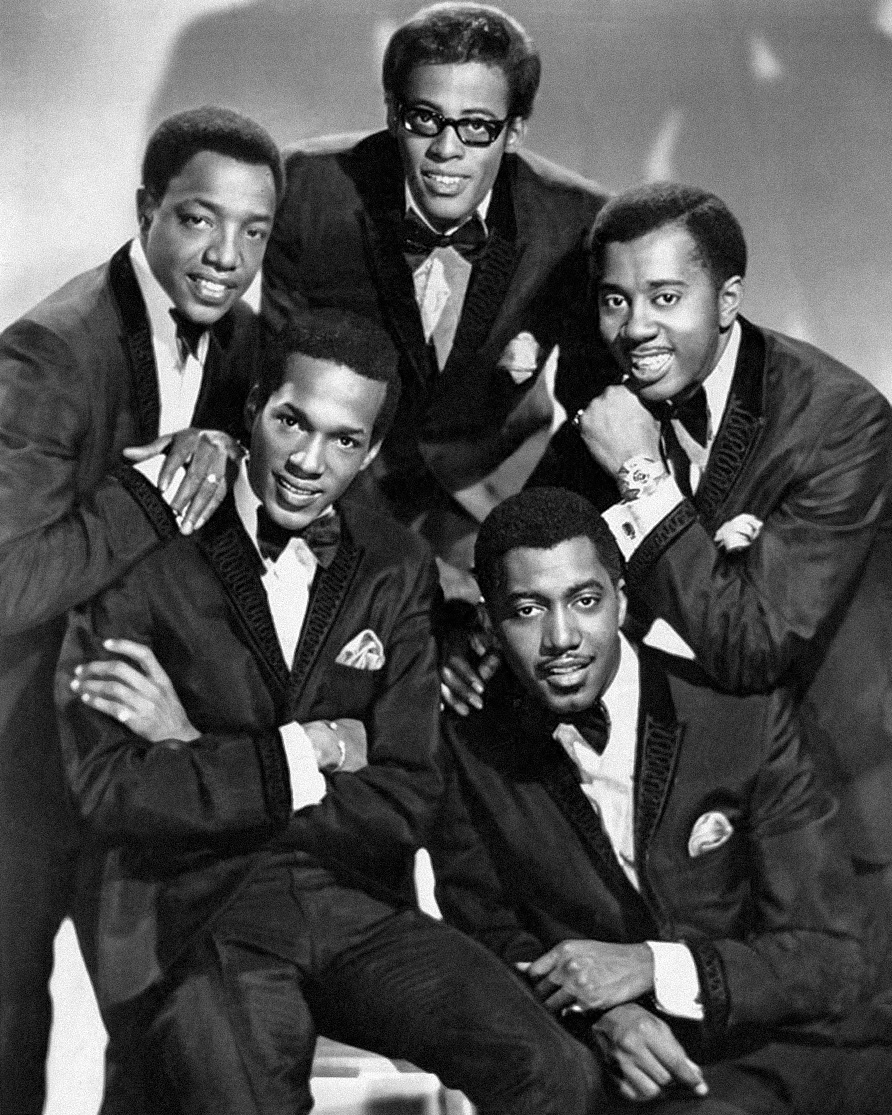
Otis Williams was twelve when his family moved from Texarkana, Texas, to Detroit in 1950, and a show at the Fox Theatre — the Cadillacs, Frankie Lymon and the Teenagers — convinced him he wanted to perform, not just watch. By 1961 he'd merged his group, the Distants, with a rival outfit, the Primes, into the Temptations, and Motown signed them a year later. Smokey Robinson wrote the group onto the charts, but in 1968, with singer Dennis Edwards freshly installed, producer Norman Whitfield tore up that blueprint after Williams himself pushed him toward a record he couldn't ignore. "Cloud Nine" won Motown's first Grammy and rebuilt the group's sound around something they'd first heard blaring from someone else's radio.
the sound in question
1972
Papa Was a Rollin' StoneThe Temptations
walk the tributaries ↓
Sly and the Family Stone1960s-70s · Funk / Soul / Psychedelic rock / R&B
In 1968, Otis Williams was killing time in a New York hotel room with the Philadelphia songwriter Kenny Gamble when a record cut through their conversation. "I ain't never heard nothing like that," he said of Sly and the Family Stone's "Dance to the Music." Back in Detroit, producer Norman Whitfield brushed him off — "I haven't heard of no damn group called Sly and the Family Stone" — until Williams insisted he "check out" the record. Weeks later Whitfield had cut "Cloud Nine," trading the group's tailored harmonies for a churning, multi-voice funk built straight off what Williams had heard.
listen: upstream & heresource: uDiscoverMusic — 'Cloud Nine' ↗
1968
Dance to the MusicSly and the Family Stone
1968
Cloud NineThe Temptations
listen forListen for how neither record settles on one voice: "Dance to the Music" stacks call-and-response vocal fragments, horn blasts, and a fuzzed guitar line over one insistent groove, and "Cloud Nine" does the equivalent trick with the Temptations' five singers — Dennis Edwards, Eddie Kendricks, Melvin Franklin, and both Williamses trading lines — while Dennis Coffey's wah-wah guitar stands in for Sly's fuzz-and-horn clatter, turning tight harmony into psychedelic funk.
Smokey Robinson1960s–70s · R&B / Soul / Motown
Smokey Robinson caught the Temptations live at Detroit's 20 Grand club, and by Otis Williams' account gushed about the choreography before turning serious. "He stopped and he looked at David [Ruffin]," Williams remembered, "he said, 'I've got a song for you.'" Williams and his bandmates, cocky and young, told Robinson to bring it on — they could sing anything. What he brought was "My Girl," built on the same warm, mid-tempo blueprint Robinson had already perfected fronting the Miracles on "You've Really Got a Hold on Me," and the Temptations' first No. 1 followed.
listen: upstream & heresource: PEOPLE (via Yahoo Entertainment) — Otis Williams Details How The Temptations Made 'My Girl' (Smokey Robinson/20 Grand club anecdote) ↗
1962
You've Really Got a Hold on MeSmokey Robinson
1965
My GirlThe Temptations
listen forCue up "You've Really Got a Hold on Me" next to "My Girl" and hear the same Robinson trick twice: a plainspoken opening line delivered almost conversationally, a steady mid-tempo pulse built to cradle rather than drive, and a chorus that swells without raising its voice. David Ruffin's lead on "My Girl" settles into the same unhurried tenderness Robinson sang over the Miracles' arrangement three years earlier — the blueprint traveling intact from writer to singer.
Frankie Lymon and the Teenagers1950s · Doo-wop / Rock and roll
Otis Williams was barely a teenager, newly arrived in Detroit from Texarkana, when a show at the Fox Theatre rearranged his ambitions. "When I saw how people reacted to the Cadillacs, Frankie Lymon and the Teenagers," he recalled, "that's what made me say, 'Hey, I wanna do that.'" It's the earliest formative memory Williams tells about wanting to perform at all — years before Motown, before the Temptations existed even as an idea — and it fixed vocal-group harmony, not solo stardom, as the thing worth chasing.
listen: upstream & here
1956
Why Do Fools Fall in LoveFrankie Lymon and the Teenagers
1962
(You're My) Dream Come TrueThe Temptations
listen forNo interview names a specific Lymon song Williams had in mind, so the lineage here is a family resemblance rather than a straight line: set "Why Do Fools Fall in Love" beside the Temptations' 1962 debut single "(You're My) Dream Come True" and hear the same shape, a bright, boyish tenor riding tight close harmony over a simple doo-wop beat — the sound of a teenage vocal group doing exactly what first pulled Williams toward a stage.