walking upstream…
Sly and the Family Stone
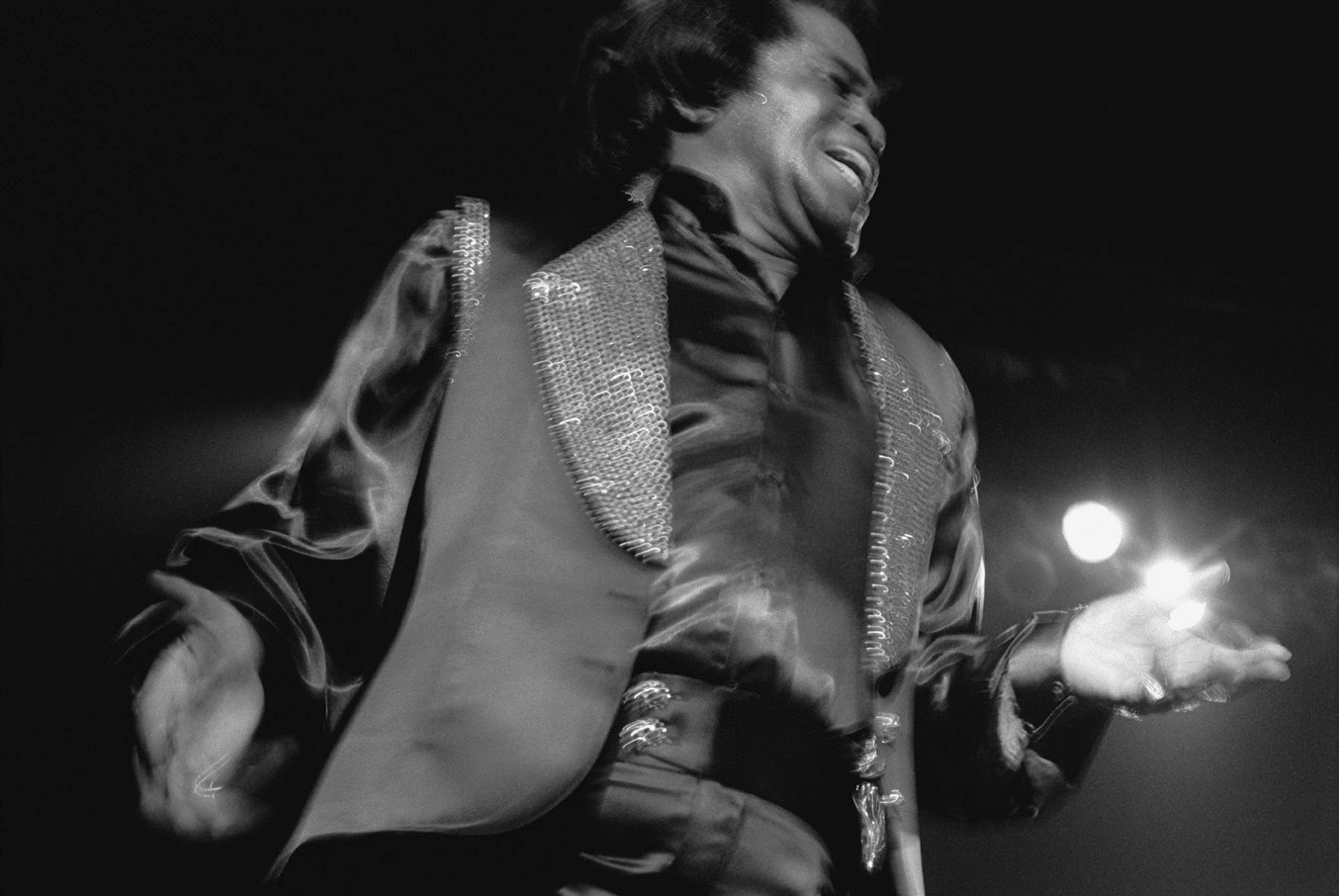


Sylvester Stewart came up in the San Francisco Bay Area as a gospel-schooled prodigy, radio DJ, and record producer before assembling the Family Stone in 1966 as an integrated band of Black and white, male and female players. Across a run of albums from 'Dance to the Music' through 'Stand!' the group fused funk, soul, gospel, and psychedelic rock into a joyous, chant-along style that made everyday uplift sound radical; the darker, drug-clouded 'There's a Riot Goin' On' then tracked the era's collapse from utopian optimism into weary reckoning. The band frayed by the mid-1970s, but its interlocking, bass-forward grooves and communal vocal trade-offs became foundational to nearly all funk, disco, and hip-hop that followed.
the sound in question
1968
Everyday PeopleSly and the Family Stone
walk the tributaries ↓
James Brown1960s–70s · Funk / Soul / Rhythm and blues
Brown's mid-1960s move away from chord changes toward a locked, percussive one-chord vamp — every instrument treated as a drum — is the rhythmic ground Sly's band built its funk on. Histories of funk routinely place Brown and Sly as the two poles of the genre's late-1960s formation.
listen: upstream & here
1965
Papa's Got a Brand New BagJames Brown
1969
Thank You (Falettinme Be Mice Elf Agin)Sly and the Family Stone
listen forSet Brown's 'Papa's Got a Brand New Bag' against Sly's 'Thank You (Falettinme Be Mice Elf Agin)': both strip the song down to a tight, syncopated groove that parks on a single riff, with the bass and guitar biting out interlocking figures rather than following a melody.
Ray Charles1950s–60s · Soul / R&B / Gospel
Charles's fusion of church music with secular R&B — carrying gospel's call-and-response, hand-clap fervor, and testifying vocals into pop songs — is a model Sly, himself raised singing in a family gospel group, extended into secular funk anthems.
listen: upstream & here
1959
What'd I SayRay Charles
1968
Sing a Simple SongSly and the Family Stone
listen forPlay Charles's 'What'd I Say' before Sly's 'Sing a Simple Song': both run on a preacher-and-congregation exchange, a lead line answered by a shouting chorus over a rolling, gospel-rooted groove built for participation.
The Beatles1960s · Rock / Pop / Rock and roll
The mid-1960s psychedelic studio pop the Beatles pioneered — treating the recording as an instrument, layering effects, and blending unrelated genres into a single track — fed the 'psychedelic soul' Sly is credited with helping invent, where a soul band could also sound like a rock band and a pop record at once.
listen: upstream & here
1966
Tomorrow Never KnowsThe Beatles
1968
Dance to the MusicSly and the Family Stone
listen forCue the Beatles' 'Tomorrow Never Knows' before Sly's 'Dance to the Music': both stack fragmented, effect-treated parts — fuzz, drones, and layered voices dropping in and out — into a swirling, studio-assembled collage rather than a straight-ahead band take.