walking upstream…
Boyz II Men

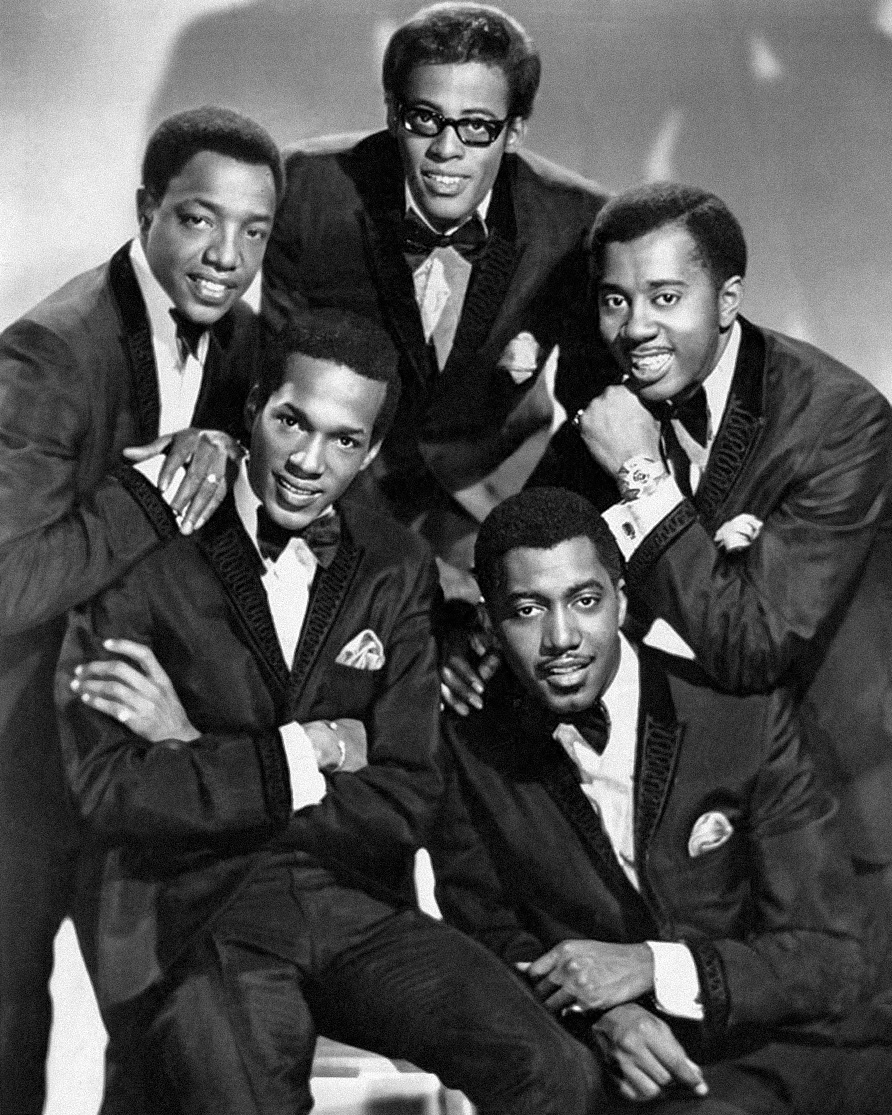
 photo: lunchbox lp · cc by 2.0 ↗
Boyz II Men
sourcesClassic Motown — Cooleyhighharmony (formation background, album facts, Bivins as executive producer) · Encyclopedia.com — Boyz II Men (the Temptations' influence on the group's vocal approach) · Kent Tamplin Vocal Academy — The Temptations (formation and harmony blueprint later cited as Boyz II Men's influence)
In February 1989, four Philadelphia teenagers snuck backstage at a Power 99 radio concert hoping to glimpse hometown star Will Smith and found New Edition's Michael Bivins instead. On the spot, they sang him an a cappella version of his own group's "Can You Stand the Rain." Bivins gave them his number; two years later he executive-produced their debut, Cooleyhighharmony, marrying new jack swing to the four-part harmonies the group — then still called Unique Attraction, trained at Philadelphia's High School for Creative and Performing Arts — had already drilled. The album went nine-times platinum, Motown's best seller in a quarter-century, and its single "Motownphilly" folded Bivins' own account of that hallway audition into a rap verse. What followed was the best-selling run any R&B vocal group has had: precision harmony, built from doo-wop's street corners, sold as pop's biggest ballads.
the sound in question
1994
I'll Make Love to YouBoyz II Men
walk the tributaries ↓
New Edition1980s · R&B / Pop
Nathan Morris put it plainly: "We were always big New Edition fans. In high school we listened to them. They were like the modern-day Temptations to us, so those are the ones that we looked up to." That devotion reshaped the group before Bivins ever heard them, refitting church-honed doo-wop harmonies around New Edition's harder, hip-hop-inflected rhythm. The co-sign did the rest: with a New Edition member executive-producing their debut, urban radio treated four unknown Philadelphia teenagers as heirs apparent rather than newcomers.
listen: upstream & heresource: Cheatsheet — Boyz II Men's Special Connection to New Edition (Nathan Morris and journalist Kelley L. Carter on the New Edition co-sign) ↗
1988
Can You Stand the RainNew Edition
1991
MotownphillyBoyz II Men
listen for"Can You Stand the Rain" is the New Edition song four Philadelphia teenagers sang a cappella backstage to New Edition member Michael Bivins, until he handed over his number. Listen for that same vocal cushion — thick, close-harmonied backing under a pleading lead line — carried into Boyz II Men's own debut single "Motownphilly," where Bivins turns up rapping his own account of the discovery. Both records share a rhythm bed too: the clipped swingbeat groove and stuttering hi-hat New Edition's late-1980s singles popularized, retooled here as the frame under four-part harmony.
The Temptations1960s–70s · R&B / Soul / Motown / Psychedelic soul
Shawn Stockman traced the whole lineage back to Philadelphia radio: "One of my favorite songs at a very young age was The Flamingos' 'I Only Have Eyes For You.' It was such an impressionable record because of the harmonies they used. Even the Temptations and O'Jays dabbled in doo-wop. It was all around us, especially being in Philadelphia," he told Billboard. The Temptations were the loudest of those ghosts — the clean-cut choreography, the bass-anchored four-part blend, a pleading tenor riding on top. Boyz II Men borrowed the architecture wholesale, then stripped away the instruments to prove the voices alone could carry it.
listen: upstream & heresource: Billboard — Boyz II Men Get Vocal About Doo-Wop, A Cappella And Las Vegas Residencies (Shawn Stockman on Philadelphia doo-wop and the Temptations) ↗
1965
My GirlThe Temptations
1992
End of the RoadBoyz II Men
listen for"My Girl" is the Temptations' 1965 signature: David Ruffin's lead riding a bassline recognizable before he even opens his mouth, the other four voices entering as a cushion under him rather than competing for the melody. Boyz II Men's "End of the Road" opens with that same architecture stripped bare — a full a cappella verse before the beat even arrives — then rebuilds it with the same call, one lead testifying while the rest thicken the edges of every held note. The bass voice anchoring the bottom, Michael McCary's job here, is doing what Melvin Franklin did for the Temptations three decades earlier.
Take 61980s-90s · Gospel / Jazz / A cappella
Take 6 had already redefined a cappella by the time Boyz II Men picked up the tradition — six-part gospel-jazz harmony built, as one critic put it, from "four tenors, each capable of astonishing flights of falsetto singing in soprano range, one baritone, and one bass." Boyz II Men's own four voices mapped onto a scaled-down version of that architecture, Michael McCary's bass anchoring the block the way Take 6's did. Decades later, the two groups closed the circle themselves, trading verses on a shared cover.
listen: upstream & heresource: PopMatters — Jazz Today ↗
1988
Spread LoveTake 6
2017
A Thousand Miles Away (feat. Take 6)Boyz II Men
listen for"Spread Love" was Take 6's 1988 breakout, a wall of unaccompanied voices stacking jazz chords no single singer could carry alone — listen for how the bass voice works almost like an instrument, sliding under the block instead of just doubling the root. Nearly three decades later, Boyz II Men brought Take 6 into the studio for "A Thousand Miles Away," a doo-wop cover from their 2017 album Under the Streetlight; the two groups trade the lead and stack behind each other, and the seam between Boyz II Men's smoother soul blend and Take 6's sharper jazz voicings is audible wherever the harmony gets densest.