The Ravens
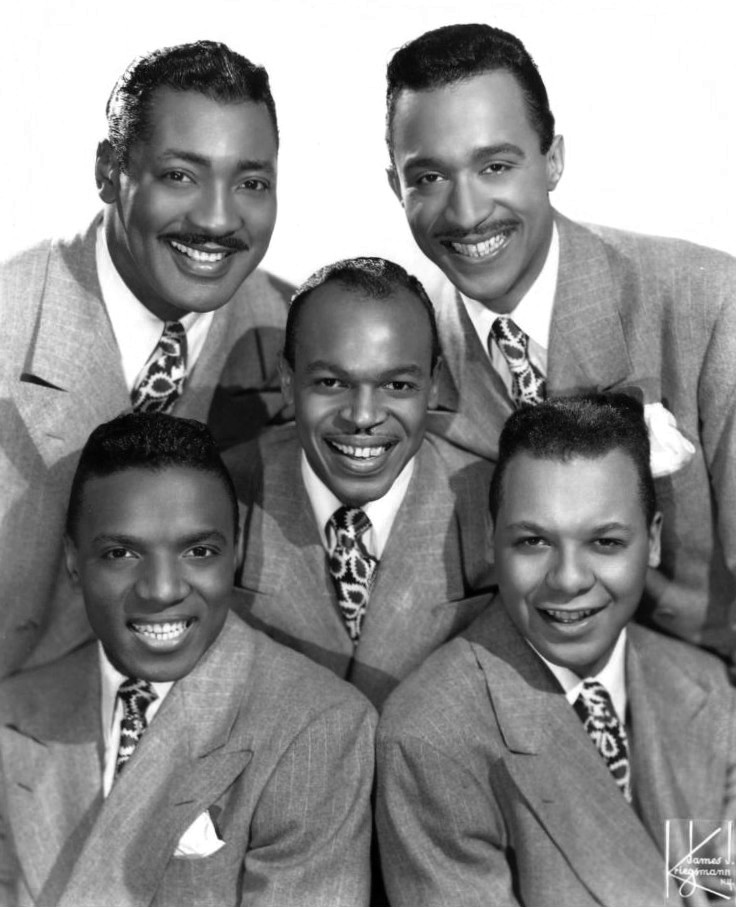

In early 1946, two Harlem waiters at the Four Hundred Tavern — bass Jimmy "Ricky" Ricks and baritone Warren Suttles — spent their slow shifts singing along to the jukebox, worked up enough of a repertoire to quit the bar, and formed a group. Leonard Puzey filled out the sound at first; tenor Maithe Marshall joined in January 1947. The Ravens then did something no vocal group had done before: instead of floating a high tenor over the harmony, as the era's smooth acts did, they put Ricks's cavernous bass on lead, with Marshall's falsetto answering from above. National Records' "Ol' Man River" turned that inversion into a hit in 1947, and that December "Write Me a Letter" became the first R&B record to reach the national pop top 25. The bass lead they pioneered became the founding trick of doo-wop's "bird groups" that followed.
Ricks didn't just admire the Delta Rhythm Boys' bass, Lee Gaines — one historian records that Ricks "chose a singing career due to his being enamored with Lee Gaines' singing," and it was Delta Rhythm Boys records that Ricks and Suttles harmonized to on the jukebox before they ever formed a group. Gaines had, by reputation, one of the deepest voices in the business; RCA reportedly wouldn't let him sing as low as he could, fearing it would widen the groove on their 78s. National had no such rule, so Ricks pushed past where his own idol had been allowed to go.
listen forPlay the Delta Rhythm Boys' 1947 side "Dry Bones" and listen to Lee Gaines's bass carry the tune's rolling melody instead of just anchoring the chord underneath it. Then drop into the Ravens' "Send For Me If You Need Me" a year later: Jimmy Ricks does the same trick even lower, the whole song built around a bass voice up front where a 1948 record would usually put a tenor — the device Ricks studied off Gaines's records before he ever sang professionally.
The Ravens' other showcase voice has a thinner paper trail. Historian Marv Goldberg calls Jimmy Springs, the high tenor of the 5 Red Caps, "a definite influence on future Ravens' lead Maithe Marshall" — though elsewhere in his own writing Goldberg hedges the same idea as just "my feeling," since no interview with Marshall about his own influences has ever surfaced. What's documented instead is the shape of the model: the 5 Red Caps split their records between jump numbers and soaring ballads, Springs handling the ballads, the very role Marshall stepped into answering Ricks's bass.
listen forPlay the 5 Red Caps' "In the Quiet of the Dawn," the ethereal ballad Goldberg singles out from the same 1945 sessions where Springs usually took the high tenor lead, next to the Ravens' 1948 side "September Song," with Maithe Marshall out front. Both trade the group's up-tempo jump-tune energy for a hushed, floating delivery, the tenor drifting above soft harmony instead of driving it — the same role the Ravens built to answer Ricks's bass instead of another high voice.