walking upstream…
The Moonglows
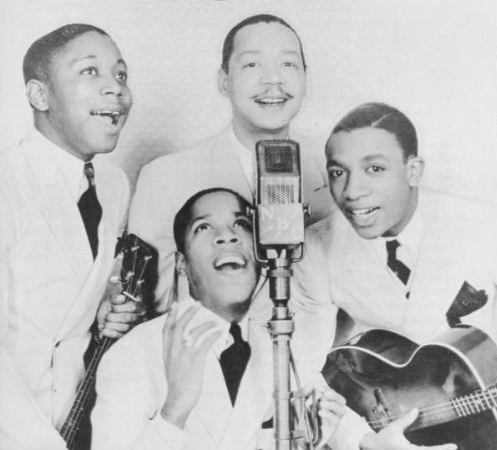


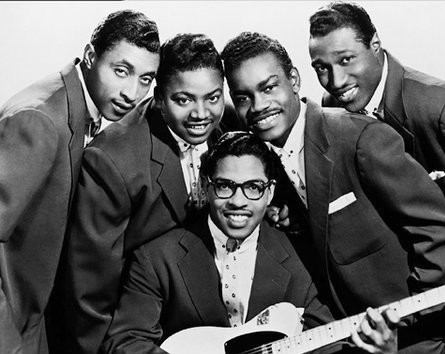 photo: chess records · public domain ↗
The Moonglows
sourcesMarv Goldberg's R&B Notebooks — Moonglows (group history, Ink Spots tie, "Sincerely"/Dominoes bridge claim) · A History of Rock Music in 500 Songs, Episode 28 — "Sincerely" (independent audio corroboration of the Dominoes bridge claim) · The Vocal Group Hall of Fame — The Moonglows (lineup, Freed renaming, Ink Spots tie corroboration) · Kentucky Music Hall of Fame — The Moonglows ("blow note" harmony attribution, Louisville chronology) · Encyclopedia of Cleveland History — Fuqua, Harvey (Cleveland/Chess chronology) · Notable Kentucky African Americans Database — Bobby Lester (biographical detail) · Adam White — "A Moonglow Rising" (Fuqua's defense of Alan Freed's songwriting credit, Motown-era bio)
Harvey Fuqua and Bobby Lester, both fresh out of the military, teamed up in Louisville in 1949 — Lester singing, Fuqua on piano — then drove to Cleveland in 1951 and built a group, the Crazy Sounds, with Alexander "Pete" Graves and Prentiss Barnes. They started out singing vocalese, jazz singing that sets words to instrumental solos, before turning toward rhythm and blues. Cleveland disc jockey Alan Freed heard them in 1952, renamed them the Moonglows — a play on his own on-air name, Moondog — and eventually landed them at Chess Records, where "Sincerely" hit No. 1 on the R&B chart in 1954, built on the group's "blow harmony," a technique other vocal groups spent the decade trying to copy. Fuqua later carried that same ear for blend into Motown, shaping the sound of Marvin Gaye and the Spinners.
the sound in question
1954
SincerelyThe Moonglows
walk the tributaries ↓
The Ink Spots1930s–40s · Vocal harmony / Traditional pop
Harvey Fuqua's uncle Charlie Fuqua sang baritone and played guitar in the Ink Spots, the top-selling Black vocal group of the 1940s — though doo-wop historian Marv Goldberg notes the two barely knew each other, having met only two or three times. Distance didn't erase the influence: the Washington Post's account of Fuqua's career records that as a Louisville teenager he was "trying to impress girls with his renditions of Ink Spots songs" on street corners, years before he had a group of his own. The uncle he barely knew became the sound he learned first.
listen: upstream & heresource: The Vocal Group Hall of Fame — The Ink Spots (Charlie Fuqua/Harvey Fuqua family tie, genre-founder context) ↗
1939
If I Didn't CareThe Ink Spots
1958
Ten Commandments of LoveThe Moonglows
listen forThe Ink Spots built "If I Didn't Care" around the formula that made them famous: a lead tenor sings the verse, then a bass voice breaks from the harmony to recite the bridge as spoken word, plain and unadorned. "Ten Commandments of Love" borrows that same architecture — the group holds a hushed chord while a voice speaks its list of vows instead of singing them. No source ties the two records together directly; the shared device is the clearest trace of the family tie the Washington Post and Marv Goldberg both describe.
Sonny Til and the Orioles1940s–50s · Doo-wop / R&B
Before they were the Moonglows, Fuqua and Lester's group performed vocalese and got nowhere. The turn that mattered, according to the Washington Post's account of Fuqua's career, came when the group "shifted to a rhythm-and-blues style modeled on Sonny Til and the Orioles" — the Baltimore group whose plaintive lead had already made the aching ballad the sound of early-1950s Black vocal harmony. It's a single obituary's claim, not the group's own account, but it's the only record of what the Moonglows actually reached for before Alan Freed ever heard them.
listen: upstream & heresource: Washington Post — "Harvey Fuqua, singer in doo-wop band the Moonglows, dies at 80" (Ink Spots family tie, Sonny Til and the Orioles claim, group chronology) ↗
1953
Crying in the ChapelSonny Til and the Orioles
1955
Most of AllThe Moonglows
listen forSonny Til's lead on "Crying in the Chapel" barely rises above a murmur, the Orioles' harmony holding so still behind him it sounds like a room gone quiet to listen. "Most of All" works the same trick — Bobby Lester's lead never pushes past a hush either, the backing voices thinning to almost nothing so the ache in his phrasing has room to sit. Neither song hurries; the tension is in how long the group can hold back before the lead breaks it.
Billy Ward and His Dominoes1950s · R&B / Doo-wop
Harvey Fuqua and Alan Freed share the writing credit on "Sincerely," but doo-wop historian Marv Goldberg noticed something neither man owned up to. The bridge, he wrote, was lifted from "That's What You're Doing to Me," a 1952 hit written by bandleader Billy Ward for his group Billy Ward and His Dominoes, with a young Clyde McPhatter singing lead — "I can't imagine Ward not suing Chess for part of the profits from 'Sincerely,'" Goldberg added. Podcaster Andrew Hickey reached the same conclusion independently, playing both bridges back to back — proof, if not a confession, that the group's biggest hit carries someone else's melody inside it.
listen: upstream & here
1952
That's What You're Doing to MeBilly Ward and His Dominoes
1954
SincerelyThe Moonglows
listen forThe bridge is where the borrowing hides: the same rising melodic turn that carries Clyde McPhatter's voice on "That's What You're Doing to Me" shows up again under Bobby Lester's lead on "Sincerely," slowed and folded into the Moonglows' hushed harmony. Two researchers reached this independently — one working from the page, one cueing up both bridges back to back — and once you've heard the Dominoes record, the phrase is unmistakable inside the group's biggest hit.