walking upstream…
The Spinners
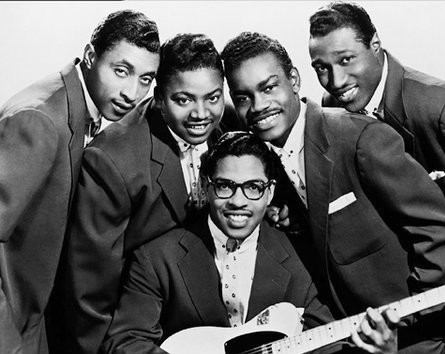


 photo: motown · public domain ↗
The Spinners
sourcesWikipedia · Ear of Newt
Five friends from Detroit's Herman Gardens housing project — Billy Henderson, Henry Fambrough, Pervis Jackson, C.P. Spencer, and James Edwards — formed the Domingoes in 1954, renaming themselves the Spinners in 1961. Signed first to Harvey Fuqua's Tri-Phi label, then folded into Motown when Berry Gordy bought the company in 1963, the group spent most of the decade in the label's shadow, several members working day jobs as shipping clerks and road managers between tours. Everything changed in 1972, when a move to Atlantic Records paired them with producer Thom Bell: 'I'll Be Around' became their first million-seller, and the run of lush, string-swept singles that followed — 'Could It Be I'm Falling in Love,' 'Then Came You,' 'Rubberband Man' — made them one of the defining vocal groups of 1970s soul. They were inducted into the Rock and Roll Hall of Fame in 2023.
the sound in question
1972
I'll Be AroundThe Spinners
walk the tributaries ↓
The Moonglows1950s · R&B / Doo-wop
Henry Fambrough, the Spinners' baritone and last surviving original member, named Harvey Fuqua and the Moonglows as one of the group's defining influences, alongside jazz vocal group the Hi-Lo's, recalling an era when vocal groups were the dominant sound in Black popular music. The connection went beyond admiration: Fuqua, running his own Tri-Phi label out of Detroit, signed the unknown Spinners in 1961 and helped shape their vocal blend before the group ever reached Motown.
listen: upstream & heresource: Rock & Roll Hall of Fame ↗
1954
SincerelyThe Moonglows
1972
I'll Be AroundThe Spinners
listen forCompare the Moonglows' 'Sincerely' with the Spinners' 'I'll Be Around' — both stack a plaintive lead over a warm, tightly blended backing chorus that breathes and swells together rather than simply harmonizing under the melody, the 'blow harmony' technique Fuqua's group popularized.
The Ravens1940s–50s · R&B / Doo-wop
Pervis Jackson, the Spinners' bass singer from the group's 1954 formation until his 2008 death, idolized Jimmy Ricks of the Ravens and built his own deep, resonant approach around Ricks's example — treating the bass as a voice that could carry real weight in the arrangement, not just a foundation note under the harmony.
listen: upstream & heresource: Rock & Roll Hall of Fame ↗
1947
Ol' Man RiverThe Ravens
1970
It's a ShameThe Spinners
listen forSet the Ravens' 'Ol' Man River' beside the Spinners' 'It's a Shame' — Ricks's cavernous bass carries the earlier record's melody outright, while on the later one that same bass-forward instinct is folded into the group's backing blend beneath the lead.
Clyde McPhatter1950s · R&B / Doo-wop / Soul
Bobbie Smith, the Spinners' lead tenor from their 1954 formation until his 2013 death, favored Clyde McPhatter above all other singers as his vocal model. McPhatter's gospel-trained church tenor — the sound he brought first to Billy Ward's Dominoes and then to his own Drifters — set the template Smith reached for: a light, high, urgently emotional lead that could turn a pop lyric into something closer to a testimony.
listen: upstream & heresource: Rock & Roll Hall of Fame ↗
1958
A Lover's QuestionClyde McPhatter
1972
Could It Be I'm Falling in LoveThe Spinners
listen forCue up McPhatter's 'A Lover's Question' next to the Spinners' 'Could It Be I'm Falling in Love' — both let a soaring tenor climb into falsetto at the emotional peak of the song, riding a call-and-response backing vocal rather than fighting it.