Clyde McPhatter

Clyde McPhatter was born in Durham, North Carolina, on November 15, 1932, to a minister father and an organist mother who put him and his siblings in the Mount Calvary Baptist Church choir. After the family moved to Harlem, he joined the gospel group the Mount Lebanon Singers, whose ranks included two brothers of the writer James Baldwin. An Apollo Theater amateur-night win led him to bandleader Billy Ward, who signed him to the Dominoes in 1950; McPhatter's first single with the group, "Do Something for Me," became a top-ten R&B hit within weeks. He broke away in 1953 to front the Drifters, then went solo, but alcoholism and disappointment wore him down — by 1971 he was telling crowds, "I have no fans." He died in 1972, at 39, and was inducted into the Rock and Roll Hall of Fame in 1987.
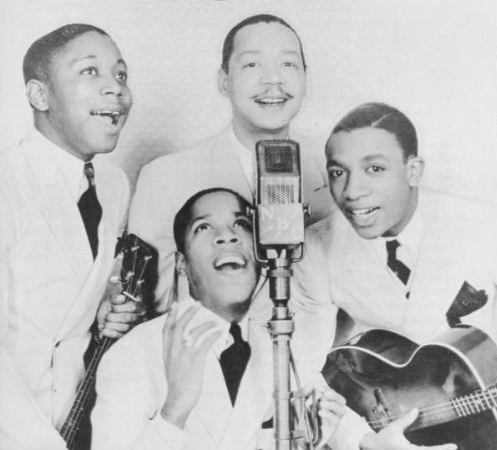
When Billy Ward went looking for a lead voice for his new vocal group the Dominoes in 1950, Bill Kenny was still the standard: the Ink Spots' tenor had, as the Library of Congress's own essay on the group puts it, influenced "every singer who sang a ballad" in R&B and doo-wop for a decade. Ward wanted that same smooth, floating high tenor. What he got, a Vintage Rock magazine profile later put it, was a nineteen-year-old who'd "honed his vocal chops on gospel, not on cooing in the soporific style" Kenny had set — and whose melismatic, church-trained wail turned Ward's assignment into something else entirely.
listen forOn "If I Didn't Care," Bill Kenny's tenor stays smooth and unhurried over Hoppy Jones's spoken-bass reply, never straining past what the melody asks. Cue up the Dominoes' "Do Something for Me" and the same high-tenor-over-harmony shape is still there, but McPhatter can't stay inside it: single syllables stretch across several notes, his voice cracks upward toward a shout, and the plea sounds less delivered than torn loose. Same register Kenny made famous, aimed at something closer to testimony than romance.