walking upstream…
Harold Melvin & the Blue Notes
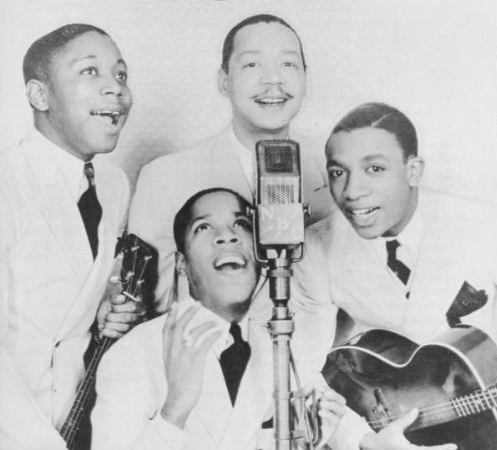

Harold Melvin & the Blue Notes
sourcesWikipedia · BlackPast · Philadelphia Music Alliance
Harold Melvin formed his group as a teenage doo-wop outfit in Philadelphia, the Charlemagnes, renaming them the Blue Notes in 1954 and grinding through nearly two decades of regional singles and lineup changes. Touring alongside the Cadillacs in the late 1960s, Melvin recruited that group's young drummer, Teddy Pendergrass, into his backing band; when lead singer John Atkins quit in 1970, Pendergrass was promoted to the microphone. Under Kenny Gamble and Leon Huff's Philadelphia International banner, the reconfigured group became architects of the lush, socially engaged 'Philly sound,' scoring across 1972-76 with 'If You Don't Know Me By Now,' 'The Love I Lost,' and 'Wake Up Everybody.' Pendergrass's 1976 departure for a solo career ended the group's commercial peak, though Melvin led later lineups until his death in 1997.
the sound in question
1972
If You Don't Know Me By NowHarold Melvin & the Blue Notes
walk the tributaries ↓
The Ink Spots1930s–40s · Vocal harmony / Traditional pop
Melvin's generation of Philadelphia street-corner singers grew up on the vocal-group blueprint the Ink Spots had popularized a decade earlier: a high, plaintive lead floating over hushed, close-harmony backing, the whole arrangement built to wring maximum sentiment from a simple romantic complaint. That template of a tender solo voice cushioned by group harmony runs straight through into the orchestral ballads Gamble and Huff later wrote for the Blue Notes.
listen: upstream & here
1939
If I Didn't CareThe Ink Spots
1973
The Love I LostHarold Melvin & the Blue Notes
listen forSet 'If I Didn't Care' beside 'The Love I Lost' — both hang a fragile, aching lead vocal over hushed group harmonies that never fight for space, letting the lead's vulnerability carry the record.
Clyde McPhatter1950s · R&B / Doo-wop / Soul
McPhatter's gospel-trained tenor, first with the Dominoes and then fronting the Drifters, established a career template Melvin later followed almost move for move: pull a young singer out of the group's ranks and let his raw, church-honed lead carry a harmony act onto the R&B charts. Pendergrass's 1970 promotion from drummer to lead singer repeats that arc, and his surging, testifying delivery echoes the gospel-charged breakouts McPhatter had pioneered two decades earlier.
listen: upstream & here
1953
Money HoneyClyde McPhatter
1975
Bad LuckHarold Melvin & the Blue Notes
listen forPlay 'Money Honey' next to 'Bad Luck' — both let a young, gospel-schooled lead tear loose from the surrounding harmony with an urgency the polished arrangement can barely contain.
Soul Stirrers1940s–50s · Gospel / Jubilee quartet / Gospel quartet
The call-and-response, lead-and-response structure of Black gospel quartets like the Soul Stirrers — one voice testifying over the others' repeated vocal answers — fed directly into the Philadelphia soul the Blue Notes helped define, most explicitly on the group's socially conscious message songs, where Pendergrass's lead alternates with the group's chanted responses in a structure lifted straight from the church.
listen: upstream & here
1956
Touch the Hem of His GarmentSoul Stirrers
1975
Wake Up EverybodyHarold Melvin & the Blue Notes
listen forCompare 'Touch the Hem of His Garment' with 'Wake Up Everybody' — both build from a lead voice delivering an urgent, sermon-like message answered by a repeating group refrain, gospel's call-and-response reframed as secular social commentary.