walking upstream…
The Jimi Hendrix Experience


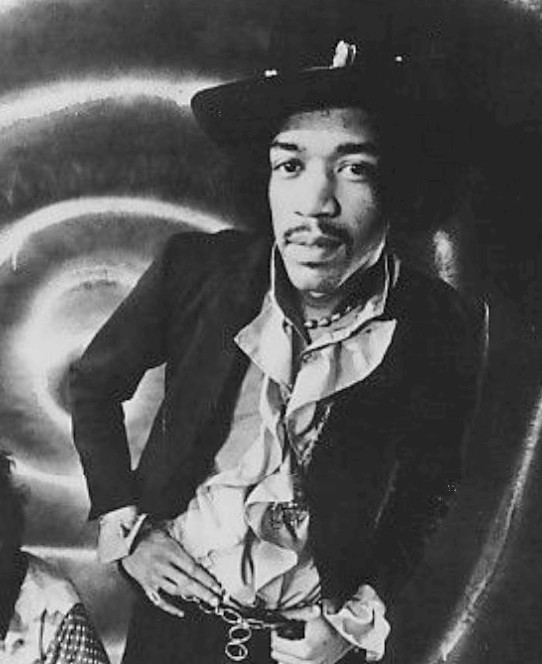 photo: reprise records · public domain ↗
The Jimi Hendrix Experience
sourcesFar Out Magazine -- How Jimi Hendrix assembled The Experience (Redding/Mitchell recruitment) · Rock and Roll Hall of Fame -- The Jimi Hendrix Experience Biography (formation, Dylan/Beatles influence) · Guitar World -- Why Noel Redding quit the Jimi Hendrix Experience (band breakup) · Wikipedia -- Hey Joe (Tim Rose's arrangement and Hendrix's recording) · Official Jimi Hendrix site -- Sgt. Pepper's cover, out now from Hollywood Bowl 1967 (Beatles influence)
In the fall of 1966, Chas Chandler, freshly retired as the Animals' bassist, flew from New York to London with an American guitarist barely known outside Greenwich Village. He assembled a band around him within days: bassist Noel Redding walked into a London audition for a different act and left holding an instrument he'd never played, hired, Chandler recalled, because "he had the same haircut as Jimi, and it looked right." The trio held its first rehearsal on October 6, 1966, and had a UK hit within ten weeks. Three years and three landmark albums later, it ended mid-tour, bassist and guitarist no longer speaking. What held the band together in between was less originality than nerve -- a genius for taking someone else's song, playing it louder and stranger than its author ever intended, and making it sound like the future.
the sound in question
1967
Purple HazeThe Jimi Hendrix Experience
walk the tributaries ↓
Bob Dylan1960s · Folk / Folk rock / Rock
Hendrix arrived in London already a Dylan devotee. "Before I came to England, I was digging a lot of the things Bob Dylan was doing," he told biographer Chris Welch, admitting he'd first mocked Dylan's voice before he "listened to the words." The admiration ran both ways: accepting a 2015 MusiCares award, Dylan singled out Hendrix's cover of "All Along the Watchtower," saying he "took some small songs of mine that nobody paid any attention to and brought them up into the outer limits of the stratosphere." Hendrix cut his version for Electric Ladyland in 1968, and it became the song's definitive reading.
listen: upstream & heresource: Far Out Magazine -- the only meeting of Bob Dylan and Jimi Hendrix (mutual testimony) ↗
1967
All Along the WatchtowerBob Dylan
1968
All Along the WatchtowerThe Jimi Hendrix Experience
listen forDylan's 1967 original is spare: acoustic guitar, harmonica, three chords circling under a plain, urgent vocal. The Experience's 1968 version keeps the chords but rebuilds everything around them -- a wah-drenched guitar answering every vocal line, drums pushing the tempo instead of holding it steady, the whole track layered with echo until Dylan's folk warning sounds like a storm arriving. Where Dylan implies apocalypse, Hendrix's guitar plays it.
Tim Rose1960s · Rock / Folk / Blues
By late 1966, Tim Rose's slow, bluesy "Hey Joe" -- a minor-key ballad reading of what had been a garage-rock staple -- was a regional hit and a fixture of his live set. Chandler was, in his own telling, "a consummate fan" of that record, hunting for a rising guitarist to cut his own version of it when he wandered into Cafe Wha? in Greenwich Village and found Hendrix already playing the same slowed-down arrangement, learned off a jukebox. Chandler signed him within the hour and flew him to London. The Experience's first single wasn't just inspired by Rose's record -- it was built on its exact shape.
listen: upstream & heresource: Official Jimi Hendrix site -- The Birth of an Experience ↗
1966
Hey JoeTim Rose
1966
Hey JoeThe Jimi Hendrix Experience
listen forPlay the two "Hey Joes" back to back. Both drag the tempo into a dirge and ride the same descending minor-key walk -- the song's blues bones. Rose sings it plain, guitar and voice out front, closer to a folk lament than a rock record. Hendrix keeps that walk and that tempo but buries it in wah-wah and feedback, turning Rose's ballad into something psychedelic and ominous: the same skeleton wearing an entirely different skin.
The Beatles1960s · Rock / Pop / Rock and roll
Three days after Sgt. Pepper's Lonely Hearts Club Band hit shops in June 1967, the Experience opened a London show with its title track, the curtains at the Saville Theatre parting on Hendrix already deep into the riff. Paul McCartney, watching from the crowd with George Harrison, called it a rare honor: "To think that album had meant so much to him as to actually do it by the Sunday night, three days after the release... I put that down as one of the great honours of my career." The band repeated the move two months later, opening their Hollywood Bowl set the same way.
listen: upstream & heresource: The Beatles Bible -- McCartney and Harrison watch Jimi Hendrix in London (Saville Theatre) ↗
1967
Sgt. Pepper's Lonely Hearts Club BandThe Beatles
1967
Sgt. Pepper's Lonely Hearts Club BandThe Jimi Hendrix Experience
listen forThe Beatles built their title track around a full band plus a horn section, panned wide across multitrack tape, McCartney's vocal riding a wash of studio effects. At the Hollywood Bowl, the Experience strip all that away: Hendrix's guitar alone carries the melody the horns played, Mitchell's drums push harder and looser than Ringo's did, and Redding's bass fills the space the orchestra used to occupy. A studio fantasy becomes a three-person dare, played live within months of the original's release.