walking upstream…
Deep Purple


sourcesLouder/Classic Rock — the birth of Deep Purple Mk II (formation, Ian Paice quote, Hendrix/Speed King claim) · The Highway Star — Ritchie Blackmore interview, "Just Steal From Everybody" (Hendrix tremolo quote, Bach chord-progression quote) · mu · The Highway Star — Jon Lord interview, Modern Keyboard 1989 (Vanilla Fudge/Mark Stein quote)
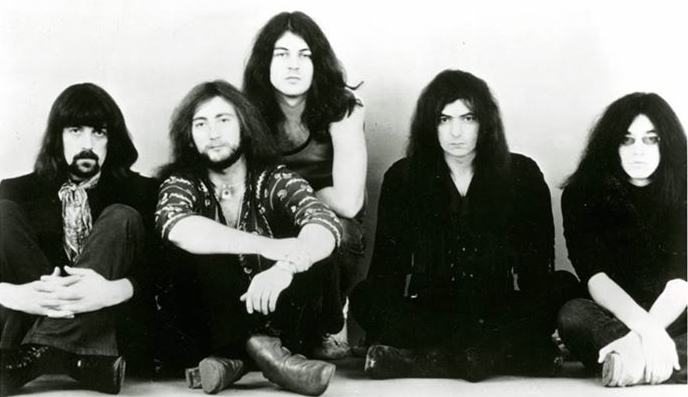
In spring 1967, Chris Curtis, drummer for the fading Merseybeat band the Searchers, cornered London clothier Tony Edwards: "You could be the next Brian Epstein. You should be my manager!" The scheme collapsed when Curtis vanished into a clinic, but the two musicians he'd recruited — guitarist Ritchie Blackmore and classically trained organist Jon Lord — pressed on, adding bassist Nick Simper, singer Rod Evans and drummer Ian Paice, naming the band after Blackmore's grandmother's favorite song. Their heavied-up cover of "Hush" cracked the US Top 5 in 1968, but Britain dismissed them as "manufactured teenybopper rock" until singer Ian Gillan and bassist Roger Glover arrived in 1969, sharpening the band into the lineup behind Deep Purple In Rock (1970) — the record that placed Deep Purple alongside Led Zeppelin and Black Sabbath at heavy metal's birth, riding the collision of Blackmore's raw guitar and Lord's Hammond organ.
the sound in question
1972
Smoke on the WaterDeep Purple
walk the tributaries ↓
Vanilla Fudge1960s · Psychedelic rock / Hard rock / Proto-prog
Before Deep Purple existed, Jon Lord and bassist Nick Simper shared bills with Vanilla Fudge as backing musicians for the Flower Pot Men, watching organist Mark Stein turn the Hammond into a wrecking ball. When the fledgling band needed a debut single, they reached for Fudge's whole method. "Vanilla Fudge had covered a Supremes hit and turned it into something else," bassist Roger Glover said. "That's what the band tried to do with Hush." Drummer Ian Paice later admitted the debt ran through the whole first era: "It's trying to be Vanilla Fudge. It's trying to be Cream... it's not really sure what it is."
listen: upstream & heresource: Louder/Classic Rock — Deep Purple's Hush ↗
1967
You Keep Me Hangin' OnVanilla Fudge
1968
HushDeep Purple
listen forPlay Vanilla Fudge's 1967 "You Keep Me Hangin' On" against Deep Purple's 1968 "Hush" and the shared blueprint is audible immediately: both take a tight, three-minute pop song — a Supremes hit, a Billy Joe Royal country tune — and blow it open with churning Hammond organ, dragged tempo, and dramatic dynamic swells. Lord's organ fills on "Hush" chase the same wrecking-ball effect Mark Stein built on "Hangin' On," turning a throwaway cover into the loudest thing in the room.
Johann Sebastian Bach1720s · Baroque / Classical
Blackmore traced one of the band's most famous instrumental moments straight to the classical training he shared with Lord. "The chord progression in the 'Highway Star' solo — Bm, to a Db, to a C, to a G — is a Bach progression," he said, without naming the specific piece he had in mind. Lord's own Bach fixation ran on a separate, more literal track: he spent his career threading Bach's Toccata and Fugue in D minor into his playing, telling one interviewer in 1982, "I have always wanted to do the Fugue. I have always played a bit of the Toccata on stage."
listen: upstream & here
1704
Toccata and Fugue in D minor, BWV 565Johann Sebastian Bach
1972
Highway StarDeep Purple
listen forBach's Toccata and Fugue in D minor opens with a stormy, cascading run before snapping into tightly ordered counterpoint — a shape Lord's organ chases on the "Highway Star" solo, a rapid, tumbling flourish that resolves into a repeating baroque figure. Blackmore's guitar solo that follows runs its own Bach-derived chord changes underneath, though the exact piece behind them was never confirmed — what's audible is two classically trained musicians reaching for the same 18th-century vocabulary on different instruments.
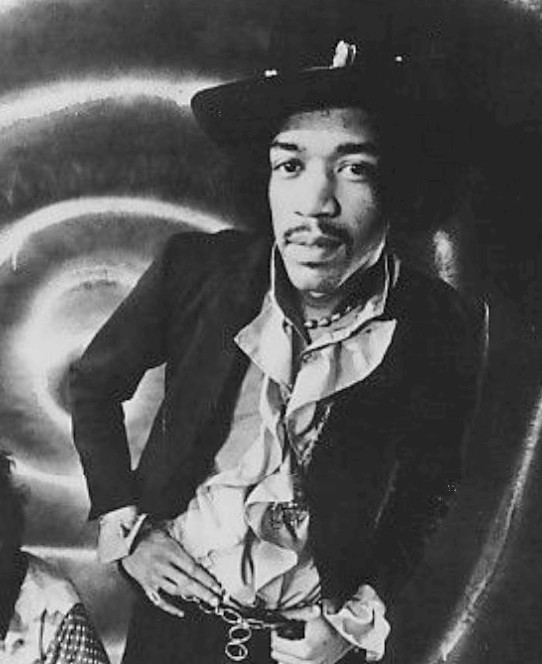
The Jimi Hendrix Experience1960s · Rock / Blues rock / Psychedelic rock
Blackmore has pointed to one specific jolt that pushed Deep Purple off its "manufactured teenybopper rock" reputation: hearing Jimi Hendrix. "Hendrix gave me faith in the music scene," he told Creem in 1975, and the awakening steered the band toward the harder sound that followed. The clearest trace lands on "Speed King," the opening track of Deep Purple In Rock — critic Peter Makowski, writing for Classic Rock, calls it "based around the riffs from two Hendrix songs, Fire and Stone Free," though Blackmore never spelled out the connection in his own words.
listen: upstream & here
1967
1970
Speed KingDeep Purple
listen forSet The Jimi Hendrix Experience's 1967 "Fire" against "Speed King" and listen for the tremolo arm: "I liked the way Hendrix used his tremolo," Blackmore said, "though I don't think I use it the same way... you can get a lot of aggression out with a tremolo arm." "Fire" rides a driving, syncopated riff under Hendrix's vocal; "Speed King" opens with that same feedback-drenched, tremolo-bent attack pushed harder and faster, Blackmore wringing aggression from the technique rather than copying Hendrix's riff shape.