walking upstream…
The Beach Boys

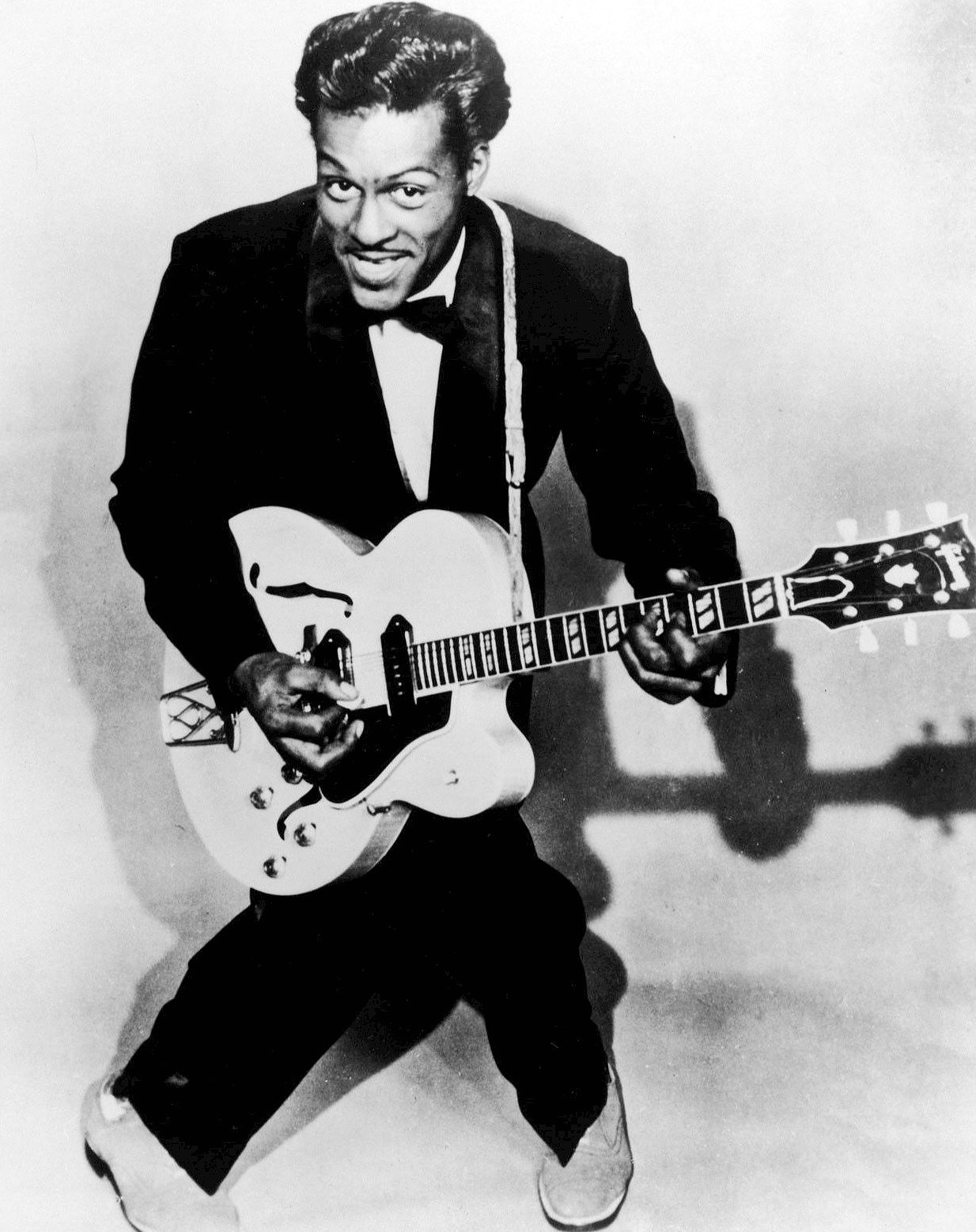
 photo: capitol records · public domain ↗
The Beach Boys
In 1961, in a Hawthorne, California living room, three Wilson brothers, a cousin, and a friend cut a demo about the new local craze, surfing, and became the Beach Boys within the year, with teenage Brian Wilson already the group's songwriter and self-taught arranger, having spent his adolescence transcribing vocal-jazz harmony off a record bought at a nearby store. Surf and hot-rod singles carried the band to fame fast, but the arrangements under the lyrics kept growing stranger and denser as Wilson chased sounds only he could hear. By 1966 he'd left the road to build Pet Sounds out of what he called "feels," unfinished musical fragments he pieced together "like a mosaic," turning three-minute pop songs into orchestral miniatures that rewired what a rock band was allowed to attempt.
the sound in question
1966
Good VibrationsThe Beach Boys
walk the tributaries ↓
The Four Freshmen1950s · Vocal jazz / Traditional pop
Wilson was thirteen when he brought home "Four Freshmen and Five Trombones," bought at a record store in Hawthorne — "I played it, and I was so, so happy to hear it," he said. He wore the grooves out studying how the group stacked four independent vocal lines into one chord, then taught his brothers and cousin to sing their own parts the same way: "I learned how to give the guys parts by listening to The Four Freshmen," he told an interviewer, crediting singer Bob Flanigan's range for teaching him falsetto. The method became the Beach Boys' whole vocal blueprint.
listen: upstream & heresource: WFYI — Brian Wilson on Indianapolis' the Four Freshmen (Wilson's own account of discovering and studying the group) ↗
1956
You Stepped Out of a DreamThe Four Freshmen
1966
God Only KnowsThe Beach Boys
listen forOn "You Stepped Out of a Dream," the Four Freshmen split into four independent vocal lines that cross and recombine on nearly every chord change, none of them simply doubling the melody. "God Only Knows" does the same trick at bigger scale: listen to the outro, where the Beach Boys' voices split into a round, each part entering a beat behind the last until the harmony seems to fold over itself. That layered, contrapuntal blend, prized over a single lead voice, is the technique a teenage Brian Wilson lifted from a record he bought in Hawthorne.
Phil Spector1960s · Pop / Rock and roll / Girl group
At Gold Star Studios, Wilson watched Phil Spector build records by sculpting one instrument at a time, walking to the control-room window and calling out, "Let's hear the electric piano... that's what I want," Wilson remembered. He took the lesson home and turned it into physics: combine a tack piano and an organ, he said, "and that created... a third sound. You get a different sound." For Pet Sounds he hired Spector's own studio players, the session musicians known as the Wrecking Crew, layering their parts the way Spector had layered the Ronettes'.
listen: upstream & heresource: Album Liner Notes — Interview with Brian Wilson (Gold Star Studios sessions with Phil Spector) ↗
1963
Be My BabyPhil Spector
1966
Wouldn't It Be NiceThe Beach Boys
listen forListen to "Be My Baby" for the walking bass line driving under a reverb-drenched wash behind the Ronettes' lead vocal — so many instruments doubling each part that no single player stands out. "Wouldn't It Be Nice" borrows that same bass movement and buries it in layered strings and studio effects until the arrangement reads as one continuous wall rather than separate instruments, the same cavernous reverb Wilson absorbed watching Spector work the control-room glass at Gold Star. The debt is in the density, not any single sound.
Chuck Berry1950s · Rock and roll / Rhythm and blues
Wilson heard Chuck Berry's "Sweet Little Sixteen" and went straight to a surfing friend with a plan: "What about trying to put surf lyrics to 'Sweet Little Sixteen's' melody?" he asked, borrowing the song's structure, its city-by-city catalogue of teenage scenes, and reworking it into a chant of the same shape — "the idea was about, 'they are doing this in this city, and they're doing that in that city,'" he explained, sending his friend Jimmy Bowles off for a list of surf spots. The melodic debt was so exact that Brian's father Murry eventually signed the songwriting credit over to Berry's publisher.
listen: upstream & heresource: Tim's Cover Story — Sweet Little Sixteen/Surfin' U.S.A. (Wilson's account of adapting Chuck Berry's melody) ↗
1958
Sweet Little SixteenChuck Berry
1963
Surfin' U.S.A.The Beach Boys
listen forPlay "Sweet Little Sixteen" against "Surfin' U.S.A." back to back and the vocal melody lines up phrase for phrase, same rise and fall, same chord changes, the same driving, train-like drum pattern underneath. What's swapped out is the words: Berry's roll call of cities where kids gather to hear rock and roll becomes Wilson's roll call of California and Hawaiian surf breaks, sung over a guitar figure lifted almost untouched from the original. It's the clearest one-to-one lineage in the catalogue, close enough that Berry ended up credited as co-writer.