walking upstream…
Fleet Foxes


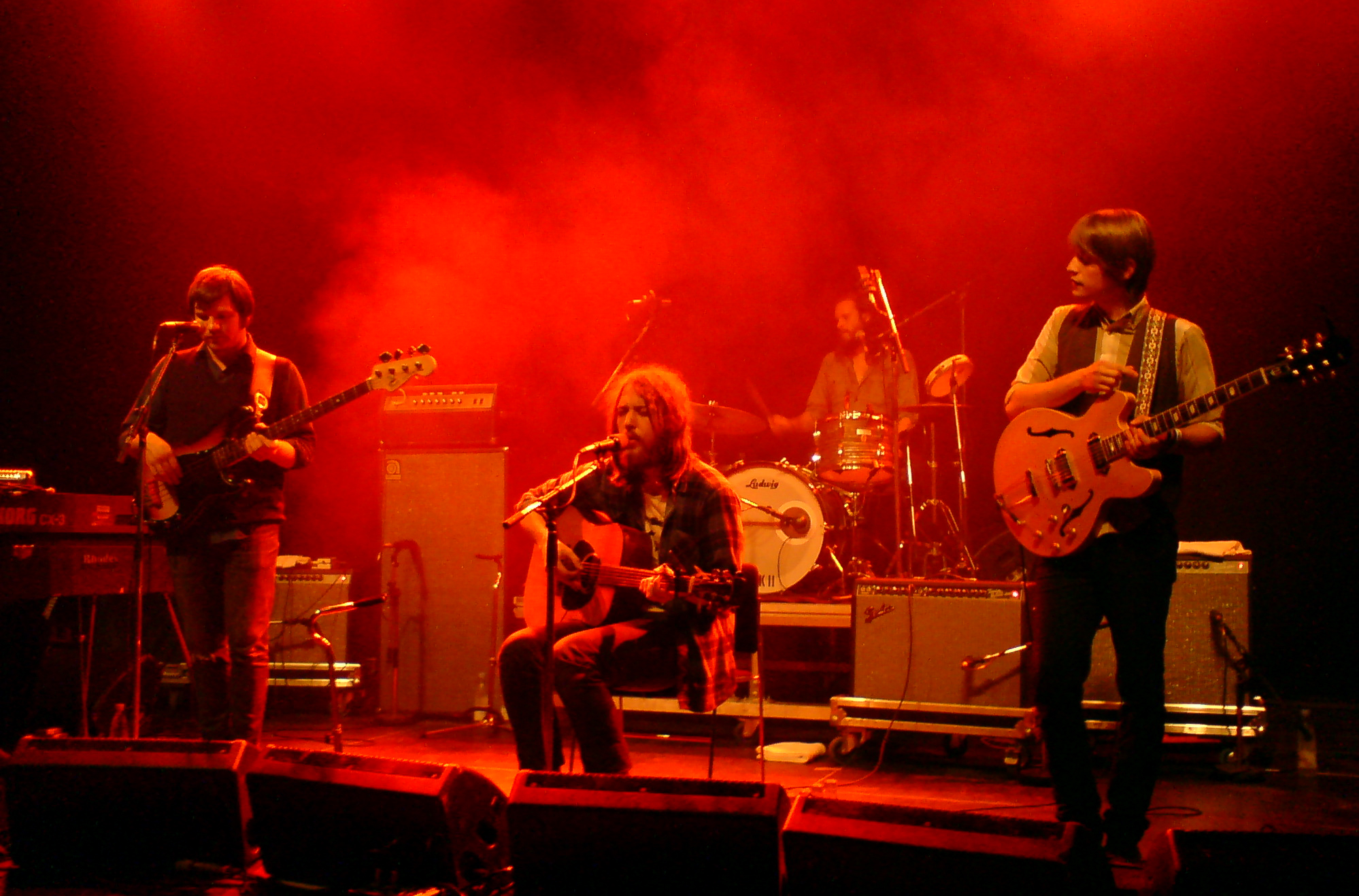 photo: danishdrummer · public domain ↗
Fleet Foxes
sourcesWikipedia · Jambands.com · Highway 81 Revisited
Fleet Foxes formed in Seattle in 2006 when Lake Washington High School acquaintances Robin Pecknold and Skyler Skjelset began writing songs together, bonding over a shared love of Bob Dylan, Neil Young, and Brian Wilson absorbed partly through their parents' record collections. Their self-titled 2008 debut and its preceding "Sun Giant" EP turned that inheritance into something distinctly their own: cascading, chorale-thick harmonies wrapped around pastoral, Pacific Northwest imagery, propelled by drummer Josh Tillman (later known as Father John Misty). 2011's more ambitious "Helplessness Blues" pushed further into CSN and Roy Harper territory before internal strain and Pecknold's own detours slowed the band's pace. "Crack-Up" (2017) and "Shore" (2020) kept expanding the catalog with denser, more restless arrangements built on the same foundation of stacked voices.
the sound in question
2008
White Winter HymnalFleet Foxes
walk the tributaries ↓
Bob Dylan1960s · Folk / Folk rock / Rock
Pecknold and Skjelset have said they bonded early over a shared love of Bob Dylan, and that fingerpicked, plainspoken folk-narrative style became a foundation for Fleet Foxes' quieter material -- verses that unspool like short stories over a simple, repeating acoustic figure rather than building toward a pop hook.
listen: upstream & here
1963
Don't Think Twice, It's All RightBob Dylan
2008
Tiger Mountain Peasant SongFleet Foxes
listen forCompare the unhurried, story-driven fingerpicking of Dylan's "Don't Think Twice, It's All Right" with Fleet Foxes' "Tiger Mountain Peasant Song," Pecknold's own hushed meditation on mortality -- both let a single guitar figure carry a long, plainspoken lyric with almost no other instrumentation.
Neil Young1970s · Folk rock / Country rock / Rock
Neil Young was the other artist Pecknold and Skjelset cited as a formative shared enthusiasm, and his high, keening tenor riding over ragged, open-tuned acoustic guitar left its mark on Fleet Foxes' more plaintive material -- a lonesome vocal line hung over a sparse, unresolved chord bed.
listen: upstream & here
1972
Heart of GoldNeil Young
2008
Blue Ridge MountainsFleet Foxes
listen forSet Young's "Heart of Gold" next to Fleet Foxes' "Blue Ridge Mountains" -- both hang a high, wavering lead vocal over spare, ringing acoustic chords that seem to drift rather than resolve, building tension through space instead of volume.
The Beach Boys1960s · Surf rock / Pop / Psychedelic pop
Pecknold has named Brian Wilson among his and Skjelset's earliest shared touchstones, and Wilson's dense, interlocking vocal-harmony writing -- treating a chorus of voices as its own instrument -- shows up directly in Fleet Foxes' most stacked arrangements, where five singers braid into chords rather than simply doubling a melody.
listen: upstream & here
1966
God Only KnowsThe Beach Boys
2008
MykonosFleet Foxes
listen forListen to the intricate, layered vocal counterpoint of the Beach Boys' "God Only Knows" against the round-like, overlapping vocal entrances of Fleet Foxes' "Mykonos" -- both treat the human voice as an orchestra section, with separate parts moving independently before locking into a shared chord.