walking upstream…
ABBA


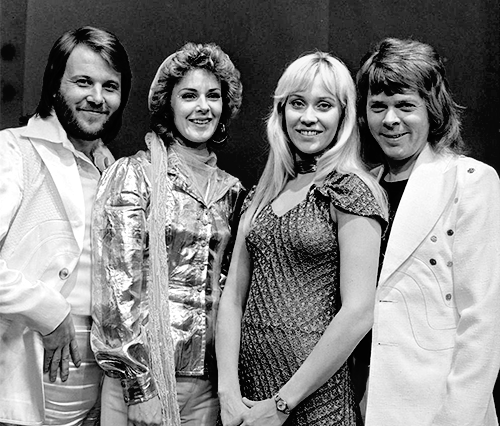
ABBA formed in Stockholm in 1972 from two romantic couples — Agnetha Fältskog and Björn Ulvaeus, Benny Andersson and Anni-Frid Lyngstad — whose first initials gave the group its name. Their 1974 Eurovision Song Contest victory with 'Waterloo' launched a run of meticulously produced, harmony-drenched pop hits that made them one of the best-selling recording acts in history. After disbanding in 1982 the group's catalogue was reframed by the 'Mamma Mia!' stage musical and films, and the four reunited in 2021 for the album 'Voyage.'
the sound in question
1976
Dancing QueenABBA
walk the tributaries ↓
Phil Spector1960s · Pop / Rock and roll / Girl group
Benny Andersson and Björn Ulvaeus built ABBA's records around a dense, layered production style widely compared to Phil Spector's 'Wall of Sound' — massed instruments, heavy echo, and doubled parts stacked into a single enveloping wash, an approach commentators regularly trace back to Spector's early-1960s girl-group productions.
listen: upstream & here
1963
Be My BabyPhil Spector
1974
WaterlooABBA
listen forPlay the Ronettes' Spector-produced 'Be My Baby' and sit with that booming, reverb-soaked opening drum figure and the wall of massed sound behind the lead vocal; then cue the thundering, echo-heavy stomp that opens 'Waterloo' — the same instinct to bury a simple pop hook inside a huge, roomy production.
The Beatles1960s · Rock / Pop / Rock and roll
Andersson and Ulvaeus came up as songwriters in the wake of the Beatles, and ABBA's singles share that group's ambition to treat the three-minute pop record as a small, ornately arranged studio construction — key changes, countermelodies, and unexpected instrumental colors packed into radio-length songs.
listen: upstream & here
1967
Penny LaneThe Beatles
1975
Mamma MiaABBA
listen forCue 'Penny Lane' and notice the bright piano, the brass flourish, and the way the melody keeps pivoting into new sections; then listen to the marimba figure and the tumbling, hook-after-hook structure of 'Mamma Mia' — both crowd a lot of melodic incident and studio color into a compact pop frame.
The Beach Boys1960s · Surf rock / Pop / Psychedelic pop
ABBA's most distinctive sonic signature is the blend of Agnetha Fältskog and Anni-Frid Lyngstad's voices multi-tracked into thick, close harmony — a stacked-vocal approach critics regularly place in the lineage of the Beach Boys' dense harmony writing rather than in any single lead-singer tradition.
listen: upstream & here
1966
Wouldn't It Be NiceThe Beach Boys
1976
Dancing QueenABBA
listen forThrow on 'Wouldn't It Be Nice' and follow how the voices layer into a bright, bell-like chord that sounds bigger than the number of singers; then listen to the interlocking harmonies lifting the chorus of 'Dancing Queen' — the same trick of turning a vocal blend into the song's main hook.