walking upstream…
Motörhead

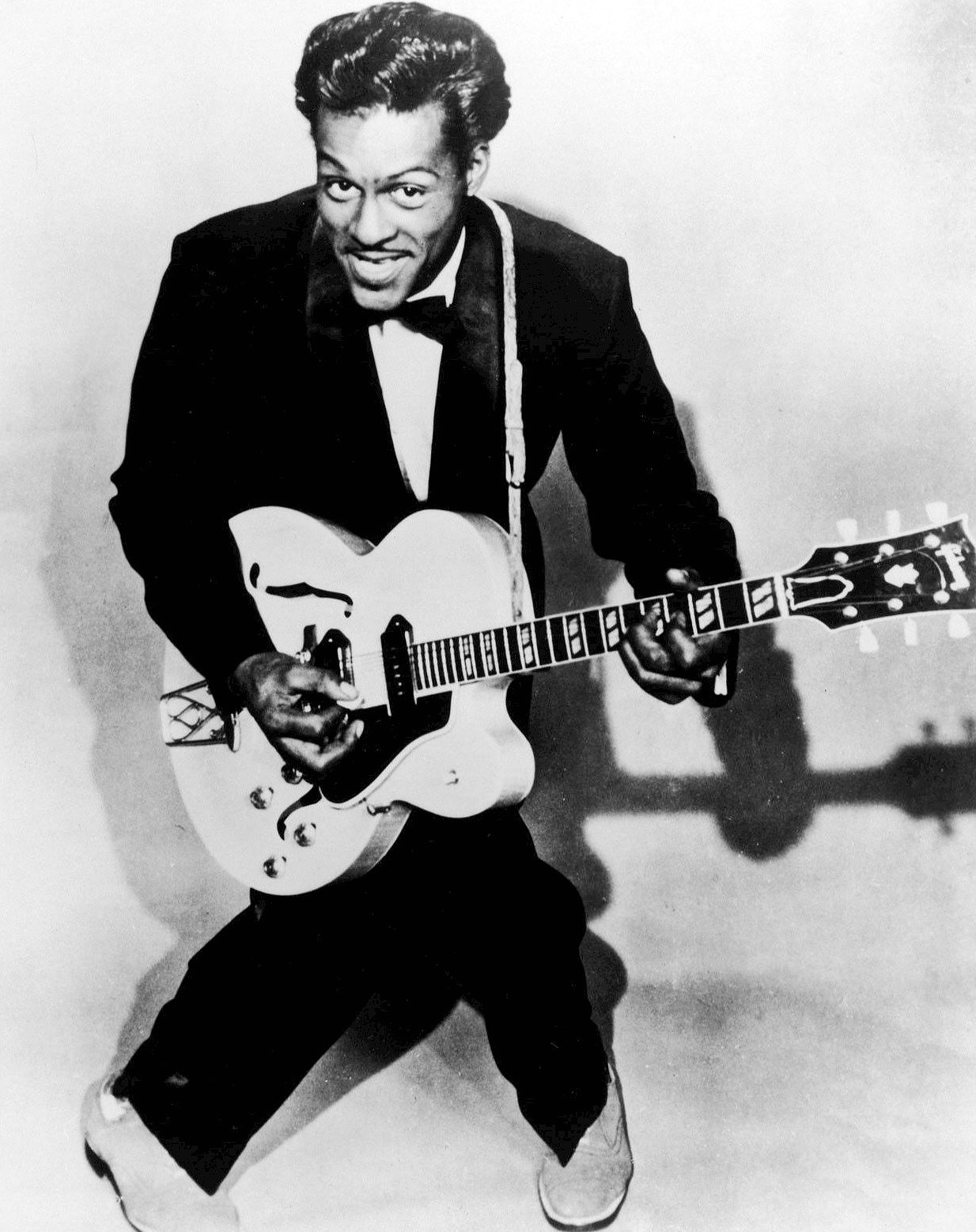

 photo: mark marek · cc by-sa 3.0 ↗
Motörhead
sourcesMusicRadar — Lemmy's stories about Jimi, Ozzy, Little Richard and Motörhead (Little Richard ranking quotes) · Spin — The Spin Interview · Premier Guitar — Motörhead's Lemmy Kilmister · Louder — Lemmy fronting Jools Holland's R'n'B Orchestra, 1995 (Good Golly Miss Molly performance) · Ultimate Classic Rock — Lemmy at the 2012 Chuck Berry tribute concert (Bye Bye Johnny) · Wikipedia — Motörhead (formation, Hawkwind dismissal, discography dates)
Lemmy Kilmister was twelve, catching a crackly signal on a radio in rural north Wales, when he first heard Little Richard, and by his own account he never got over it. Sacked from the space-rock band Hawkwind in 1975, he formed Motörhead the same year on a plan borrowed less from his contemporaries than from his adolescence: "I wanted to form the MC5 of Britain," he told Louder Than War, fast and loud, but rock and roll first. He spent the rest of his career defending that word against the "heavy metal" tag the press kept pinning on him, pointing back to Little Richard, Chuck Berry, and the Beatles as the lineage he actually belonged to. Motörhead's amp-blown gallop was the 1950s turned up past distortion: the same handful of chords, running faster, meaner, and louder than anyone had thought to try.
the sound in question
1980
Ace of SpadesMotörhead
walk the tributaries ↓
Little Richard1950s · Rock and roll / Rhythm and blues / Gospel
Lemmy was twelve, in an isolated corner of north Wales with only a crackling radio for company, when Little Richard's voice reached him. "Little Richard sang how I felt," he said, "and I felt it was mine" — a conviction he never softened. Decades later, ranking his heroes for Classic Rock, he was blunt: "nobody comes within 50 yards of Little Richard," he said, placing him above even the Beatles. So in 1995, handed a mainstream TV slot fronting Jools Holland's big band, Lemmy used it to sing "Good Golly Miss Molly" himself.
listen: upstream & heresource: Louder Than War — An epic interview with Lemmy by John Robb (Little Richard, Beatles/Stones comparison, MC5, Back in the U.S.S.R. quotes) ↗
1958
Good Golly Miss MollyLittle Richard
1980
Ace of SpadesMotörhead
listen forRichard's 1958 "Good Golly Miss Molly" opens on a scream before the first line even lands, a voice pushed past clean control on purpose, riding a boogie-woogie piano built for speed, not polish. Cue up Motörhead's "Ace of Spades" and the same move is audible: Lemmy barks the melody rather than singing it, sitting just ahead of a tempo already redlining. Neither man is chasing pitch. Both are chasing urgency — the sound of a singer racing his own band to the end of the verse.
Chuck Berry1950s · Rock and roll / Rhythm and blues
Lemmy discovered Chuck Berry on a jukebox in a remote part of north Wales, chasing more of it afterward on the crackly signal of Radio Luxembourg. "It took a lot of people to make rock and roll," he told Brave Words, "but he was one of the cornerstones." He admired Berry's economy as much as his riffs — "he'd give you all the makes of the cars... in just a few words, he'd lay it all out" — and in 2012 he paid the debt in person, joining a Cleveland tribute concert to sing Berry's own "Bye Bye Johnny."
listen: upstream & heresource: Brave Words & Bloody Knuckles — Lemmy on Chuck Berry as a cornerstone of rock and roll ↗
1958
Johnny B. GoodeChuck Berry
1977
MotörheadMotörhead
listen forBerry's 1958 "Johnny B. Goode" is built almost entirely around one guitar riff, restated and mutated until the song is that riff wearing a story — a country boy, a guitar, a promise of fame in three verses. Motörhead's self-titled 1977 track runs the same trick at triple the volume: Eddie Clarke's riff repeats through every verse while the band announces its own name in the opening single. Berry's clean twang becomes distortion; the swaggering announcement stays exactly intact.
The Beatles1960s · Rock / Pop / Rock and roll
At sixteen, Lemmy stood in Liverpool's Cavern Club and watched the Beatles before Beatlemania existed, then went home and taught himself their debut LP, Please Please Me, on guitar. He never stopped ranking them first: "they were amazing — greatest rock n roll band ever," he told Louder Than War, adding that where the Rolling Stones "were too art school, the Beatles were real working class." Of their later work he singled out one song by name: "Back in the U.S.S.R. is a great piece of rock n roll, as good as anything I've heard."
listen: upstream & here
1968
Back in the U.S.S.R.The Beatles
1979
OverkillMotörhead
listen for"Back in the U.S.S.R." never lets its own joke slow it down — a Chuck Berry riff sped into a jet-engine sprint, Beach Boys harmonies thrown in almost as a dare, no bridge allowed to cool things off. Motörhead's "Overkill" answers with the same refusal to ease up: a barreling, twin-bass-drum charge that never pauses for breath either. Neither band sounds interested in restraint once the tempo is set — a shared, audible impatience across two very different studios, a decade apart.