walking upstream…
Venom



sourcesRoppongi Rocks — Five Records That Changed My Life, Part 68 · ST NEWS — Gods Rock'n'Roll · Louder/Classic Rock — The true story of Venom, the most influential NWOBHM band of them all (Cronos's Sex Pistols/punk formation; Kiss stage-show ambitions) · Wikipedia — Venom (band) (lead only, background)
In 1979, in Newcastle upon Tyne, bassist-vocalist Conrad Lant — soon Cronos — guitarist Jeff Dunn — soon Mantas — and drummer Tony Bray — soon Abaddon — began rehearsing for Neat Records, the only local label willing to sign them. The members don't agree on how they got there: Cronos calls the Sex Pistols his own "hardcore, life-changing" teenage jolt, while Mantas, who wrote most of the riffs, says punk was "non-existent for me" — his world "starts with the word Judas and ends with the word Priest." What they did agree on was theater: pentagrams, face paint, a single shared copy of the Satanic Bible passed around "to have a bit of a read of" — presentation, Mantas has said, more than doctrine. Welcome to Hell (1981) and Black Metal (1982) named a genre before it existed.
the sound in question
1982
Black MetalVenom
walk the tributaries ↓
Judas Priest1980s · Heavy metal
On a night Mantas remembers as a Thursday in May 1979, on Judas Priest's Killing Machine tour, teenage Jeff Dunn watched guitarist K.K. Downing run onstage and told an interviewer decades later, "that wasn't a human being, that was a god." Three years on, as Mantas, he wrote "Countess Bathory" for Venom's Black Metal — and admitted its mid-song breakdown wasn't original: "the bit... was my little tip of the hat to 'The Ripper.'" The title track's chorus line does the same trick with a lyric borrowed from Priest's "Exciter." Priest remains, in his words, his "favourite band of all time."
1976
The RipperJudas Priest
1982
Countess BathoryVenom
listen forCue up "The Ripper" and let it run past the verses to its stop-start centre section — a tightly coiled, palm-muted riff that drops the tempo before Priest snaps back to speed. Find the same structural move inside "Countess Bathory": after the galloping verse, Venom's guitar drops into a near-identical breakdown figure, the tribute Mantas named outright. It isn't a cover — Venom rebuilds the riff around Cronos's growl — but the shape of the pause-and-strike is unmistakably borrowed.
Motörhead1980s · Heavy metal / Speed metal / Rock and roll
Mantas has said it took years of re-recording old Venom songs before he recognized the debt he owed Motörhead's guitarist, Fast Eddie Clarke: it was "only years later... that I realised just how much of an influence Fast Eddie Clarke's playing was in my early songwriting attempts... that loose clanging rhythm and blues infused solos certainly must have soaked into my musical subconscious." The original, Clive Archer-fronted lineup even worked up "a very respectable version" of Motörhead's "No Class" at their unpaid, pre-fame church-hall rehearsals.
1979
OverkillMotörhead
1980
In League with SatanVenom
listen forPlay "Overkill" and listen to how little the guitar does beyond driving eighth notes under Lemmy Kilmister's bark — the riff is rhythm, not melody. "In League with Satan," Venom's first single, runs on the same principle: a blunt, repeating power-chord figure that never resolves into a hook, just speed and pressure. Where Clarke lets an occasional bluesy fill breathe through the wall of chords, Mantas keeps his flatter still — the debt absorbed, then stripped down further.
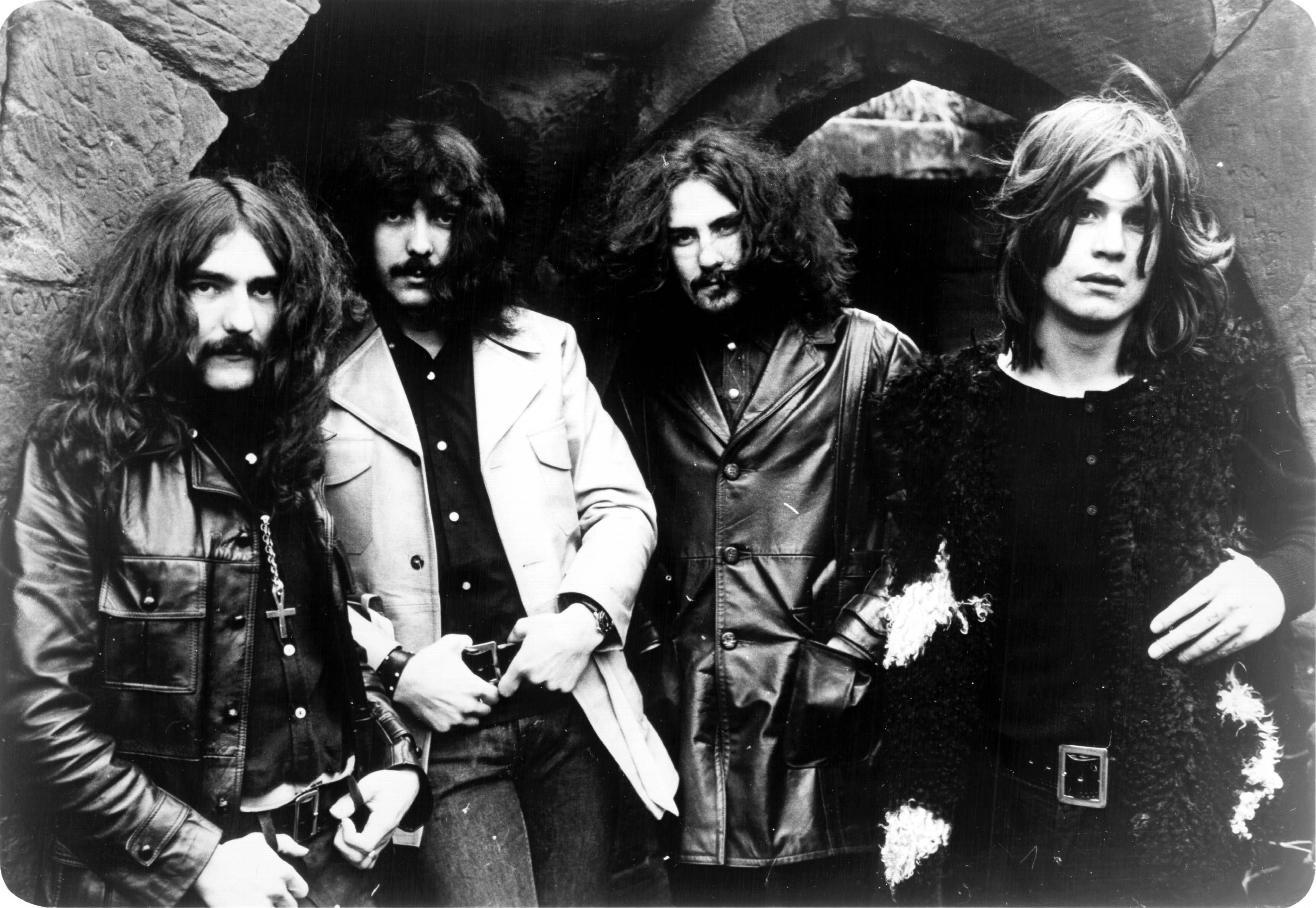
Black Sabbath1970s · Heavy metal / Hard rock
Asked point-blank what inspired the band, Abaddon didn't hesitate — "and Black Sabbath, of course" — and Cronos jumped in: "they were already doing all this dark shit, evil lyrics and that." Mantas later located the debt in his own hands: "Red Light Fever," the first song he ever wrote for Venom, he called "definitely Sabbath-influenced in the beginning with that string bend, and the rest of it is just bluesy rock and roll, which, I guess, is what a lot of Sabbath was, also." In their unpaid church-hall days, the trio also worked up covers of "Paranoid" and "Children of the Grave."
listen: upstream & heresource: Guitar World — Jeff "Mantas" Dunn on the Very Best of Venom, 2017 (Countess Bathory/Black Metal's Judas Priest homages; Red Light Fever's Black Sabbath string-bend mechanism) ↗
1970
ParanoidBlack Sabbath
1981
Red Light FeverVenom
listen forListen to the bent, blues-scale phrasing guitarist Tony Iommi works into "Paranoid" once the riff opens up for the solo — a slow pull against the string, used as punctuation. "Red Light Fever" opens on the same move: a single note dragged upward before the riff locks into a straight blues-rock shuffle, the exact "string bend... bluesy rock and roll" Mantas pointed to when asked about the song decades later.