walking upstream…
Marvin Gaye


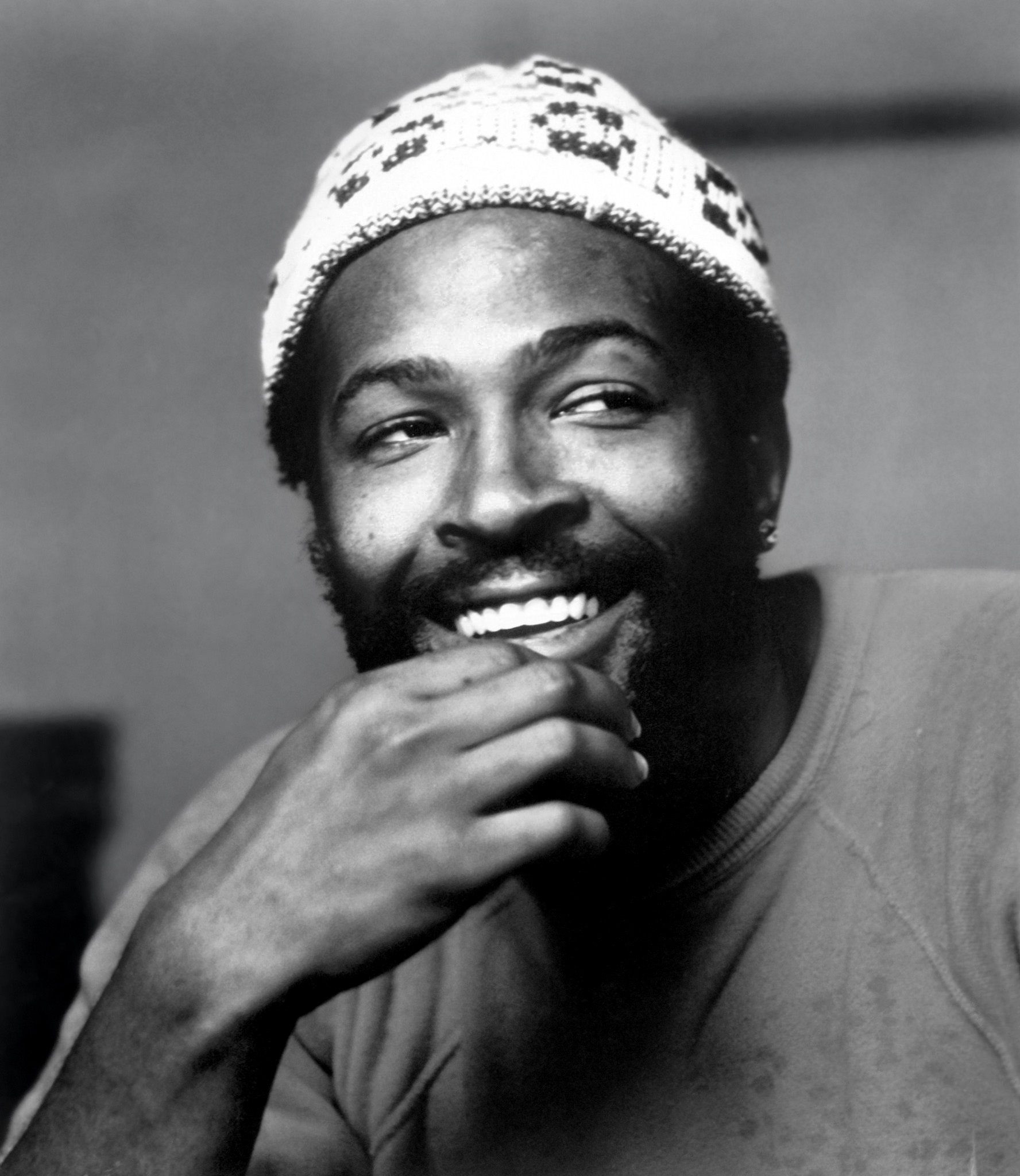
Marvin Gaye started singing in church at four, his minister father on piano, and by eleven a school-play rendition of Mario Lanza's 'Be My Love' convinced everyone he had a professional voice. What he wanted to do with it was become a jazz-pop crooner: his 1961 debut single, released under his birth surname 'Gay,' was a hopeful cover of the standard 'The Masquerade Is Over.' Motown had other plans, pushing him toward rasping, uptempo R&B; labelmates David Ruffin and Levi Stubbs pushed harder still, and Gaye later said their grittier voices taught him to 'develop a growl.' By the late 1960s he had cultivated what one account called 'three distinct voices: his smooth, sweet tenor; a growling rasp; and an unreal falsetto,' stacking them against each other on 'What's Going On' and turning Motown's hit machine into something that finally sounded entirely his own.
the sound in question
1971
What's Going OnMarvin Gaye
walk the tributaries ↓
Nat King Cole1940s–50s · Traditional pop / Jazz / Vocal jazz
Nine months after Nat King Cole died in February 1965, Gaye walked into Motown's Hitsville studio to record an entire tribute album — by UDiscover Music's account, he went in 'to pay his musical respects to one of his singing idols.' Motown had its own reasons for indulging him, building the record partly to 'gain a valuable foothold in America's lucrative supper club market,' but it sold poorly and Gaye's soul career resumed almost immediately. Even so, the tribute stands as the clearest confession he ever recorded of a debt: Cole's vocal styles had shaped him, by his own account, long before Motown ever signed him.
listen: upstream & heresource: uDiscoverMusic — A Tribute To The Great Nat King Cole (Cole tribute album context) ↗
1951
UnforgettableNat King Cole
1965
UnforgettableMarvin Gaye
listen forPlay Cole's 1951 'Unforgettable' back to back with Gaye's 1965 version from the tribute album, same title and same melody, and listen for what Gaye borrows on purpose: the unhurried enunciation, each syllable given its full length before the next one starts, and a vibrato that never turns showy. Gaye's voice is huskier and younger than Cole's, and he can't fully erase the soul singer underneath the crooner's restraint, but the phrasing choices — where he holds a note, where he lets a line simply stop — are a direct, deliberate copy of Cole's original arrangement of the standard.
Ray Charles1950s–60s · Soul / R&B / Gospel
Ask Gaye who he listened to before Motown, and he answered plainly: 'my four favorite solo singers were Rudy West, Clyde McPhatter, Little Willie John and Ray Charles.' Of the four, Charles's example carried the furthest — a gospel-trained voice that never flinched at singing about the body instead of the spirit, blues and jazz phrasing bent into the same take. Gaye came up in the same tension, a minister's son leaving church pews for secular radio, and the vocabulary of moans, shouts, and call-and-response that Charles had already made acceptable gave a preacher's boy a way to sound devout and carnal in the same breath.
listen: upstream & heresource: MarvinGaye.net — About (Gaye's own list of favorite singers, incl. Ray Charles) ↗
1959
What'd I SayRay Charles
1982
Sexual HealingMarvin Gaye
listen forPlay Charles's 'What'd I Say' next to Gaye's 'Sexual Healing' and listen for what's doing the seducing: not the melody but the groove, and the voice riding on top of it in moans and half-words more than lyrics. Charles built his record on call-and-response grunts traded with his backing singers over a spare, vamping piano riff; Gaye strips that down further, one voice sighing and repeating over a slow, reggae-tinged drum pulse instead of a full band. Different decades, different rhythm section, same bet — that a groove left alone long enough will do more than words can.
Frank Sinatra1950s · Traditional pop / Vocal jazz
Before Motown built him a rougher voice, Gaye wanted to be smooth in a very specific way — the arrangements, phrasing, and matinee-idol polish of Frank Sinatra. In May 1961, Tamla issued his first single under his birth surname 'Gay': a cover of the standard 'The Masquerade Is Over,' the kind of orchestral heartbreak song Sinatra had built a career on. Motown steered him toward up-tempo R&B within the year, but the ambition didn't disappear — five years later, with soul hits behind him, Gaye told Billboard plainly, 'I'd like to become known as a more versatile singer.'
listen: upstream & here
1956
I've Got You Under My SkinFrank Sinatra
1961
(I'm Afraid) The Masquerade Is OverMarvin Gaye
listen forPlay Sinatra's 'I've Got You Under My Skin' next to Gaye's 'The Masquerade Is Over' and the debt is in the pacing, not the voice — both singers let a full orchestra swell and recede around unhurried, conversational phrasing, taking their time inside a lyric instead of racing the beat. Gaye's tenor is younger and thinner than Sinatra's baritone, still finding the confidence of that laid-back delivery, but the intent is the same: sell heartbreak through control, not volume. It's the version of Gaye that Motown shelved within the year, before the growl and the uptempo singles took over.