walking upstream…
Jagjit Singh

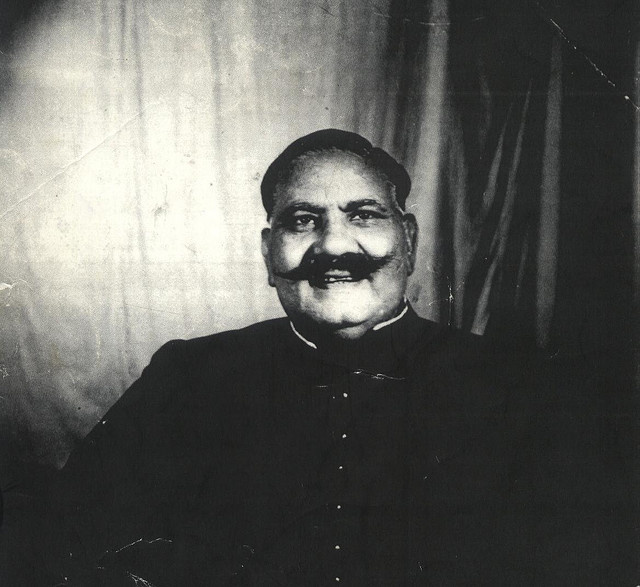
 photo: krupasindhu muduli · cc by-sa 3.0 ↗
Jagjit Singh
sourcesWikipedia · The Pioneer — "I am Successful Because I am Simple" (Singh's own account of training, influences, and career, via jagjitchitra.wordpress.com) · The Guardian — Jagjit Singh obituary (career turning points, The Unforgettables) · Daily Excelsior — "Philanthropist face of Jagjit Singh" (backs the Mehdi Hassan anecdote) · Indian Express — the haircut anecdote and its rift with his father (backs the bio)
Born Jagmohan Singh in 1941 in Sri Ganganagar, Rajasthan, he grew up singing shabads in a devout Namdhari Sikh household before six years of classical training under Ustad Jamal Khan, a teacher descended from the Mughal court musician Tansen. He left for Bombay in 1965 against his family's wishes, and when the record label HMV needed a cover photo for his debut EP, he chose to shed the turban, hair, and beard that marked him as Sikh: "I still had my long hair, my beard and my turban, and that was when I decided to cut my hair," he recalled — a decision his biography records as nearly ending his bond with his father. Paired with his wife Chitra, he then remade the ghazal itself: their 1976 album The Unforgettables set old Urdu couplets to guitar and simple tunes, turning a connoisseur's form into something a whole country could hum.
the sound in question
1981
Hothon Se Chhoo Lo TumJagjit Singh
walk the tributaries ↓
Mehdi Hassan1970s · Ghazal / Filmi / Hindustani classical
On a concert tour in Karachi, Jagjit Singh's real reason for going was to see Mehdi Hassan, who was by then bedridden and short of money — he visited, pressed cash into his hands, and, as the Daily Excelsior later recorded, "donated his entire concert fee, an act of deep respect from one artist to his Guru." The gesture only confirmed what critics already heard in his singing: as the Indian news site Scroll.in put it, "a fan of ghazal maestro Mehdi Hassan, Jagjit Singh initially followed his icon's style, but later evolved his own."
listen: upstream & heresource: Scroll.in — "Before Jagjit Singh, there was another ghazal king" (backs the Mehdi Hassan influence) ↗
1971
Ranjish Hi SahiMehdi Hassan
1999
Hoshwalon Ko Khabar KyaJagjit Singh
listen forPlay Hassan's 1971 recording of "Ranjish Hi Sahi" against Singh's "Hoshwalon Ko Khabar Kya," from the 1999 film Sarfarosh, and the difference critics point to becomes audible: Hassan glides through each line with full classical ornament, drawing on his gharana — his hereditary classical lineage — training, while Singh flattens the same kind of couplet into a steadier, plainer legato line, his voice sitting in a noticeably deeper register.
Talat Mahmood1950s · Filmi / Ghazal / Bollywood playback
Asked, late in life, whether he had ambitions left, Jagjit Singh talked instead about old debts: "I am also a great devotee of old Hindi film music and may be, I will pay a tribute to some of my favorite singers like Talat Mehmood one day," he told The Pioneer. He never made that record, but the debt is there anyway — obituaries name Talat Mahmood, the hushed-baritone star of 1950s film ghazals, among the singers who shaped Singh's ear before he found his own sound.
listen: upstream & heresource: India Today, via sikhchic.com — "The Golden Voice Lives on" (backs the Talat Mahmood and Bade Ghulam Ali Khan influences) ↗
1959
Jalte Hain Jiske LiyeTalat Mahmood
1981
Hothon Se Chhoo Lo TumJagjit Singh
listen forSet Talat Mahmood's "Jalte Hain Jiske Liye," from the 1959 film Sujata, beside Singh's "Hothon Se Chhoo Lo Tum," from Prem Geet, his 1981 debut as a Bollywood music composer, and the kinship is unmistakable in the restraint: both singers keep the melody low and close-mic'd, letting a soft, faintly worn baritone carry the ache of the lyric rather than any vocal flourish or ornament.
Bade Ghulam Ali Khan1940s–1950s · Hindustani classical / Khayal / Thumri
Before he simplified anything, Jagjit Singh spent years absorbing the classical tradition he would later strip down for mass audiences. His Independent obituary, by the critic Ken Hunt, records that alongside his six years of formal training he "soaked up recordings by such vocal livewires within their separate, strict classical traditions as Abdul Karim Khan, Amir Khan and Bade Ghulam Ali Khan" — de rigueur listening, Hunt wrote, for any serious Indian classical student of his generation.
listen: upstream & heresource: The Independent — obituary by Ken Hunt (backs the Bade Ghulam Ali Khan influence) ↗
Yaad Piya Ki AayeBade Ghulam Ali Khan
1988
Woh Kaagaz Ki KashtiJagjit Singh
listen forBade Ghulam Ali Khan's thumri "Yaad Piya Ki Aaye" stretches a single line of longing into minutes of melisma, each syllable bent and re-bent in classical taans. Singh's "Woh Kaagaz Ki Kashti," from his 1988 album Aaj, keeps the same plaintive high note but resolves it fast, trading the taans for one steady, hummable tune — the classical foundation, deliberately cleared of its own ornament.