walking upstream…
Tom Jobim

sourcesTV Cultura — Roda Viva · Juliana Ripke — "Villa-Lobos e Tom Jobim" (Jobim's account of first hearing Villa-Lobos on record; her paired performance of Bachianas Brasileiras No. 5 and "Passarim") · Templo Cultural Delfos — "Antônio Carlos Jobim (Tom Jobim) – a última entrevista" (Jobim naming Villa-Lobos his first confessed idol) · SciELO / Alea — "Comparar o incomparável · Daniella Thompson (Brazzil magazine) — "Plain João · Instituto Antônio Carlos Jobim — Cronologia (dating the start of the bossa nova movement to 1958) · Washington Post — "Antonio Jobim Dies at 67" (biographical facts, obituary)
Born Antônio Carlos Jobim in Rio de Janeiro on January 25, 1927, he took up piano in 1941 at his stepfather's urging, studying with Hans-Joachim Koellreutter and later Lúcia Branco before briefly enrolling in architecture school. By the early 1950s he was working nights as a club pianist and arranging for Continental Records, absorbing samba-canção from the bandstand while writing songs of his own. His 1956 partnership with poet Vinícius de Moraes, begun on the musical Orfeu da Conceição, gave him a lifelong collaborator; 1958, the year João Gilberto's guitar remade one of Jobim's own compositions into "Chega de Saudade," is the year Brazil's Jobim Institute dates the start of bossa nova. He died in New York on December 8, 1994, having built a harmonic language, rooted equally in Rio's erudite and popular traditions, that jazz musicians worldwide would spend decades borrowing.
the sound in question
1962
Garota de IpanemaTom Jobim
walk the tributaries ↓
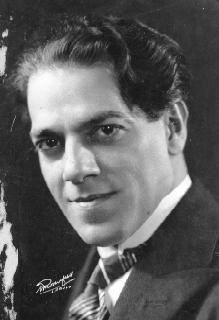
Heitor Villa-Lobos1930s-40s · Classical / Nationalist
As a teenager, an import pressing of Heitor Villa-Lobos's Choros No. 10 arrived at the Jobim house, conducted by Werner Janssen. When the record started, so did the tears. "Tudo estava lá! Minha querida floresta, os pássaros, os animais, os índios, os rios, os ventos, em suma, o Brasil," he recalled — "everything was there: my beloved forest, the birds, the animals, the rivers, the winds, in short, Brazil." Decades later, on the TV Cultura program Roda Viva, a journalist asked point-blank whether Villa-Lobos had been his principal reference, personally and musically. "Completamente," Jobim answered. Completely.
listen: upstream & here
1938
Bachianas Brasileiras No. 5 (Ária – Cantilena)Heitor Villa-Lobos
1987
PassarimTom Jobim
listen forVilla-Lobos's Bachianas Brasileiras No. 5 opens with a wordless soprano line drifting over slow, barely resolving harmony — here sung by Nadine Sierra. Jobim's 1987 "Passarim" runs the same trick decades on: a long-breathed vocal phrase floating over chords that keep changing color underneath it instead of pushing toward a cadence. São Paulo researcher Juliana Ripke arranged and performed the two works back to back specifically to make the kinship audible — the same unhurried vocal line, doing nothing but riding the harmony under it.
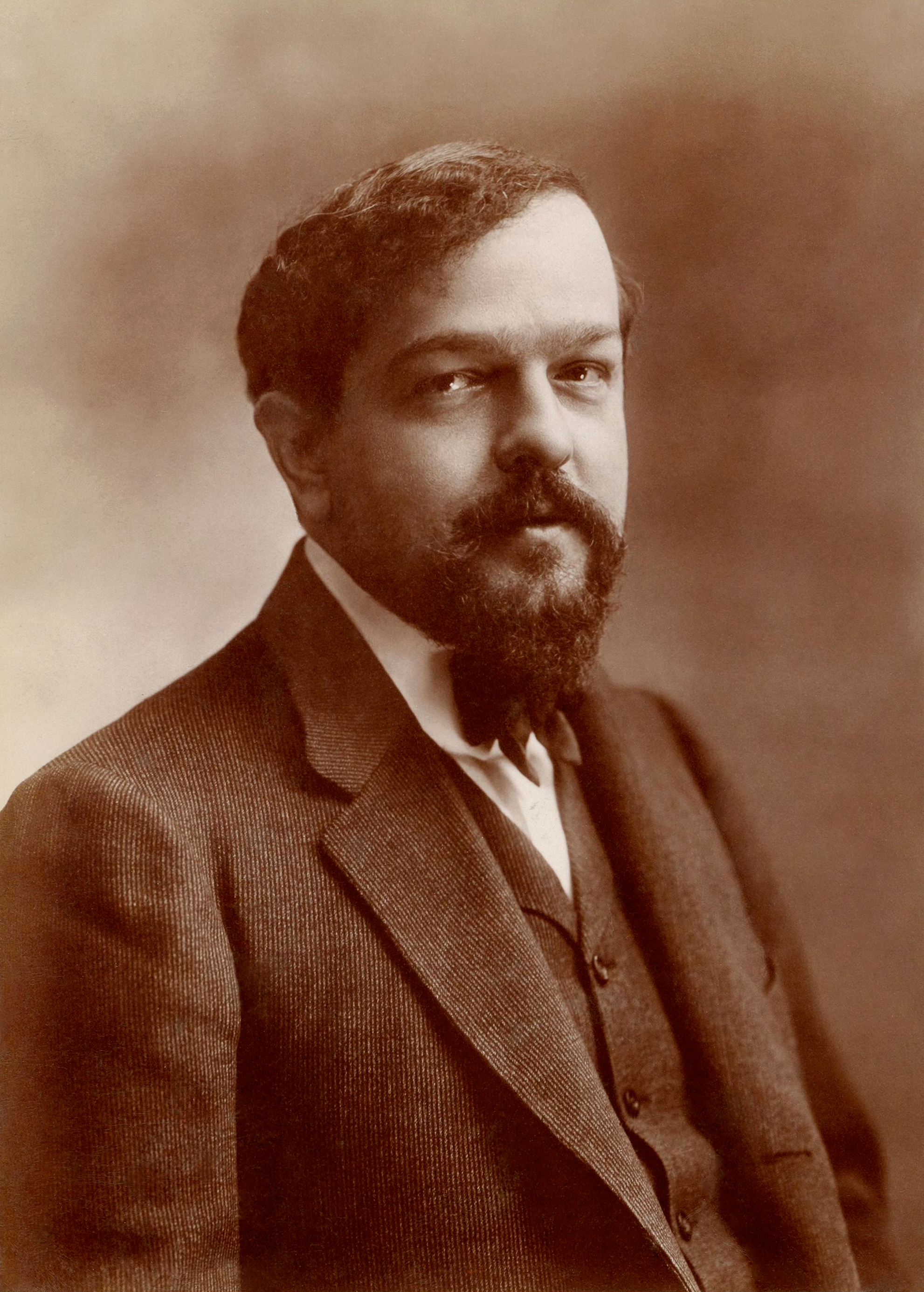
Claude Debussy1900s · Classical / Impressionist
On the same Roda Viva panel, someone finally asked Jobim to explain the trick at the center of his own writing — taking one simple melodic cell and working it through shifting harmony until it carried a whole song. His answer named a source: "Estudei muito o Debussy, o Claude-Achille Debussy," he said — "I studied Debussy a lot, Claude-Achille Debussy" — recalling, with a laugh, an American fan once asking "Debi who?" "Muito bonitas aquelas harmonias," he added: those harmonies are so beautiful.
listen: upstream & here
1899
Nuages (Trois Nocturnes)Claude Debussy
1960
CorcovadoTom Jobim
listen forDebussy's "Nuages," heard here in Leonard Bernstein's recording with the New York Philharmonic, states one cloud-shaped motif again and again without ever harmonizing it the same way twice. A Brazilian musicology journal traces the identical technique straight into Jobim's 1960 "Corcovado," naming it directly: a nearly static two-note melody that means nothing until the chords beneath it start moving. Strip either song's harmony away and the tune collapses — the harmony, not the melody, was always doing the composing.
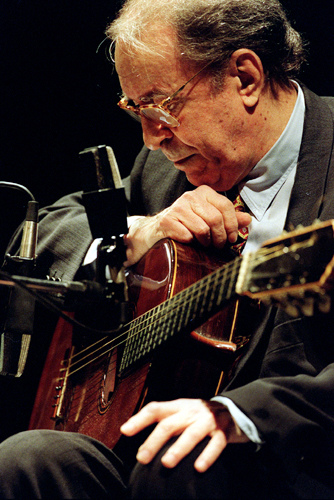
João Gilberto1950s-60s · Bossa nova / Samba-canção
The clearest account of what happened next comes from journalist Daniella Thompson, drawing on Ruy Castro's history of bossa nova — Jobim never described the moment himself. When Gilberto privately played his new songs "Bim-Bom" and "Hô-Bá-Lá-Lá" for him in Rio, Jobim, Thompson writes, "was impressed not so much with the singing as with the guitar": he heard in its clipped, syncopated batida a beat that simplified samba's pulse and opened room for the dense chords he was already writing. He went back through his own songbook, found a song written with Vinícius de Moraes a year earlier, and rebuilt its arrangement around the beat: "Chega de Saudade."
listen: upstream & here
1958
Bim-BomJoão Gilberto
1963
Chega de SaudadeTom Jobim
listen forPlay Gilberto's own "Bim-Bom" first: the guitar clips each chord short and lands just behind the beat, a pattern he said he composed watching washerwomen sway under loads on a riverbank. Then hear Jobim's own 1963 instrumental recording of "Chega de Saudade" — a song he had already finished a year before that guitar style existed — and listen for the piano landing its comping chords in that same clipped, slightly late pocket, built to carry a beat that didn't exist when the song was first written.