walking upstream…
The Prodigy
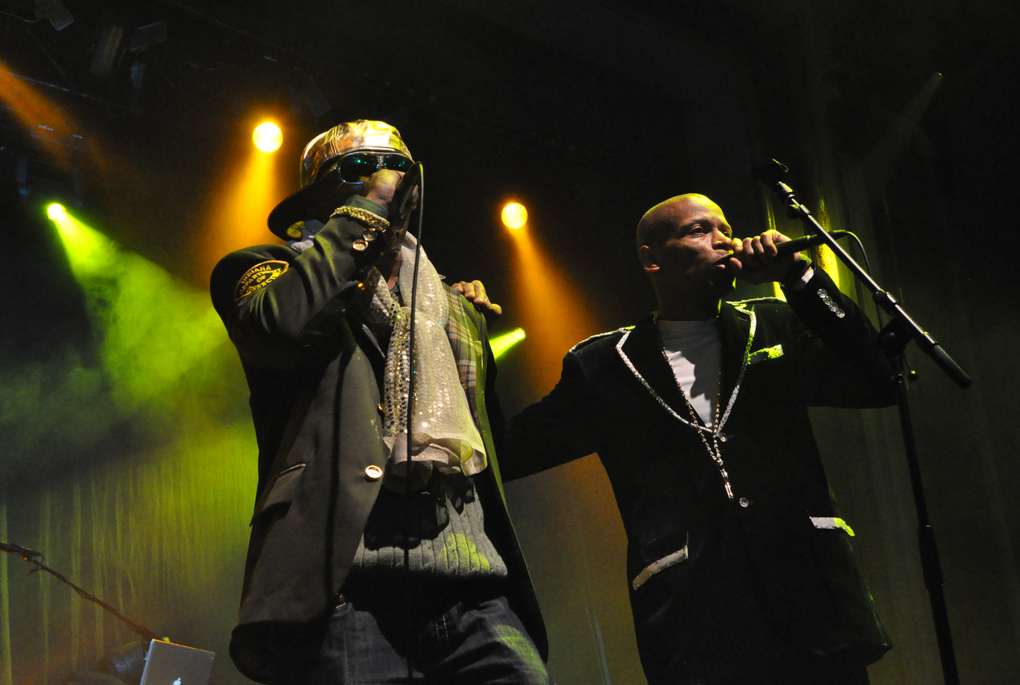


 photo: silver blu3 · cc by 2.0 ↗
The Prodigy
sourcestheprodigy.info — band history (Howlett's path from hip-hop into rave) · NME (1998, reposted at theprodigy.info) — "Soil of the Century" · Clash Magazine — Howlett on Music for the Jilted Generation and the London breakbeat scene · Ambrosia for Heads — Kool Keith and Ced Gee on the "Smack My Bitch Up" sample and collaboration · The Prodigy Fanboy (reposting dancemusic.about.com) — Howlett on "the path of all my inspiration"
Liam Howlett grew up in Braintree, Essex, classically trained on piano but pulled first toward Two Tone ska, then into hip-hop and breakdancing with a local crew, Cut 2 Kill. A knife pulled on him at a London club in 1988 ended his run in a hip-hop scene he found "exclusivist" and pushed him into rave, where dancers Keith Flint and Leeroy Thornhill heard his own productions on a mixtape B-side — labeled "the prodigy" after his Moog synth — and asked him to front a live show while they danced. From 1991's "What Evil Lurks" through 1997's The Fat of the Land, Howlett built breakbeat-rave tracks the way he'd learned to build hip-hop ones: sample-stacked, collaged, loud — just faster, and aimed at a crowd instead of a cypher.
the sound in question
1996
BreatheThe Prodigy
walk the tributaries ↓
Ultramagnetic MC's1980s · Hip hop / East Coast hip hop
By 1997, Liam Howlett was calling Kool Keith — Ultramagnetic MC's off-the-wall MC — "the fifth member of the Prodigy." The Bronx group had already turned up, unbilled, on The Prodigy's first single and its 1992 breakout hit; when a sample clearance needed sorting on a new record, group member Ced Gee suggested cutting something fresh with Keith instead, and Kool Keith recorded a guest verse and toured with the band. "He's the only MC that can rap about gerbils and shit like that, then drop in a cool B-boy lyric," Howlett told NME in 1998. "No-one flows like him."
listen: upstream & heresource: theprodigy.info — The Fat of the Land sample credits (Ultramagnetic MC's, Beastie Boys) ↗
1988
Give the Drummer SomeUltramagnetic MC's
1997
Smack My Bitch UpThe Prodigy
listen forCue Ultramagnetic MC's "Give the Drummer Some" for Kool Keith's clipped half-rapped hook, "Change my pitch up, smack my bitch up" — then play The Prodigy's "Smack My Bitch Up," where that same phrase, pitched up further, becomes the entire chorus, looped over a bassline lifted from elsewhere and slammed into rave tempo. The words barely change; everything around them does — Howlett strips away Kool Keith's boom-bap for a bed of breakbeats and siren synths, turning a hip-hop brag into a nine-minute rave assault.
Public Enemy1980s · Hip hop / Political hip hop / Conscious hip hop
Howlett has named the Bomb Squad's beats, unprompted, across two decades of interviews. "Early electro and those Public Enemy and Bomb Squad beats really influenced me and have never left," he told the Denver alt-weekly Westword in 2015, tracing a line from Bronx electro records like Cybotron's "Clear" through Public Enemy's productions into the rave records he'd go on to make himself. It's framed as formation, not a single song's debt — the density and controlled aggression of the Bomb Squad's collage production reads straight through The Prodigy's own sample-stacked arrangements.
listen: upstream & heresource: Denver Westword — Howlett on Public Enemy and Bomb Squad beats as formative influence ↗
1987
Rebel Without a PausePublic Enemy
1996
FirestarterThe Prodigy
listen forPlay Public Enemy's "Rebel Without a Pause" for how the Bomb Squad builds a whole track from one looped, siren-pitched horn stab and Chuck D's voice turned into another percussive layer — then put on "Firestarter," where Howlett runs the same trick with a shrieking sampled riff and Keith Flint's shouted vocal mixed like another drum hit. No specific song link between the two acts is documented; this is the sound Howlett names directly, carried whole into a different genre.
Beastie Boys1980s-2000s · Hip hop / Hardcore punk / Alternative hip hop
Beastie Boys were the other of two hip-hop acts Howlett picked when NME asked him, in 1998, to name the five records that shaped The Prodigy. "No-one touches them as far as three guys on mics goes," he said. "When all three of them are together blowing on a track, there's no finer sound... anyone who writes beats would love to get Ad-Rock on a track." By then Howlett had already acted on it, sampling the group twice across The Fat of the Land — one hook borrowed for a chorus, another for a remix's bridge.
listen: upstream & heresource: theprodigy.info — The Fat of the Land sample credits (Ultramagnetic MC's, Beastie Boys) ↗
1994
Root DownBeastie Boys
1997
Funky ShitThe Prodigy
listen forListen to Beastie Boys' "Root Down" for Mike D's half-sung shout of "root down" riding a wah-wah organ line — then play The Prodigy's "Funky Shit," which chops that same vocal moment down to "oh my God, that's the funky shit" and loops it as the entire hook, dropped over horn stabs and a hard breakbeat instead of the Beasties' live-band groove. Same vocal snap, a different engine running underneath it.