walking upstream…
The Band


sourcesRolling Stone -- Alfred G. Aronowitz, "The Beginnings of the Band" (1968), on Big Pink, Helm's Arkansas origin, and the Dylan tour invitation · NPR -- "50 Years On, The Band's 'Music From Big Pink' Haunts Us Still" (2018) · Edward Kiersh, "Robbie Robertson of The Band," from Where Are You Now, Bo Diddley? (Doubleday, 1986) -- Robertson on Hawkins's "street education" · Andy Gill, "Back To The Land," Mojo (Nov 2000) -- Robertson on Hawkins's "boot camp" and on first meeting Dylan's working methods · Encyclopedia of Arkansas -- "King Biscuit Time" entry, on the KFFA broadcast and its roster of musicians · Something Else! Reviews -- "Robbie Robertson, Jim McCarty remember the legend of Sonny Boy Williamson II" (2014), on Robertson and Helm tracking Williamson down in Helena
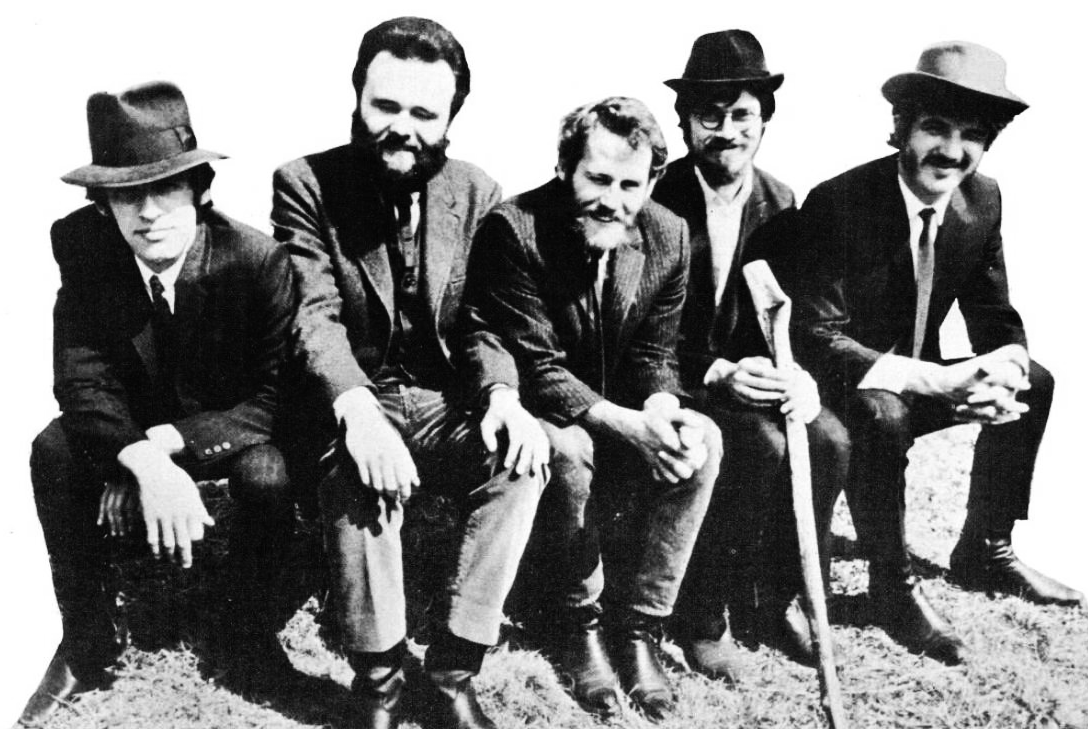
In 1957, a rockabilly bandleader named Ronnie Hawkins hired a teenage drummer from West Helena, Arkansas, and by 1961 had filled out the rest of his backing band, the Hawks, with four musicians from Ontario: guitarist Robbie Robertson, bassist Rick Danko, pianist Richard Manuel, and organist Garth Hudson. Four Canadians and one Arkansan spent years grinding through roadhouses before striking out alone, then landed the strangest day job in rock -- touring behind an electrified, booed Bob Dylan through 1965-66 and holing up with him in a rented pink house outside Woodstock in 1967 while he wrote what became the Basement Tapes. What came out the other side, Music from Big Pink and The Band, sounded like antique Americana invented from scratch, three lead singers trading verses over horn-and-organ arrangements that read like short stories. The classic lineup closed the book with 1976's filmed farewell, The Last Waltz.
the sound in question
1968
The WeightThe Band
walk the tributaries ↓
Ronnie Hawkins1950s-60s · Rockabilly / Rock and roll / Rhythm and blues
Hawkins ran the Hawks like a boot camp: grueling roadhouse residencies across Ontario and the American South, Helm on drums from the start and Robertson, Danko, Manuel and Hudson recruited one by one through 1961. "Playing with Ronnie Hawkins was like going to boot camp," Robertson told the British music magazine Mojo in 2000. "You worked really hard, really long hours, you learned the rules of the road, and you got your street education." By late 1963 the discipline had made them sharp enough to leave -- Hawkins, Robertson joked, had sharpened them into a "crackerjack band" and shot himself in the foot doing it.
listen: upstream & heresource: The Canadian Encyclopedia -- "The Band," on the group's origin as Ronnie Hawkins's Hawks and its Ontario-born members ↗
1959
Forty DaysRonnie Hawkins
1969
Rag Mama RagThe Band
listen forHawkins tears through "Forty Days" at a manic, crowd-baiting pace built for a rowdy roadhouse bar, one voice barking the whole song. The Band's own honky-tonk piano stomp on "Rag Mama Rag" keeps that same barroom velocity, but redirects it: instead of a lone frontman shouting over the band, three voices trade lines and pile onto the chorus together, the showband discipline still audible under a completely different idea of who gets to sing.
Bob Dylan1960s · Folk / Folk rock / Rock
After backing Dylan's booed electric tours of 1965-66, the group moved into a rented house outside Woodstock in 1967 and spent the summer with him taping what became the Basement Tapes. Robertson put it plainly: "Bob was educating us a little," he said, crediting the sessions with reshaping his own songwriting. One song came out of that basement still belonging entirely to Dylan: "I Shall Be Released." The Band closed their own debut with it in 1968, three years before Dylan's own studio recording reached record stores.
listen: upstream & heresource: Tom Wilmeth, "How Robbie Robertson Changed Bob Dylan Forever," Something Else! Reviews (2023) -- Robertson on Dylan "educating us a little" ↗
1967
I Shall Be ReleasedBob Dylan
1968
I Shall Be ReleasedThe Band
listen forDylan's 1967 basement take of "I Shall Be Released" is just his voice, a guitar and a wheezing organ, sung plain and almost tossed off, the way a songwriter runs through something new for the room. The Band's version, closing Music From Big Pink in 1968, keeps that same spare frame but changes who's speaking: Richard Manuel takes the lead in a high, keening falsetto, with Rick Danko and Levon Helm rising to meet him on the chorus -- one man's demo turned into a three-part hymn.
Sonny Boy Williamson II1950s–60s · Blues / Chicago blues / Delta blues
Helm grew up near Helena, Arkansas, within radio range of Sonny Boy Williamson II's live blues broadcast, King Biscuit Time, on KFFA. "I used to listen to him a lot when I was a kid," he recalled in 1968, "but I think my influences are more general than specific" -- he'd absorbed the show's drummer, James "Peck" Curtis, as much as Williamson's harmonica. Years later Robertson and Helm sought the aging bluesman out in person: "Why don't we go over and see if we can find Sonny Boy Williamson?" Robertson remembered asking, shortly before Williamson's 1965 death.
listen: upstream & heresource: Encyclopedia of Arkansas -- Levon Helm entry, on his boyhood exposure to Sonny Boy Williamson II's King Biscuit Time and drummer Peck Curtis ↗
1963
Help MeSonny Boy Williamson II
1975
OpheliaThe Band
listen forNo recording documents The Band covering a Williamson song outright, so the clearest pairing is atmospheric: Williamson's harmonica on "Help Me" rides a rolling, deliberately behind-the-beat blues shuffle that never rushes. Helm's drumming on the Band's horn-driven "Ophelia" keeps that same unhurried pocket, a New Orleans horn line standing in for the harmonica -- the kind of loose, general debt Helm himself downplayed rather than a traceable quotation.