walking upstream…
Counting Crows

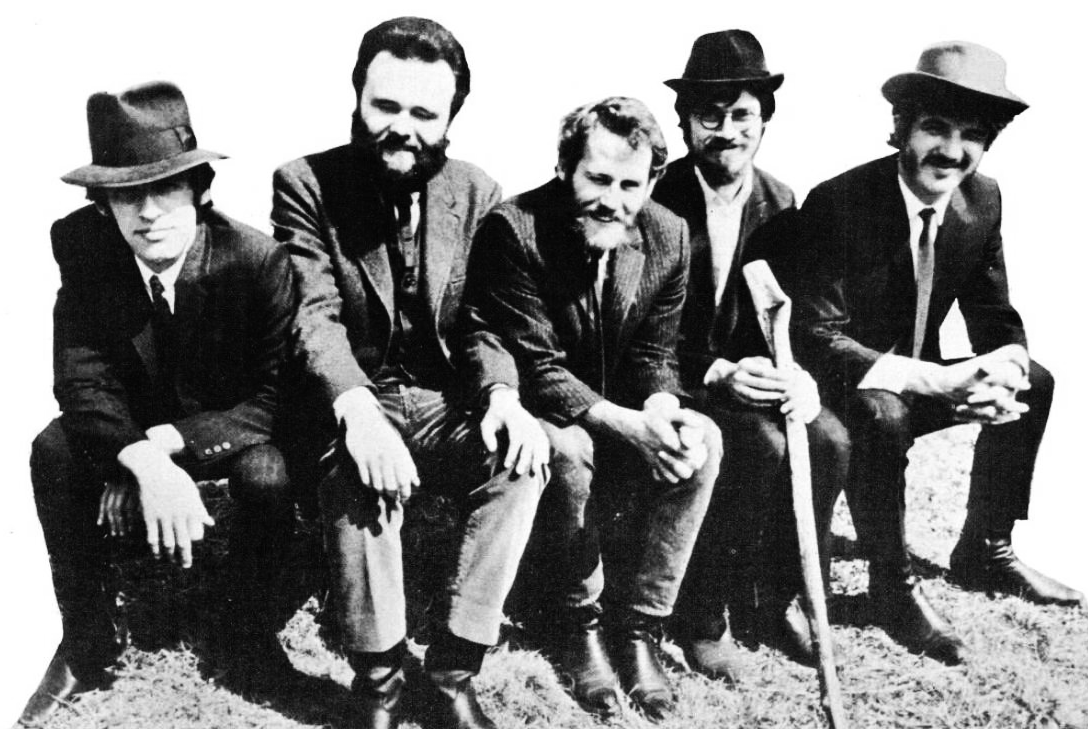

 photo: peter myers · cc by 2.0 ↗
Counting Crows
sourcesWikipedia2 · Ultimate Classic Rock · Rolling Stone
Counting Crows formed in Berkeley in 1991 around Adam Duritz, a shaggy-voiced singer whose lyrics ran long and confessional even by singer-songwriter standards, and guitarist David Bryson, his songwriting partner from an earlier acoustic duo. Their 1993 debut 'August and Everything After,' produced by T-Bone Burnett, arrived amid grunge's dominance but sounded like it had wandered in from a decade earlier — mandolin, accordion, and Hammond organ wrapped around Duritz's rambling, Van Morrison-indebted vocal digressions. 'Mr. Jones' made them unlikely superstars; Duritz's habit of rewriting his own lyrics onstage, night after night, became as much a signature as the songs themselves. They've stayed a durable touring act for three decades since, still led by Duritz's restless, unfinished relationship with his own catalogue.
the sound in question
1993
Mr. JonesCounting Crows
walk the tributaries ↓
Van Morrison1960s–70s · Celtic soul / R&B / Folk rock
Van Morrison is the influence Counting Crows can't escape being asked about — critics have called it a 'mudslide of references' since the first album. Duritz has said what he took from Morrison wasn't a vocal trick but a philosophy of performance: 'what I learned from Van was that when you go up onstage, it has to happen right there,' meaning a song is remade live each night rather than reproduced. It's why Robbie Robertson, musical director for the 1993 Rock and Roll Hall of Fame inductions, tapped the then-unknown Counting Crows to back Morrison's own induction performance of 'Caravan.'
listen: upstream & here
1970
CaravanVan Morrison
1993
Round HereCounting Crows
listen forPut 'Caravan' beside 'Round Here' and listen for what happens after the written verses run out: both singers abandon the lyric sheet for loose, half-spoken vocal runs — repeating a phrase, stretching a vowel, chasing a feeling instead of a rhyme — treating the song's back half as a place to improvise rather than a destination to land on.
The Band1960s-70s · Americana / Roots rock / Folk rock
Counting Crows have been described as wearing 'their time-stamped influences like Van Morrison and The Band on their patchwork sleeves,' and the debt runs past sound into method: when the band was intimidated by studio recording ahead of their 1993 debut, The Band's Robbie Robertson personally advised them, through their A&R rep, to 'just go make a record in a house' the way The Band had — advice Duritz credits with shaping how they recorded their first four albums. Musically it surfaces as a communal, rustic-ensemble texture: accordion, organ, and mandolin standing in for horn sections, built for a full band playing in a room together rather than a singer fronting a rock combo.
listen: upstream & here
1968
The WeightThe Band
1993
Rain KingCounting Crows
listen forCompare 'The Weight' with 'Rain King' — both pile up a small orchestra of unglamorous, front-porch instruments (organ, accordion, upright textures) around plainspoken storytelling vocals, favoring a loose, ensemble-breathing pulse over a tight rock backbeat.
Bob Dylan1960s · Folk / Folk rock / Rock
Reviews of 'August and Everything After' consistently place Counting Crows in a lineage of 'sixties and seventies folk rock' running through Bob Dylan and The Band, and Duritz's own writing has been grouped with 'the poetic shimmy and sway of Dylan and Mitchell.' The connection is in the density of the words themselves: Duritz packs verses with proper nouns, half-finished asides, and interior monologue that don't resolve into tidy choruses, a habit closer to Dylan's cascading, story-within-a-story lyric sheets than to conventional pop-rock songcraft.
listen: upstream & here
1975
Tangled Up in BlueBob Dylan
1993
Anna BeginsCounting Crows
listen forSet 'Tangled Up in Blue' next to 'Anna Begins' — both stack image after image and person after person into a single flowing lyric that resists a clean narrative arc, more interested in the accumulation of specific, confessional detail than in a resolved story.