walking upstream…
Teddy Riley
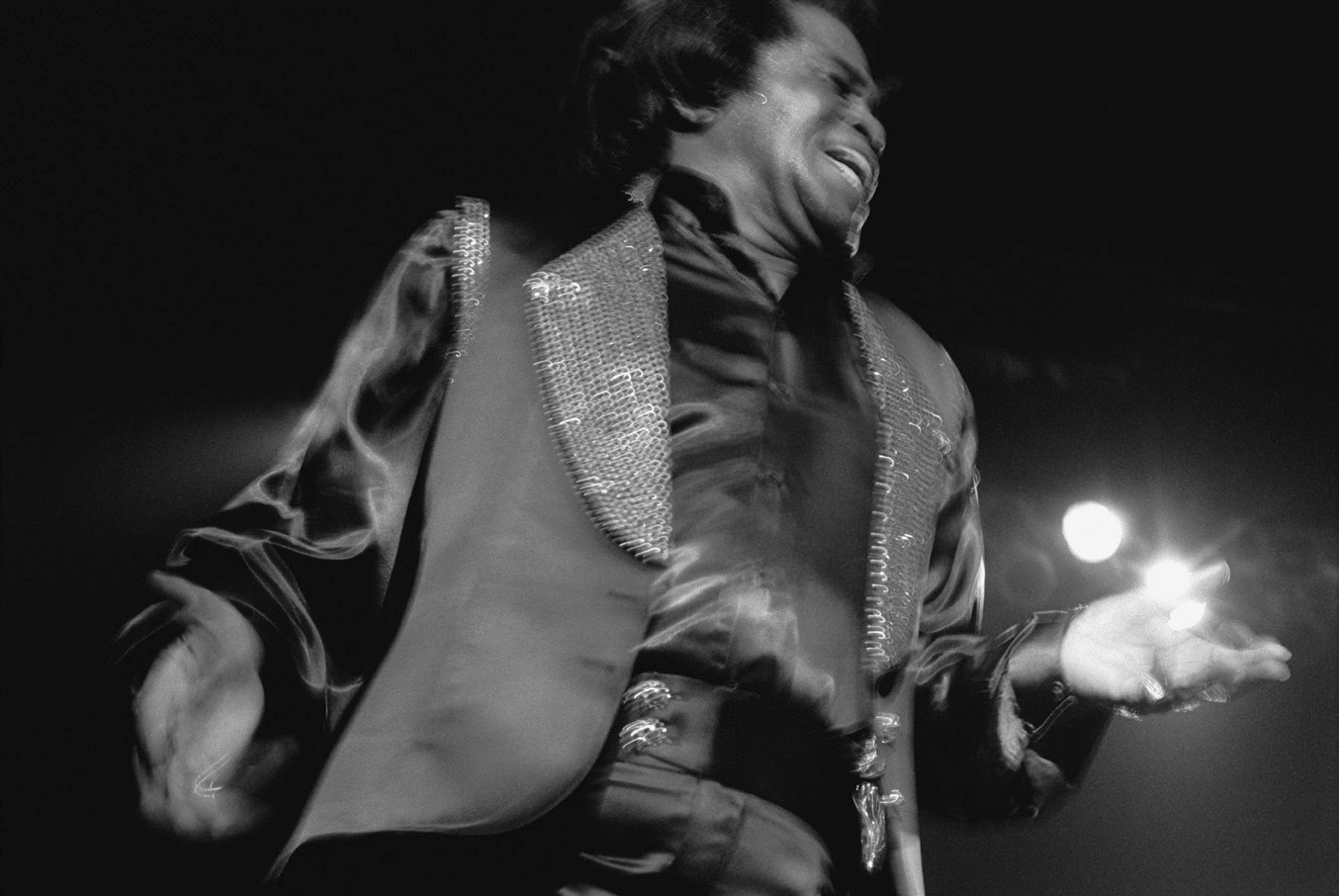

 photo: christopher diont'e · cc by-sa 4.0 ↗
Teddy Riley
sourcesMusic Business Worldwide — "Teddy Riley on what it's like to create a genre..." (early arrest/bio, Dangerous writing process, Songwriters Hall of Fame) · SongwriterUniverse — Teddy Riley interview (church piano roots, new jack swing naming story) · REVOLT — "Groove Me · Shatter the Standards — "The Handguide to Talkbox" (critical corroboration of Riley as Roger Troutman's talkbox successor) · Wikipedia — "How Ya Like Me Now" (song) (producer credits, James Brown sample corroboration)
In the mid-1980s, a Harlem police officer caught fifteen-year-old Teddy Riley selling drugs and warned him he was headed for Rikers Island; the beating from his mother that followed, Riley said, was "the evolution and revolution all in one" — the night he decided to make music instead. He was already producing, reshaping Doug E. Fresh's "The Show" as a teenager, then Kool Moe Dee's early records. By 1987 he had built new jack swing, his fusion of church chords, hip-hop drums, and R&B swing named by his friend, screenwriter Barry Michael Cooper, first on Keith Sweat's "Make It Last Forever," then with his own group Guy. Michael Jackson recruited him for 1991's "Dangerous," the album that replaced Quincy Jones as Jackson's chief collaborator; Riley called those sessions "like going to college." He kept building the sound through Blackstreet's "No Diggity" and a 2023 Songwriters Hall of Fame induction.
the sound in question
1996
No DiggityTeddy Riley
walk the tributaries ↓
James Brown1960s–70s · Funk / Soul / Rhythm and blues
Riley was in London finishing Kool Moe Dee's second album when James Brown's catalog became his raw material: "Between me and Marley Marl, we were the first to sample James Brown and really get away with it," he said. "The sample clearance laws were not in effect yet." He went further than sampling — impersonating Brown's voice on record, dropping his own falsetto shout into sessions before Brown's lawyers began trademarking every yell. The habit outlasted the loophole: years later Riley said his whole career chased one dream, "putting Michael Jackson and James Brown together."
listen: upstream & heresource: VIBE — Teddy Riley breaks down the songs that made him (James Brown sampling, Roger Troutman/talkbox, Michael Jackson/Quincy Jones account) ↗
1965
Papa's Got a Brand New BagJames Brown
1987
How Ya Like Me NowTeddy Riley
listen forBrown's 1965 breakthrough locks the whole band to one chord and the downbeat, everything stripped away except a stabbing horn riff. That riff and a chopped vocal grunt turn up sliced directly into the drum programming under Kool Moe Dee's "How Ya Like Me Now," the Riley-produced diss record built on Brown breaks two years before the sample-clearance era shut that loophole down — the JB horn stab reappearing as a boom-bap loop instead of a live vamp.
Roger Troutman1980s · Funk / Electro
When Riley found his own voice as a singer — pushed into the spotlight, uncomfortably, by Guy's manager Gene Griffin — he reached first for a vocoder, then a talkbox, chasing one specific record he'd worn out. "I studied Roger Troutman," he said. "That's how 'Teddy's Jam' came about." Riley kept extending that study for years, running the talkbox through Blackstreet's biggest ballads; a later critical history of the instrument singled him out by name, writing that he spent those records "presenting himself as Roger's successor."
listen: upstream & heresource: VIBE — Teddy Riley breaks down the songs that made him (James Brown sampling, Roger Troutman/talkbox, Michael Jackson/Quincy Jones account) ↗
1980
More Bounce to the OunceRoger Troutman
1988
Teddy's JamTeddy Riley
listen forZapp's 1980 breakthrough rides almost entirely on Roger Troutman's talkbox, his voice run through a keyboard until the words come out robotic and rubbery, half-sung, half-synthesized. "Teddy's Jam," recorded eight years later, borrows that exact device: Riley routes his own voice through the same talkbox rig, letting it wobble and vocode over a stop-start New Jack Swing beat instead of Zapp's slower electro-funk groove — same machine, sped up and reprogrammed for a different dance floor.
Quincy Jones1960s–80s · Jazz / Soul / R&B
Riley called Quincy Jones "my mentor and idol" in the same breath as Prince and Roger Troutman, but the debt was paid inside the room, not from a distance. Producing "Dangerous," the first Jackson album made without Jones since 1979's "Off the Wall," Riley says Michael handed down Quincy's own methods directly: "Working with Michael was like going to college," he said. "He basically gave me the map... he taught me all the different ways of working with Quincy Jones and Greg Phillinganes." Jones, for his part, had vouched for Riley to Jackson years earlier.
listen: upstream & heresource: VIBE — Teddy Riley breaks down the songs that made him (James Brown sampling, Roger Troutman/talkbox, Michael Jackson/Quincy Jones account) ↗
1979
Off the WallQuincy Jones
1991
Remember the TimeTeddy Riley
listen for"Off the Wall," arranged by Jones, stacks Jackson's lead over a dense wall of interlocking backing vocals and horn hits, disco-funk sped into something jittery and layered. "Remember the Time," the song Jackson stopped Riley's demo tape to ask about, keeps that same density but swaps disco horns for New Jack Swing's syncopated drum programming and a hymn-like chord Riley learned in church — Quincy's architecture of stacked voices and rhythm, rebuilt with a different generation's tools.